
Can You Work on a Student Visa in New Zealand?
 Talk to Expert
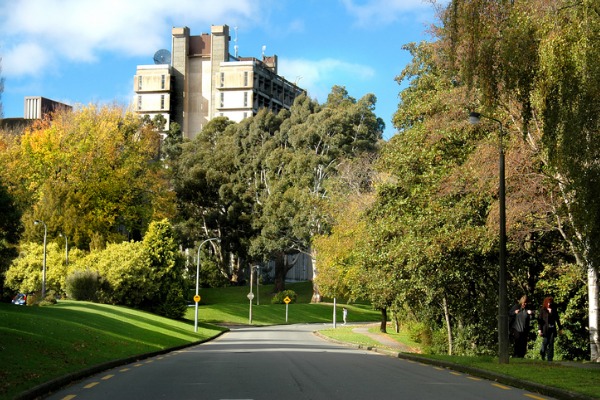
New Zealand is a country of opportunities, and many who are staying there on a student visa may like to take up work. Working is a good way to build up bank reserves and provide for expenditures. Apart from that, taking up work gives practical exposure. In New Zealand, students who are enrolled in a degree program are eligible for post-study work rights. However, the applicants will not be allowed to apply for a post-study work visa for the second time during the course of their study. The applicants can apply for work opportunities that are related to the course you are pursuing in New Zealand.
- Part-time work permit eligibility for students
- Full-time work permit eligibility for students
- Student visa New Zealand for English language courses
- Work permit label on New Zealand student visa
Part-time work permit eligibility for students
Students pursuing vocational or foundation courses can work up to 20 hours a week. You can opt to work daily for a few hours or during weekends.
The course being pursued should be in the tertiary education category. The tertiary course is any course that can be pursued after clearing school or higher secondary level (class XII boards). Certain diploma courses in the country can also be taken up after clearing Class X boards. Tertiary courses include diploma, undergraduate, graduate, bachelor’s, master’s, and doctoral program courses.
While on a New Zealand student visa, you can take up part-time work in the country with a legal entity. Your employer needs to issue an employment agreement. As a student, you cannot start a self-employed business.
To be eligible for a New Zealand work visa as a student, you need to:
- Enroll in a skilling course of level 4 or higher foundation course.
- Skilling course should be of at least two years duration
- The Foundation course duration should at least be of one academic year.
Full-time work permit eligibility for students
Full-time work with no restrictions on working hour limit can be taken up during session breaks, and long vacations of Christmas or New Year. For taking up full-time work, you need to be enrolled in a course with 120 or more credits.
Students pursuing a master’s level or doctoral programs in research can take up full-time work. Students who are required to undergo practical training under their study programs are also given work permit visas. The work can be part-time or full-time, depending upon the course program objectives and schedules.
Read more: Popular Job Sectors in New Zealand
Student visa New Zealand for English language courses
Students pursuing English language courses in New Zealand are eligible to work even if they have enrolled for short-duration courses.
You can work part-time while pursuing English courses in New Zealand if:
- You have enrolled for a full-time six months or longer course in English
- You have scored 5+ in recognized international English language tests
- Your score is not more than two years old
- Your objective is to improve my English knowledge and skills
Students pursuing full-time continuous shorter English courses of 14 weeks duration can also work part-time in the country. Students who take up courses in less than 14 weeks can also apply for work. The shorter course being pursued should be in continuance with the previous course cleared and with the same university or institute.
Also read: How to get PR (Permanent Residency) in New Zealand after study?
Predict your IELTS, TOEFL, and PTE in just 4 steps!
Work permit label on New Zealand student visa
It is best to get a work permit label on your visa if you want to work in New Zealand while pursuing your studies there. Choose courses from universities and institutes recognized by the New Zealand qualification framework. When you apply for a visa, apply for the work permit label as well, which can be full-time or part-time depending upon your course criteria. Once the work permit is cleared, you will be able to see it in your e-visa, on your passport visa label, or on a separate work permit letter issued to you.
If you are planning to extend your stay and continue your work, make sure you apply for a visa and work permit renewals within the stipulated time limits. Students who are about to complete their courses can also apply for post-study work visa New Zealand. Working and continuing your stay without a permit can have serious implications as New Zealand laws, though student-friendly, are stringent on permits.
Read more:

Commonly asked questions
The entry requirements to study BTech in New Zealand are:
- Formal Schooling
- Class 12 with a minimum of 75%
- A degree from a recognised university
- Statement of Purpose
- Resume
- IELTS / TOEFL / PTE scores
The first-year tuition fee to study BTech in New Zealand is in the range of INR 10 Lacs – INR 40 lakh. A majority of the universities have the first-year tuition fee in the range of INR 20 Lacs – INR 40 lakh.
University | 1st-Year Tuition Fees |
|---|---|
University of Auckland | INR 20.48 L - INR 25.16 L |
University of Otago | INR 16.26 L - INR 19.42 L |
AUT University | INR 15.47 L - INR 22.38 L |
Victoria University of Wellington | INR 14.55 L - INR 20.66 L |
University of Canterbury | INR 15.9 L - INR 20.17 L |
The top specializations for BTech in New Zealand are:
- Electronics Engineering
- Computer Science
- Computer Science Engineering
- Information Systems
- Electrical Engineering
- Civil Engineering
- Mechatronics Engineering
According to Talent.com, the average Engineer salary in New Zealand is $99,976 per year. Entry-level positions start at $77,410 per year, while the most experienced workers make up to $132,195 per year. According to Payscale, the average base salary of a B.Tech graduate is NZ$77,000 per year. Check the table given below to know about the average salary of the job profiles:
Job Titles | Average Salary |
|---|---|
Software Developer | NZ$67,060 |
Food Technologist | NZ$63,164 |
Service Desk Analyst | NZ$51,882 |
Systems Engineer, IT | NZ$70,222 |
Business Analyst, IT | NZ$72,621 |
 Statement of Purpose
 Letter of Recommendation
 Student Visa Application
 Admission Essay Writing
 Student Curriculum Vitae
Raj Vimal is an education writer and editor with over 8 years of experience. He helps Indian students find the right universities, visas, and courses abroad. Currently, he leads content strategies at InfoEdge India
Read Full Bio