
Top 5 Private Universities in Germany: Fees, Requirements
 Talk to Expert

Private universities in Germany are a growing option for international students: the German Science and Humanities Council reported 111 private and 38 church-maintained higher education institutions for winter semester 2025/26. Many charge tuition, and fees depend on the university and course. This guide covers fees, accreditation, scholarships and application requirements.
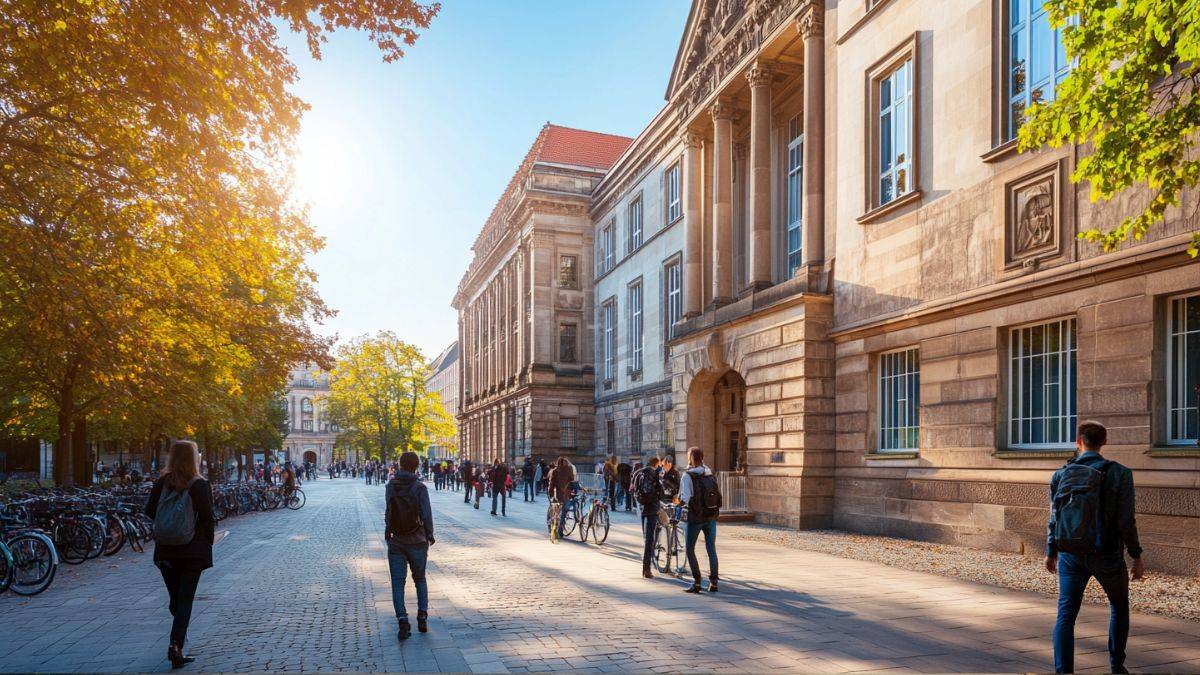
The higher education system in Germany is changing, and private universities are becoming more popular. Germany had 111 private and 38 church-maintained higher education institutions, and 386,973 students attended private institutions. Private institutions made up about 26.3% of all higher education institutions, while around 13.5% of students were enrolled at private institutions.
While many students still prefer public universities, private ones are becoming popular because they offer new and practical programs that help students get jobs. One big difference between public universities in Germany and private universities is that private universities charge tuition fees. However, these fees are much lower than what you would pay in the USA or the UK. Despite all, Germany is still one of the most sought-after study abroad destinations for Indian students looking to study in Germany for free.
The fees at private universities in Germany vary by programme. A broad planning range is around €10,000 to €25,000 per year, although some programmes cost less or more. Always check the official fee page for the exact course and intake. For example, Bard College Berlin offers liberal arts degrees rather than an MBA at the fee of €27,500 for off-campus students or €38,250 for on-campus students.
- List of Top Private Universities in Germany
- Top 5 Private Universities in Germany for Indian Students
- Germany Private University Fees: Estimated Total Cost in INR
- Practical Information for Studying in Germany at Private Universities
- Scholarships at Private Universities in Germany
- Language Requirements in Private Universities in Germany
- Why Study in Private Universities in Germany
- Private vs Public Universities in Germany: Key Differences
- Top 5 Private Universities in Germany FAQs

List of Top Private Universities in Germany
Choosing the right institution is the first step toward a global career. Below is a curated list of top private universities in Germany known for high international student satisfaction and strong post-study work placements.
| University | Published Fee Example (2026–27 where available) |
|---|---|
| Bard College Berlin | €27,500 off-campus comprehensive fee (about ₹29.29 lakh); €38,250 on-campus comprehensive fee (about ₹40.73 lakh). Not an MBA provider. |
| Constructor University | Programme-specific; check the official university website. |
| GISMA Business School | Programme-specific; check the official GISMA website. |
| Hertie School of Governance | Programme-specific; check the official Hertie School website. |
| Munich Business School | MBA and master’s fees vary by course; check official Munich Business School fees. |
| Frankfurt School of Finance and Management | Programme-specific; check official Frankfurt School fees. |
| IU International University of Applied Sciences | One-Year MBA: €10,829 with yearly-payment discount, plus €1,500 campus registration and €226.80 per semester ticket (official fee page). |
| SRH University | Example: non-EU/EEA tuition for MA International Management from €6,950 per semester, plus one-off enrolment fee; course-specific. |
| Katholische Universität Eichstätt – Ingolstadt | Check the university’s current programme and contribution details at KU Eichstätt-Ingolstadt; fees vary by course and student status. |
| University of Witten/Herdecke | Programme-specific; check the official University of Witten/Herdecke website. |
| SRH Berlin | Example: non-EU/EEA MA International Management from €6,950 per semester, plus a one-off enrolment fee. See official programme fees. |
Top 5 Private Universities in Germany for Indian Students
Choosing a private university in Germany is a strategic move for students who value speed, industry focus, and career support. While there is a tuition fee, the career services may support students, but employment is not guaranteed. Eligible graduates may apply for a residence permit to seek qualified employment, subject to current immigration rules. Check the top 5 private universities in Germany.
Bard College Berlin
Bard College Berlin is a social sciences and humanities-focused liberal arts university. Bard College Berlin fosters critical, creative thinking and civic engagement to provide a well-rounded education.
| Popular Programs |
Humanities, Arts, Social Thought, Economics, Politics |
| Campus |
Berlin |
| Cost of Studying |
Bard College Berlin does not offer an MBA. For 2026–27, its comprehensive fee is €27,500 off campus or €38,250 on campus. The on-campus fee includes tuition, housing and weekday meals. |
| Admission Deadlines |
Applications are typically due by May 1 for the fall semester. |
Constructor University
Constructor University is strongly known for its international students and research programs. It provides scholarships and flexible programs for paying fees.
| Popular Programs |
Computer Science, International Business Administration, Electrical and Computer Engineering |
| Campus |
Bremen |
| Cost of Studying |
Fees depend on the programme and intake. Check the official Constructor University website for current tuition and scholarship options. |
| Admission Deadlines |
Applications are open throughout the year. Early applications get better chances for scholarships. |
GISMA Business School
GISMA has programs that focus on business, and management. By emphasizing practical learning and exposing students to global experiences, GISMA provides an excellent education.
| Popular Programs |
MBA, International Business Management, Data Science, Artificial Intelligence |
| Campuses |
Berlin, Hamburg, Hannover |
| Cost of Studying |
Programme-specific; check the official GISMA website. |
| Admission Deadlines |
Multiple intakes through the year. You can apply anytime. |
Hertie School of Governance
Hertie School is noted for its public policy and international affairs programs. The focus is public leadership, governance, and data science.
| Popular Programs |
Public Policy, International Affairs, Data Science for Public Policy |
| Campus |
Berlin |
| Cost of Studying |
Programme-specific; check the official Hertie School website. |
| Admission Deadlines |
Apply by May 1 for September intake |
Munich Business School
Munich Business School, or MBS, is a premier German business school that emphasizes innovation and entrepreneurship. Their courses contain a blend of theoretical knowledge of business and practical application. MBS is physically located in Munich which is a major business city.
| Popular Programs |
Business Administration, Master of Innovation and Entrepreneurship, Master of Sports Business and Communication, MBA |
| Campus |
Munich |
| Cost of Studying |
Fees vary by programme and intake. Check the official Munich Business School fee page for the current MBA or master’s course. |
| Admission Deadlines |
Applications for Master's programs are accepted on a rolling basis throughout the year. Applying early is recommended for scholarships and program availability. |
Before applying to a private university in Germany, students should check whether the institution is state-recognised and whether the chosen programme has the required accreditation. Accreditation helps students assess the quality of education and whether a programme meets recognised academic standards. Students should verify the university and course details through official sources before paying any application or tuition fees.
Germany Private University Fees: Estimated Total Cost in INR
Tuition is only one part of the budget. The example below uses IU International University’s published One-Year MBA fee and a DAAD planning estimate of €990 per month for living costs. It is an illustrative first-year budget, not a quote for every private university. Exchange rate used throughout this article: €1 = ₹106.4935 (October 2026)
| Cost item | Amount in EUR | Approx. amount in INR | Source / note |
|---|---|---|---|
| One-Year MBA tuition (yearly-payment price) | €10,829 | ₹11.53 lakh | IU official fee page; programme discount shown on the page |
| One-time campus registration | €1,500 | ₹1.60 lakh | IU official fee page |
| Semester tickets (2 × €226.80) | €453.60 | ₹0.48 lakh | IU official fee page; estimated for two semesters |
| Living costs (€990 × 12 months) | €11,880 | ₹12.65 lakh | DAAD living-cost guidance; planning estimate |
| Estimated first-year total | €24,662.60 | ₹26.26 lakh | Sum of the four line items above |
Important: The blocked-account amount is proof of funds for a visa, not an additional fee. The official 2026 requirement is at least €11,904 for one year. It is separate from tuition and the budget calculation above. Actual bank exchange rates and transfer fees may differ from the ECB reference rate.
Predict your IELTS, TOEFL, and PTE in just 4 steps!
Practical Information for Studying in Germany at Private Universities
In this section, we are going to talk about important requirements to study at Private Universities in Germany.
- With academic transcripts and standardized tests like GMAT or GRE private universities in Germany require essays, LORs and work experience. Students are advised to check specific requirements for their desired programs.
- For a German student visa in 2026, students generally need to show at least €11,904 for one year in a blocked account, unless an accepted alternative such as a scholarship or formal declaration of commitment applies. Check the latest figure with the official German government study-visa guidance.
- Most private universities offer programs entirely in English. However, some programs might require proficiency in German for specific courses or internships. Check the language requirements for chosen program. Knowing the German language will not only help students settle down in the country but also prove to be an advantage during part-time work in Germany and post-study work opportunities.
- Once candidates have received their university admission letter, they are required to apply for their German student visa. The national student visa fee is generally €75, but applicants should confirm the current fee and document checklist with the German mission responsible for their place of residence. Required documents usually include the admission letter, proof of funds, and health insurance. Apply for a German student visa through the German mission responsible for your usual place of residence.
Scholarships at Private Universities in Germany
International students can explore scholarships to reduce the cost of studying at private universities in Germany. Scholarship availability and award amounts vary by university, course and eligibility criteria. Some universities offer merit-based scholarships or tuition discounts, while external funding may also be available through organisations such as DAAD. Students should check the official university website for application deadlines, eligibility rules and required documents.
Students can also compare funding options on the official DAAD scholarship website. Scholarship conditions vary, and full-degree funding is limited for some programmes. Students should confirm whether a scholarship covers tuition fees, living costs or both before applying.
Language Requirements in Private Universities in Germany
For English-taught courses, universities may accept IELTS, TOEFL iBT, PTE Academic or other approved proof of English proficiency.
The required score is programme-specific; there is no single IELTS or TOEFL score that applies to every private university in Germany.
DAAD advises applicants to confirm the accepted tests and minimum scores with their chosen institution. For German-taught courses, German-language proof may be required.
Why Study in Private Universities in Germany
While Germany is known for its affordable public universities, private universities can be a good option for students looking for specialised programmes, smaller classes and stronger industry-focused learning. Private institutions may also offer flexible study options and career support. Some key benefits of studying at private universities in Germany include:
- Specialised programmes: Private universities often offer focused courses in areas such as business, management, technology and other career-oriented fields that may not be widely available at public universities.
- Smaller class sizes: Private universities generally have smaller student groups, which can allow students to receive more personal attention from professors and participate actively in classroom discussions and group projects.
- Modern facilities: Many private institutions invest in updated technology, laboratories, digital learning resources and campus facilities to support practical and industry-focused education.
- International exposure: Private universities in Germany attract students from different countries, giving students opportunities to build an international network and learn in a multicultural environment.
- Career support: Many private universities offer career counselling, internships, placement support and networking opportunities with companies. This can help students gain practical experience and prepare for careers in Germany.
Students should compare tuition fees, course curriculum, accreditation, career opportunities and admission requirements before choosing between public and private universities in Germany.
Private vs Public Universities in Germany: Key Differences
Understanding the distinction is vital for your German student visa application and financial planning. Both offer high-quality education, but the "student experience" varies significantly between the two systems.
- Tuition Fees: Public unis are free (nominal semester fee); Private universities commonly charge tuition, often around €10,000 to €25,000 per year for many programmes, although actual fees can be lower or higher depending on the course. See the official fee pages linked in the university table.
- Admission Ease: Public unis have very high GPA requirements; Private unis look at your overall profile, including work experience and LORs.
- Start Dates: Private unis often have multiple intakes (Jan, May, Sept), whereas public unis mostly stick to the Winter (October) semester.
If students are uncertain about attending a private or public university in Germany, they can contact Shiksha Study Abroad Counsellors for help.
Top 5 Private Universities in Germany FAQs

Commonly asked questions
Public universities are better if you want to save money and get more course options. But private universities give you more personal support, modern classrooms, and faster application process. Both are good in their own way.
Many public universities in Germany ask for higher marks, especially in popular courses. But if the course doesn't have NC (Numerus Clausus), and your other documents are strong, you still have a chance.
While data about most popular courses among Indian students in Germany isn't available, courses like Computer Science, Data Science, Automotive Engineering, Mechanical Engineering, Artificial Intelligence, and Information Technology are very popular among students currently in Germany.
Source- Unofficial
Whether private universities are "better" depends on what you want. Private universities often offer smaller classes, flexible learning, and good job connections. However, public universities are usually cheaper and also offer good education.

 Statement of Purpose
 Letter of Recommendation
 Student Visa Application
 Admission Essay Writing
 Student Curriculum Vitae
Study Abroad Expert | Education Writer | International Admissions Specialist
Raushan Kumar is a Study Abroad Expert and Education Writer with over 6.5 years of experience in international higher education and educat
Read Full Bio