
Must-Know Changes for Indian Students in Germany 2027
 Talk to Expert
For Indian students planning to study in Germany in 2027, key changes include higher wages, a €603 Minijob limit, a €63 Deutschlandticket, the new dMAT for some Master’s applicants, and a 70% Class XII requirement for certain undergraduate pathways.

Top universities in Germany and the availability of low-cost or tuition-free study options at many public universities remain some of the reasons Indian students choose Germany. However, students planning to study in Germany for the 2027 intake should not rely on older information about visa requirements, living costs, part-time work or admission rules.
For students applying from India, the major updates to know include the current blocked account requirement, higher minimum wages and Minijob earnings, changes in public transport costs, the introduction of the Digital Master Test (dMAT) for selected Master's applicants and updated undergraduate eligibility criteria. Some universities have also introduced tuition fees for non-EU students, so the idea that every public university in Germany is completely tuition-free is no longer accurate.
- What Are the Major Changes for Indian Students Planning Germany in 2027?
- Changes to Education and Admission in Germany for 2027
- Germany Student Visa Changes for the 2027 Intake
- Germany Blocked Account Requirement: How Much Money Is Needed?
- Germany Minimum Wage Increases to €14.60 in 2027
- Minijob Salary Threshold Is Now €603 Per Month
- How Many Hours Can International Students Work in Germany?
- Tuition Fees for Non-EU Students at TU Munich
- Is Germany Still Tuition-Free for Indian Students?
- Deutschlandticket Price Increases to €63 Per Month
- Germany's Popularity Among Indian Students Is Rising
- Top German Universities Continue to Perform Strongly in Global Rankings
- What Should Indian Students Do Differently for the Germany 2027 Intake?
- Germany 2027 Intake: What Indian Students Need to Remember
- Must-Know Changes for International Students in Germany FAQs

What Are the Major Changes for Indian Students Planning Germany in 2027?
For the 2027 intake, Indian students should pay particular attention to six areas: APS and admission eligibility, student visa finances, part-time work, transportation costs, tuition fees and the growing demand for specialised programmes.
| Change | Latest Information | What It Means for Indian Students |
|---|---|---|
| Blocked account | €11,904 | Students applying under the current financial requirement need to show sufficient funds for their stay. |
| Minimum wage | €13.90/hour in 2026; €14.60/hour from January 2027 | Students working at or near minimum wage can earn more from part-time employment. |
| Minijob limit | €603/month | The earnings threshold for a Minijob has increased with the minimum wage. |
| Deutschlandticket | €63/month from January 2026 | Students should budget more for nationwide local and regional public transport unless their university provides a discounted semester ticket. |
| dMAT | Required for selected Master's applicants from affected fields for Germany Summer Semester 2027 and later | Eligible Indian applicants may need to complete the dMAT as part of their APS documentation. |
| Class XII eligibility | Minimum 70% of maximum achievable marks from Winter Semester 2026/27 | Indian undergraduate applicants must check the updated eligibility criteria before planning their admission route. |
Changes to Education and Admission in Germany for 2027
The biggest admission-related updates for Indian students are the revised undergraduate eligibility criteria and the introduction of the dMAT for selected Master's applicants.
New Digital Master Test (dMAT) for Selected Indian Master's Applicants
The dMAT is now an additional APS requirement for selected Indian Master's applicants whose previous degree falls within specified fields. The Digital Master Test was introduced by APS India in June 2026 and is applicable to affected applicants applying for the Summer Semester 2027 Master intake and subsequent Master intakes, subject to transitional exemptions.
The affected fields currently include:
- Engineering
- Commerce / Accounting / Finance / Economics
- Business / Management
The dMAT is a standardised academic aptitude test administered by g.a.s.t. APS India remains responsible for document verification, while the dMAT certificate is issued separately by g.a.s.t.
Who needs to take the dMAT? Indian applicants whose previous degree falls within the affected fields and whose application relates to the Summer Semester 2027 or a later Master's intake generally need to submit a dMAT certificate as part of their APS documentation.
However, transitional exemptions apply. Applicants who completed their APS online registration before June 29, 2026, or who shipped their complete APS application documents before that date, are exempt for that APS procedure. Applicants who have already completed the APS procedure and received their APS certificate do not need to take the dMAT for that completed procedure.
The first dMAT test date is September 26, 2026. The first certificates are scheduled to be available online from October 12, 2026.
Students subject to the dMAT requirement can submit their APS documents before the dMAT certificate becomes available. However, APS India can issue the APS certificate only after the required dMAT certificate has been submitted, and the result has been checked.
Does the dMAT Apply to All Indian Students Applying to Germany?
No. The dMAT does not apply to every Indian student. Under the current APS rules, Bachelor applicants, PhD applicants, applicants whose previous degree does not fall within the selected fields and certain exchange, double-degree and university partnership applicants are not covered by the current dMAT requirement.
Students with interdisciplinary degrees should check the official list of affected fields because programmes such as Engineering Management, Business Analytics, Industrial Engineering, Data Science, or Financial Technology may require closer classification.
The dMAT is also not a replacement for APS document verification, anabin recognition requirements or the university's admission decision.
New 70% Class XII Requirement for Indian Undergraduate Applicants
Indian students applying for undergraduate studies in Germany from Winter Semester 2026/27 onwards need at least 70% of the maximum achievable overall marks in their Class XII certificate under the updated eligibility criteria.
The revised criteria were incorporated into the anabin evaluation framework from March 15, 2026, and apply to admissions beginning with Winter Semester 2026/27.
Two established pathways continue to apply:
- Class XII + APS Certificate: Students who meet the updated Class XII requirement may qualify for subject-restricted admission through the Studienkolleg.
- Class XII + APS Certificate + one successful academic year: Students may qualify for direct subject-restricted admission to their previous field and closely related subjects if they meet the 70% Class XII requirement and have successfully completed one academic year of a recognised Bachelor's programme.
Does 70% in Class XII guarantee admission to a German university? No. Meeting the 70% threshold does not guarantee admission. It is part of the eligibility assessment, while individual universities remain responsible for admission decisions. Similarly, completing one successful academic year of a Bachelor's programme does not automatically guarantee direct admission.
The 70% requirement refers to the maximum achievable overall marks in the Class XII certificate and applies regardless of the examining board.
Germany Student Visa Changes for the 2027 Intake
Indian students applying for the 2027 intake should use the latest German student visa instructions rather than older checklists. The visa process has become increasingly digital, and the financial requirement is one of the most important parts of the application.
Germany Student Visa: Is the Remonstration Procedure Available?
No. The remonstration procedure for German visa applications in India has already been discontinued.
The German missions in India stopped accepting the remonstration procedure. For current visa refusals, applicants can reapply for a visa or, where applicable, challenge the refusal through legal action. The rejection letter contains the relevant information about available legal remedies.
Therefore, students applying for the 2027 intake should not follow old articles that tell them to file a remonstration after a visa refusal.
Germany Visa Application Through the Consular Services Portal
Germany has introduced the Consular Services Portal to make visa applications more digital. Students should check the latest instructions applicable to their place of residence and visa category before submitting an application.
For a German Student Visa application, the general process involves:
- Step 1: Complete the online visa application through the applicable German Consular Services Portal.
- Step 2: Provide the required information and upload the requested documents.
- Step 3: Wait for the relevant authorities to review the application and documents.
- Step 4: Complete any required in-person appointment, document verification and biometric procedures according to the instructions issued for applicants in India.
Students should not assume that an old VFS appointment procedure or document checklist will remain unchanged for the 2027 intake. Always check the current German mission instructions before submitting the visa application.
Predict your IELTS, TOEFL, and PTE in just 4 steps!
Germany Blocked Account Requirement: How Much Money Is Needed?

The current blocked-account requirement for students is €11,904, equivalent to €992 per month. This amount is used as proof that an international student has sufficient funds to cover living expenses in Germany.
For students applying for the 2027 intake, it is important to distinguish between the current published amount and any future adjustment. The amount applicable to a particular visa application can change, so students should verify the required amount when they actually submit their visa application.
The German government's official study-visa guidance currently lists a minimum blocked-account amount of €11,904. Students should therefore check the amount applicable to their visa category and application date rather than relying on an older article or calculator.
A blocked account is not the only possible way to prove financial resources. Depending on the circumstances, students may also use a scholarship, a formal declaration of commitment or other accepted forms of financial proof.
Germany Minimum Wage Increases to €14.60 in 2027

Germany's statutory minimum wage will rise to €14.60 per hour from 1 January 2027. It is €13.90 per hour in 2026, following an increase from €12.82 in 2025.
This is particularly relevant for international students who take part-time jobs while studying in Germany. A student earning the statutory minimum wage will have a higher gross hourly earning potential in 2027 than in 2026.
At €13.90 per hour in 2026, the minimum wage is already higher than the 2025 level. From January 2027, the statutory minimum wage will increase again to €14.60 per hour. However, students should not assume that every part-time job will pay exactly the statutory minimum wage. Many student jobs, internships and skilled roles pay more depending on the employer, city, field and student's qualifications.
Minijob Salary Threshold Is Now €603 Per Month

The Minijob earnings threshold increased to €603 per month in 2026. The increase is linked to Germany's statutory minimum wage.
A Minijob can be useful for students who want a flexible source of income alongside their studies. However, students should understand that the Minijob threshold is an earnings limit; it is not the same thing as the overall legal limit on how many days or hours an international student can work.
At the 2026 minimum wage of €13.90 per hour, earning €603 corresponds to roughly 43 hours of work per month. The actual number of hours may vary depending on the hourly wage of the job, and this will affect the average salary in Germany.
The €603 threshold is also relevant to BAföG calculations. According to the German Student Services guidance, students receiving BAföG can earn up to €603 gross per month without reducing the BAföG amount under the current rules, subject to the applicable conditions.
How Many Hours Can International Students Work in Germany?

International students from non-EU countries can generally work up to 140 full days or 280 half-days per year without approval from the Federal Employment Agency. During the lecture period, the rules can alternatively be understood as allowing up to 20 hours of work per week, similar to German students.
Student auxiliary employment, such as certain academic jobs at higher education institutions, can be treated differently under the applicable rules. Students should therefore not confuse the 20-hour weekly guideline with the 140 full-day/280 half-day annual rule. The exact application depends on the type of employment and the student's circumstances.
Part-time employment can help students manage their expenses, but it should not be treated as a replacement for the financial proof required for the German student visa. Students still need to demonstrate sufficient funds for their stay when applying for the visa. You can explore the no-experience Jobs in Germany if you are looking for job options information.
Tuition Fees for Non-EU Students at TU Munich
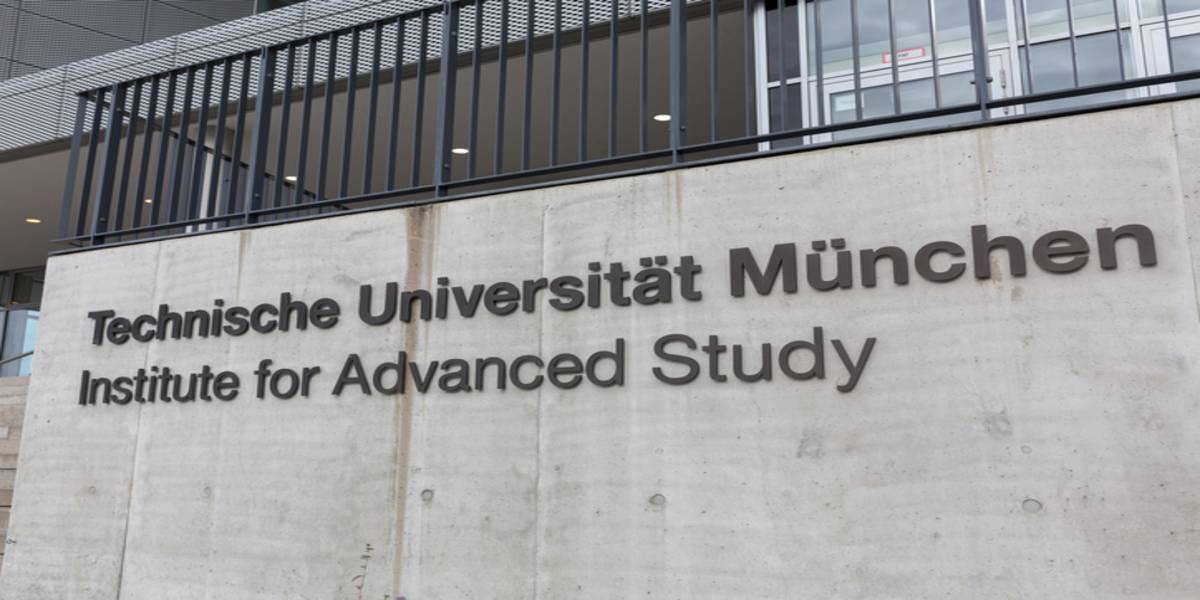
Technical University of Munich (TUM) charges tuition fees for newly enrolled students from non-EU/EEA countries in Bachelor's and Master's programmes.
At TUM, Bachelor's tuition fees are generally €2,000 or €3,000 per semester, while Master's tuition fees are generally €4,000 or €6,000 per semester. The exact amount depends on the degree programme. Students must also pay the applicable semester fee.
The tuition-fee policy began with the winter semester 2024/25 and continues to apply to newly enrolled non-EU students. Students who were already enrolled at TUM before winter semester 2024/25 and continue in the same degree programme are generally not subject to these fees. Several exemptions and waiver opportunities also exist.
This is an important point for Indian students: public university does not always mean zero tuition fees for every international student in Germany. Students should check the specific university, federal state and programme before calculating the total cost of study.
Is Germany Still Tuition-Free for Indian Students?
Not always. Many public universities in Germany continue to charge no general tuition fee for international students, although students normally pay semester contributions. However, there are important exceptions.
For example, TUM charges tuition fees to newly enrolled students from non-EU/EEA countries. Other German states or universities may also have specific tuition-fee rules for international students.
Therefore, Indian students applying for 2027 should check:
- Whether the university charges tuition fees to non-EU students
- Whether the specific programme has a separate fee
- The semester contribution
- Any state-level tuition-fee rules
- Available scholarships, exemptions or tuition waivers
Deutschlandticket Price Increases to €63 Per Month
The regular Deutschlandticket costs €63 per month from January 2026. It provides nationwide travel on local and regional public transport, including buses, trams, U-Bahn, S-Bahn, Regionalbahn and Regional-Express services in second class.
The ticket does not generally cover long-distance ICE, IC or EC trains.
The Deutschlandticket is a monthly subscription and can be cancelled according to the applicable monthly cancellation rules. Students should also check whether their university provides a discounted Deutschlandsemesterticket, because the student ticket is handled through the university and semester contribution system.
What Is the Deutschland-Semesterticket?
The Deutschland-Semesterticket allows participating students to use local and regional public transport nationwide at a discounted student rate. Unlike the regular Deutschlandticket, its price is incorporated into the semester contribution and can vary based on the applicable tariff rules.
Students planning for 2027 should therefore avoid using the older €29.40 monthly figure from the original version of this article. That figure relates to an earlier pricing period and is no longer the current general student-ticket price.
For the exact semester contribution, students should check the university's latest enrolment information before budgeting for their first semester.
Germany's Popularity Among Indian Students Is Rising
Germany continues to attract strong interest from Indian students, particularly those looking for specialised Master's programmes and career-oriented courses.
According to a July 2026 Business Standard report, applications from Indian students to Germany increased by 370% year-on-year during the first half of 2026. Demand for Master's programmes in Artificial Intelligence reportedly increased by 600%, while interest in Computer Science programmes increased by 273% and applications for programmes combining Data Science and Artificial Intelligence increased by 173%.
The same report found that 82% of Germany applications during the first half of 2026 were for postgraduate programmes. The figures suggest that Indian students are increasingly evaluating Germany based on employability, return on investment, post-study opportunities and specialised technical programmes rather than tuition cost alone.
For students planning the 2027 intake, this also means competition for popular programmes can be significant. Choosing a programme that matches your academic background, meeting the admission requirements and applying before the deadline are increasingly important.
Top German Universities Continue to Perform Strongly in Global Rankings
Germany continues to have several universities among the world's highly ranked institutions. In the QS World University Rankings 2027, four German universities were placed among the global top 100.
| University | QS World University Ranking 2027 |
|---|---|
| Technical University of Munich (TUM) | 25 |
| Ludwig Maximilians University Munich (LMU) | 61 |
| Heidelberg University | 86 |
| Free University of Berlin | 98 |
| RWTH Aachen University | 104 |
The QS 2027 ranking places TUM at 25 globally, LMU at 61, Heidelberg at 86 and Freie Universität Berlin at 98. RWTH Aachen is ranked 104 globally.
However, Indian students should not choose a German university based only on its global ranking. Course curriculum, language of instruction, tuition fees, admission requirements, location, living costs, research opportunities and career prospects should also be considered before applying.
What Should Indian Students Do Differently for the Germany 2027 Intake?
Students planning to start their studies in Germany in 2027 should begin preparing earlier because several parts of the application process now require closer attention.
- Check APS requirements early: Master's applicants from Engineering, Commerce/Accounting/Finance/Economics and Business/Management backgrounds should check whether the dMAT applies to their previous degree.
- Check undergraduate eligibility: Students applying for Bachelor's programmes should verify whether they meet the 70% Class XII requirement and which admission pathway applies to them.
- Budget beyond tuition: Do not calculate your budget using tuition fees alone. Include the blocked account, accommodation, health insurance, semester contribution, transport and daily expenses.
- Check university-specific fees: Public university status does not automatically mean that every international student pays zero tuition.
- Prepare for higher living and transport costs: The €63 Deutschlandticket and higher general costs should be included in your financial planning.
- Do not depend entirely on part-time work: A student job can supplement your income, but you should not plan your visa finances on the assumption that you will immediately find employment in Germany.
- Check official information before applying: Visa, APS, university and financial requirements can change, so students should verify the rules applicable to their intake and application date.
Germany 2027 Intake: What Indian Students Need to Remember
The Germany 2027 intake is not simply a continuation of old rules. Indian students now need to consider updated APS procedures, higher financial requirements than earlier years, revised undergraduate eligibility criteria, increased minimum wages and changing transport costs.
For Master's applicants from the affected academic fields, the dMAT is one of the most important new requirements because it forms part of the APS documentation for the Summer Semester 2027 intake and later intakes. For undergraduate applicants, the 70% Class XII requirement is already relevant for admissions from Winter Semester 2026/27 onwards.
At the same time, students can benefit from the higher statutory minimum wage, with Germany's minimum wage scheduled to reach €14.60 per hour from January 2027. However, the cost of living and transportation should also be factored into the overall budget.
Germany remains an attractive destination for Indian students because of its strong universities, research opportunities and career prospects. But for the 2027 intake, students should make decisions based on the latest programme-specific, APS and visa requirements rather than relying on the older idea that studying in Germany is automatically tuition-free or that the application process is unchanged.
Must-Know Changes for International Students in Germany FAQs

Commonly asked questions
The winter intake in Germany is the major one. All top universities of Germany are available and accepting applications during this intake.
For many German universities applications for the winter semester generally run from early May to July 15. However, this is not a universal deadline. Students must check the exact deadline of their chosen university and programme.
Yes. For a tuition-free public university in an affordable German city - INR 20 Lakhs is generally sufficient to comfortably cover your first year of living expenses and setup costs. However it is not enough on its own for a full two-year degree unless you supplement it with part-time work or secure additional funding for your second year.
No. An Indian Affidavit of Support does not replace a blocked account or official Declaration of Commitment for the German student visa.
 Statement of Purpose
 Letter of Recommendation
 Student Visa Application
 Admission Essay Writing
 Student Curriculum Vitae
Study Abroad Expert | Education Writer | International Admissions Specialist
Raushan Kumar is a Study Abroad Expert and Education Writer with over 6.5 years of experience in international higher education and educat
Read Full Bio