
Best 10 Universities in Germany in 2027 - Rankings, Courses & Fees
 Talk to Expert

Looking for universities in Germany? The QS World University Rankings 2027 feature 60 German universities, with Technical University of Munich (TUM) ranked 25th globally, making it Germany’s highest-ranked university in this edition. Rankings are one factor to consider; tuition fees, course fit, language requirements and living costs also matter.
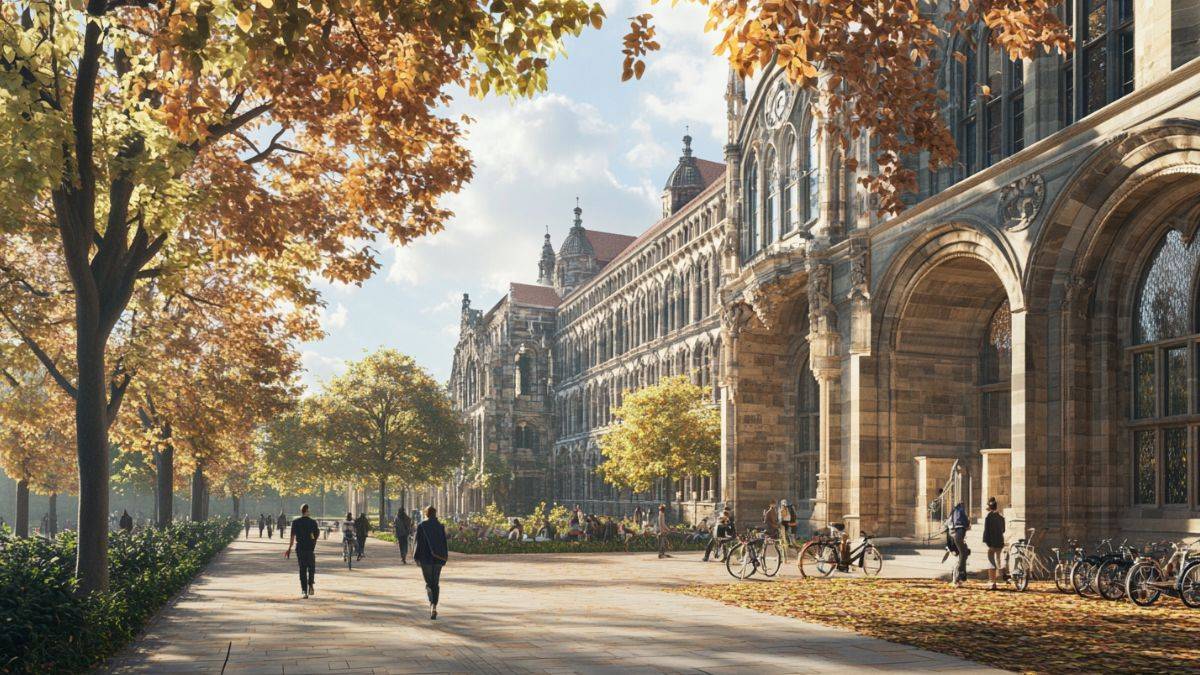
Top Public Universities in Germany 2027: Germany has many public universities with strong teaching and research in engineering, computer science, business, medicine and natural sciences. According to the QS World University Rankings 2027, 60 German institutions appear in the ranking. This guide uses the QS 2027 global ranking edition and was updated on 26 October 2026.
Many public universities in Germany do not charge general tuition fees for many standard degree programmes. However, exceptions apply: Baden-Württemberg generally charges eligible non-EU/EEA students €1,500 per semester, and TUM charges tuition for many non-EU/EEA bachelor’s and master’s programmes. Students also pay a semester contribution. Explore universities in Germany and engineering courses in Germany to compare options.
In this article, you will find the top public universities in Germany, their latest QS World University Rankings 2027, popular courses, tuition fee details, and why these universities are preferred by international students.
- Top 10 Universities in Germany for International Students
- Tuition Fees and Semester Contribution at Public Universities in Germany
- Admission Requirements for Universities in Germany
- Living Costs for Students in Germany
- Scholarships for International Students in Germany
- Best Public Universities in Germany for Master's Degrees
- Best Public Universities in Germany for Engineering
- Best 10 Universities in Germany FAQs

Top 10 Universities in Germany for International Students
If you are planning to study in Germany, choosing the right university is one of the most important decisions. Germany is home to some of the world's leading public universities, known for their excellent academic standards, research opportunities, and strong industry connections. Many public universities charge no general tuition for many standard programmes, but non-EU/EEA tuition fees apply at some universities and in some states.
Public universities in Germany offer a wide range of undergraduate and postgraduate programmes in fields such as engineering, computer science, business, medicine, natural sciences, and humanities. Graduates from these institutions are highly valued by employers worldwide, and many universities have strong partnerships with leading global companies, creating excellent career opportunities after graduation.
The table below lists the top 10 public universities in Germany based on the QS World University Rankings 2027, with the 2026 edition included for comparison. QS global ranks are not subject rankings; compare the course itself before applying.
| Public Universities in Germany | QS World University Rankings 2027 | QS World University Rankings 2026 |
|---|---|---|
| Technical University of Munich (TUM) | 25 | 22 |
| Ludwig Maximilian University of Munich (LMU Munich) | 61 | 58 |
| Heidelberg University | 86 | 80 |
| Free University of Berlin | 98 | 88 |
| RWTH Aachen University (TU9) | 104 | 105 |
| Karlsruhe Institute of Technology (KIT) | 110 | 98 |
| Humboldt University of Berlin | 140 | 130 |
| Technical University of Berlin (TU Berlin) | 158 | 145 |
| Technical University of Dresden | 185 | 218 |
| University of Bonn | 209 | 205 |
Check your fit for these universities: Compare the course language, subject requirements, tuition fees, semester contribution, scholarships and city living costs before shortlisting. Explore universities in Germany, engineering universities and top MS universities in Germany.
Know more about the universities in detail, here:
Technical University of Munich (TUM)
The Technical University of Munich is amongst the best universities in Europe having three campuses in Garching, Freising-Weihenstephan, and Munich. The academic faculties of the university are divided into three campuses. The main campus in Munich includes the departments of Architecture, Information Technology and Electrical Engineering, Civil Engineering, Economics, Medicine, and Social Sciences. The second campus is situated in Garching which houses faculties of Chemistry, Physics, Mechanical Engineering, Informatics, and Mathematics. The third campus is situated in Weihenstephan which is just 35 km north of Munich that is home to a number of faculties including Agriculture Science and Horticulture, Biology, Forestry and Resource Management, Nutrition, Landscape Planning and Architecture, and Food Technology.
Technical University of Munich - Courses
| Courses |
Duration |
Tuition Fee per Semester (2027/28 non-EU/EEA intake) |
|---|---|---|
| BE/BTech |
3 Years |
For non-EU/EEA students starting in winter 2027/28: usually €2,300 or €3,400 per semester; exact programme fee applies |
| MS |
24 Months |
For non-EU/EEA students starting in winter 2027/28: usually €4,600 or €6,800 per semester; exact programme fee applies |
| MBA |
24 Months |
Programme-specific; confirm the current fee on the official course page. |
| MArch |
2 Years |
Programme-specific fee; many non-EU/EEA degree programmes have tuition fees. Check the official course page. |
| MIM |
2 Years |
Programme-specific fee; many non-EU/EEA degree programmes have tuition fees. Check the official course page. |
For TUM, tuition depends on the exact degree programme. The university has announced higher rates for new non-EU/EEA students starting in winter semester 2027/28. Check the official TUM tuition-fee page and the course details before applying.
Ludwig Maximilians University Munich (LMU)
Established in 1472, Ludwig Maximilian University also known as the University of Munich is an open research university that is associated with LERU, Europaeum, and the German Excellence Universities. The major faculties at the university include the Faculty of Law, Faculty of Economics, Faculty of Business Administration, Faculty of Theology, Faculty of Social Sciences, Faculty of History, Faculty of Educational Sciences, and the Faculty of Language and Literature.
These faculties are built within the premises and have a well-maintained academic structure and experienced faculty members that provides students with ample knowledge. Some well-known subjects of the university are Physics, Psychology, Management, and Business among several others.
Ludwig Maximilians University Munich - Courses
| Courses |
Duration |
1st Year Tuition Fees |
|---|---|---|
| MBA |
24 Months |
Many standard degree programmes have no general tuition fee; check the specific course page and semester contribution. |
| BE/BTech |
3 Years |
No tuition fees |
| BBA |
3 Years |
No tuition fees |
| MIM |
2 Years |
No tuition fees |
| MS |
24 Months |
No tuition fees |
| BSc |
3 Years |
No tuition fees |
Heidelberg University
Heidelberg University is an open research university and Germany’s oldest university, founded in 1386. As a public university, Heidelberg does not charge general tuition to every student. However, non-EU/EEA students with a foreign university entrance qualification generally pay €1,500 per semester for bachelor's, state examination and consecutive master's programmes, subject to legal exemptions. A semester fee is charged separately. Many bachelor’s programmes are taught in German, while selected master’s programmes are available in English. Check the language of instruction for each course.
Heidelberg University offers undergraduate degree programs, postgraduate degree programs, and doctoral-level programs for students to pursue. The university offers courses in twelve subjects including, Behavioral and Cultural Studies, Philosophy, Modern Languages, Economics and Social Sciences, Biosciences, Physics and Astronomy, Chemistry and Earth Sciences, Math and Computer science, Theology, Law, and two medical faculties.
Heidelberg University - Courses
| Courses |
Duration |
Tuition Fee (per semester, where applicable) |
|---|---|---|
| BE/BTech |
3 Years |
€1,500 per semester for eligible non-EU/EEA students (about INR 1.59 lakh per semester or INR 3.19 lakh for two semesters), plus semester contribution; exemptions apply. |
| MS |
12 - 24 Months |
INR 0 - 9.9L |
| MIM |
2 Years |
€1,500 per semester for eligible non-EU/EEA students, plus semester contribution; exemptions and course-specific rules apply. |
| BSc |
3 Years |
€1,500 per semester for eligible non-EU/EEA students, plus semester contribution; exemptions and course-specific rules apply. |
Humboldt University of Berlin
Established in 1810, Humboldt University of Berlin had a humble beginning with four faculties including medicine, law, theology, and philosophy. The university started operating with just 256 students and 52 staff members. Currently, the university has nine faculties, three central institutes, five central units, and nine interdisciplinary centres.
The research-intensive Humboldt University of Berlin offers 189-degree courses in various fields of education like agriculture, biology, biophysics, business, chemistry, computer science, mathematics, economics, horticulture, theology, management, psychology, medicine, social sciences, and sports. Students are provided with excellent information, counselling services, and job and internship opportunities.
Humboldt University of Berlin - Courses
| Courses |
Duration |
1st Year Tuition Fees |
|---|---|---|
| MS |
2 Years |
No tuition fees |
| BE/BTech |
3 Years |
No tuition fees |
| BSc |
3 Years |
No tuition fees |
| BBA |
3 Years |
No tuition fees |
| MIM |
2 Years |
No tuition fees |
Free University of Berlin (FU)
Established in 1948, the Free University of Berlin was formed by students and professors. The initiative was to incorporate a free university and was strongly supported by the masses and gained plenty of financial aid. The university holds membership in various prestigious international and national organizations like the European Universities Association (EUA) and the Network of Universities from the Capitals of Europe (UNICA).
Currently, the university has 11 academic departments, four multidisciplinary central institutes, and a joint medical school with Humboldt University of Berlin. The university offers 52 doctoral, 105 graduate, and 73 undergraduate degree programs in various fields like social sciences, biology, chemistry, physics, medicine, pharmacy, mathematics, languages, cultural studies, law, economics, business, and arts. The Free University of Berlin provides students with outstanding internship and job opportunities through the tie-ups it has developed with well-established firms over the years.
Free University of Berlin - Courses
| Courses |
Duration |
1st Year Tuition Fees |
|---|---|---|
| BBA |
3 Years |
No tuition fees |
| BE/BTech |
3 Years |
No tuition fees |
| MIM |
2 Years |
No tuition fees |
| BSc |
3 Years |
No tuition fees |
| MS |
12 - 24 Months |
No tuition fees |
Karlsruhe Institute of Technology (KIT)
Established in 1825, Karlsruhe Institute of Technology (KIT) is one of the largest scientific institutions in Europe, the only German university of excellence with national large-scale research that combines a long university tradition with program-oriented cutting-edge research.
At KIT, more than 5,000 scientists work across natural sciences, engineering, economics, humanities and social sciences. Non-EU/EEA degree-seeking students generally pay €1,500 in tuition per semester, plus the semester contribution; exceptions apply. Regardless of whether scientists come from the large-scale research section or from the university world, they participate in teaching so that students studying at KIT receive rare insights into the scientific world.
Karlsruhe Institute of Technology (KIT) - Courses
| Courses |
Duration |
Tuition Fee (per semester) |
|---|---|---|
| MS |
2 Years |
Generally €1,500 per semester for non-EU/EEA degree-seeking students (about INR 1.59 lakh per semester or INR 3.19 lakh for two semesters), plus semester charges. Programme-specific exceptions may apply. |
| MIM |
2 Years |
Check the exact programme page. The general non-EU/EEA tuition fee is €1,500 per semester; continuing-education programmes may charge separate fees. |
RWTH Aachen University (RWTH)
Established in 1870, the RWTH Aachen University is an open research university and is considered among the top technological universities in Germany. The university offers undergraduate degree programs, postgraduate degree programs, and doctoral-level programs.
It includes a number of subjects that are categorized into nine faculties, namely the Faculty of Arts and Humanities, Faculty of Architecture, Faculty of Civil Engineering, Faculty of Mathematics and Computer Sciences, Faculty of Mechanical Engineering, Faculty of Medicine, Faculty of Business and Economics, Faculty of Geo-resources and the Faculty of Electrical Engineering.
RWTH Aachen University (RWTH) - Courses
| Courses |
Duration |
1st Year Tuition Fees |
|---|---|---|
| MIM |
2 Years |
No tuition fees |
| MS |
18 - 24 Months |
INR 0 - 15.6L |
| BSc |
3 Years |
No tuition fees |
| BE/B.Tech |
3 Years |
No tuition fees |
Technical University of Berlin (TUB)
The Technical University of Berlin is a prestigious research institution in Berlin, Germany. In the year 1879, it was founded and later recognized as one of the most distinguished universities in Europe. The Technical University of Berlin is popular for its engineering programs in the field of computer science, economics and management, mathematics, planning, human sciences, process science, and mechanical engineering.
These seven faculties offer varied courses that include 40 Bachelor's programs and 60 Master's programs for the students to choose from. Apart from this, the university also promotes and gives importance to entrepreneurship and start-ups in science and other subjects of importance.
Technical University of Berlin - Courses
| Courses |
Duration |
1st Year Tuition Fees |
|---|---|---|
| BE/BTech |
3 Years |
No tuition fees |
| MS |
18 - 24 Months |
No tuition fees |
| BBA |
3 - 3.5 Years |
No tuition fees |
| MArch |
2 Years |
No tuition fees |
| MIM |
2 Years |
No tuition fees |
| BSc |
3 Years |
No tuition fees |
| MA |
2 Years |
No tuition fees |
Dresden University of Technology (TUD)
Established in 1828, Dresden University of Technology is a centre for academic excellence in Germany. This prestigious university is a public research university that has its origin in the Royal Saxon Technical School and bridges technical education with humanities. Dresden focuses on interdisciplinary approaches and offers varieties of courses at undergraduate, postgraduate, and certificate levels. The university maintains world-class infrastructure including hi-tech laboratories, art studios, computer labs, and libraries offering research-driven education.
Dresden University of Technology (TUD) - Courses
| Courses | Duration | 1st Year Tuition Fees |
|---|---|---|
| MS | 24 Months | INR 0 - 2.6L |
University of Tuebingen
Established in 1477, the University of Tuebingen is one of the oldest universities in Germany, Tuebingen is acknowledged globally for its research-oriented learning system. The core faculties of the University of Tuebingen include Protestant Theology, Catholic Theology, Law, Medicine, Humanities, Economics and Social Sciences, and Science.
Apart from these, there are several interfaculty institutes in the university such as the Interfaculty Institute for Cell Biology, Interfaculty Institute of Microbiology and Infection Medicine, Interfaculty Institute of Biochemistry, and Inter-faculty Centre for Archaeology. The University of Tuebingen maintains state-of-the-art infrastructure for offering best-in-class education. The hi-tech laboratories, libraries, art studios, and IT centres on the campus constitute the most suitable environment for research and innovation.
University of Tuebingen - Courses
| Courses | Duration | 1st Year Tuition Fees |
|---|---|---|
| MIM | 2 Years | No tuition fees |
| MS | 1 - 2 Years | No tuition fees |
Albert Ludwigs University of Freiburg
Founded in 1457, Albert Ludwig University of Freiburg was first set up in Freiburg Cathedral as the 'Albertina'. Initially, the university was established as a comprehensive university with four faculties, including law, theology, medicine, and philosophy. The university was founded to educate young administrators and theologists and the lessons took place in Latin. Currently, the university has 11 faculties and 18 research centers, where the instruction and research take place.
The university has three large campuses and other buildings across Freiburg. The three campuses include the University Centre, located near the historical city Centre, the engineering campus, and the institute quarter. The University Centre also houses Jugendstil Kollegiengebäude I, the old and the current university library, and the university church.
Albert Ludwigs University of Freiburg - Courses
| Courses | Duration | 1st Year Tuition Fees |
|---|---|---|
| BE/BTech | 3 Years | No tuition fees |
| MS | 2 Years | No tuition fees |
| MIM | 2 Years | No tuition fees |
| BBA | 3 Years | No tuition fees |
Fee information checked in October 2026 against official university and DAAD pages. Course-specific fees can change by programme and intake. INR equivalents in this article use the latest European Central Bank reference rate available on 26 October 2026: €1 = ₹106.272 (October 2026)
Tuition Fees and Semester Contribution at Public Universities in Germany
Public universities in Germany do not follow one national tuition-fee rule. Many charge no general tuition for standard bachelor’s and consecutive master’s degrees, but students still pay a semester contribution. Some states and universities charge tuition to non-EU/EEA students. Always check the official fee page for your exact programme and start semester.
| University or fee type | Tuition for non-EU/EEA students | Other mandatory contribution |
|---|---|---|
| Technical University of Munich (TUM) | For winter semester 2027/28 entrants, usually €2,300 or €3,400 per semester for bachelor’s programmes and €4,600 or €6,800 per semester for master’s programmes. The exact amount depends on the programme. | Semester fee applies in addition. |
| Heidelberg University | Generally €1,500 per semester for non-EU/EEA students with a foreign university entrance qualification in bachelor’s, state examination and consecutive master’s programmes, subject to exemptions. | €189.80 per semester for winter semester 2026/27. |
| Karlsruhe Institute of Technology (KIT) | Generally €1,500 per semester for non-EU/EEA degree-seeking students, subject to exemptions. | Current listed standard charges total €184 per semester (€80 administration, €92 student services and €12 student union). |
| Other public universities | Often no general tuition for many standard programmes, but exceptions include Baden-Württemberg and some Bavarian universities/programmes. | Usually €70–€430 per semester, depending on institution and services included. |
INR guide: using €1 = ₹106.272, €1,500 is approximately ₹1.59 lakh per semester (₹3.19 lakh for two semesters), excluding semester contributions.
Admission Requirements for Universities in Germany
Admission requirements vary by university, degree level and course. Before applying, check whether your school-leaving certificate or previous degree is recognised as a German higher education entrance qualification. Some applicants may need to complete prior university study in their home country or attend a Studienkolleg and pass the assessment examination.
- Academic eligibility: A recognised school-leaving qualification for bachelor’s admission or a relevant bachelor’s degree for master’s admission. Subject prerequisites and grade requirements vary.
- Language proficiency: German-taught programmes often require German proficiency, commonly at least B2 but sometimes higher. English-taught programmes require accepted proof of English proficiency if the university asks for it.
- Documents: Usually include academic transcripts, certificates, passport, CV and course-specific documents. A motivation letter, references, portfolio or test scores may also be required.
- Application route: Apply through the university portal or uni-assist where required. Check the course’s own deadline rather than assuming one national deadline.
Use the DAAD requirements overview and DAAD admission database for guidance. The university makes the final admission decision.
Living Costs for Students in Germany
The DAAD estimates that students generally need about €900–€1,200 per month, depending on the city and lifestyle. Rent is usually the largest living expense in Germany. Health insurance, food, transport, study materials, phone and personal costs should also be included in the budget. This estimate is separate from tuition fees and the semester contribution.
For visa planning, students should check the latest official proof-of-funds requirement with the German mission responsible for their application. The required amount can differ from a general living-cost estimate and may be updated.
Source: DAAD: Costs of education and living
Scholarships for International Students in Germany
Scholarships may be offered by universities, German foundations, government programmes and organisations in students’ home countries. Eligibility can depend on academic results, study level, subject, nationality, financial need or extracurricular work. Do not assume that a scholarship covers every cost; check whether it pays tuition, living expenses, travel or only a one-time grant.
- DAAD scholarships: Search the DAAD scholarship information and official scholarship database by country, study level and subject.
- University funding: Check each university’s official scholarship and tuition-waiver pages. TUM, for example, lists tuition-fee relief options for eligible international students.
- Home-country funding: Check government and education-funding schemes in your home country, including their current eligibility rules and deadlines.
Scholarships are competitive and some applications close before the university admission deadline. Confirm current availability directly with the funding provider.
Predict your IELTS, TOEFL, and PTE in just 4 steps!
Best Public Universities in Germany for Master's Degrees
Germany is one of the most popular destinations for master's studies because of its affordable education, globally recognised degrees, and strong employment prospects. Most public universities offer research-based master's programmes in English, especially in engineering, computer science, business, natural sciences, and data science.
Some of the best public universities for master's programmes include:
- Technical University of Munich (TUM)
- Ludwig Maximilian University of Munich (LMU Munich)
- RWTH Aachen University
- Heidelberg University
- University of Bonn
- Karlsruhe Institute of Technology (KIT)
- Technical University of Berlin
- University of Freiburg
If you are planning postgraduate studies, you can also explore the top MS universities in Germany to compare courses, tuition fees, admission requirements, and scholarships.
Best Public Universities in Germany for Engineering
Germany is recognised worldwide for engineering education and innovation. Public universities work closely with industries such as automotive, manufacturing, robotics, aerospace, and artificial intelligence, giving students valuable practical exposure alongside classroom learning.
The following universities are among the best choices for engineering programmes:
- Technical University of Munich (TUM)
- RWTH Aachen University
- Karlsruhe Institute of Technology (KIT)
- Technical University of Berlin
- Technical University of Dresden
- University of Stuttgart
- University of Bonn
- Heidelberg University
Students interested in engineering courses can also compare the best engineering universities in Germany based on specialisations, rankings, admission criteria, and tuition fees.
Best 10 Universities in Germany FAQs

Commonly asked questions
TUM is ranked 25th globally in the QS Rankings 2027 and is the highest-ranked German university in this edition.
Yes! Germany is one of the popular study destinations in the world where most of the Indian students are studying. Low or no tuition fees in German universities are the key reasons to attract international students.
The ranking of top universities in Germany can be check in the ofiicial website of Shiksha, Top Universities and Colleges in Germany.
It is a top choice. You learn in advanced labs with very low fees. Since Germany is home to the Bundeskriminalamt (BKA), the training is world-class and very respected by global employers.
 Statement of Purpose
 Letter of Recommendation
 Student Visa Application
 Admission Essay Writing
 Student Curriculum Vitae