

Chemistry
Get insights from 6.9k questions on Chemistry, answered by students, alumni, and experts. You may also ask and answer any question you like about Chemistry
Follow Ask QuestionQuestions
Discussions
Active Users
Followers
New answer posted
a year ago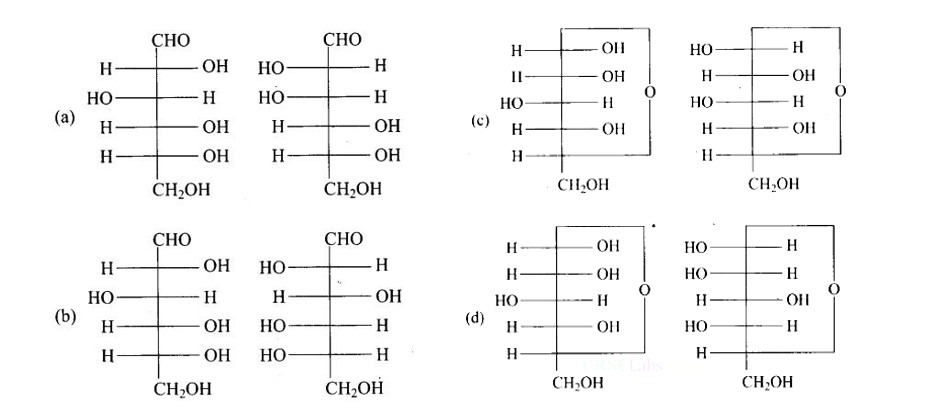
Contributor-Level 10
This is a Multiple Answer Type Questions as classified in NCERT Exemplar
The configuration of different anomers at C-I is distinct. It is known as the form if the hydroxyl group (-OH) is present on the right side of anomeric carbon, and it is known as the? form if the hydroxyl group is present on the left side. As a result, option (c) represents anomers among all the supplied pairs.
Correct option is c.
New answer posted
a year agoContributor-Level 10
This is a Multiple Answer Type Questions as classified in NCERT Exemplar
Sucrose is a disaccharide (sometimes known as cane sugar). One molecule of glucose and one molecule of fructose are produced when sucrose is digested. The reaction is depicted in the diagram below.

Correct option is c.
New answer posted
a year agoContributor-Level 10
This is a multiple choice answer as classified in NCERT Exemplar
(a) Tranquilizers are neurologically active drugs. Some tranquilizers are antidepressants and the functions by inhibiting the enzymes which catalyse the degradation of noradrenaline.
If the enzyme is inhibited, the neurotransmitter noradrenaline is slowly metabolized and can thus activate the receptor for longer periods there by counteracting the effect of depression. Tranquilizers form an essential component of sleeping pills.
New answer posted
a year agoContributor-Level 10
This is a Multiple Answer Type Questions as classified in NCERT Exemplar
Ans: The Correct option is b. In humans and animals, glycogen is mostly synthesized and stored in the liver and skeletal muscle cells. Glycogen accounts for around 5-6% of the liver's fresh weight, and an adult liver weighing 1.5kg can store approximately 100-120 gms of glycogen.
New answer posted
a year agoContributor-Level 10
This is a multiple choice answer as classified in NCERT Exemplar
(c) The most useful classification of drugs for medicinal chemists. It is on the basis of molecular targets. Target molecules are usually biomolecules like carbohydrates, lipids, proteins and nucleic acids. These drugs possess some common structural features, may have the same mechanism of action on a specific drug target.
New question posted
a year agoNew answer posted
a year agoContributor-Level 10
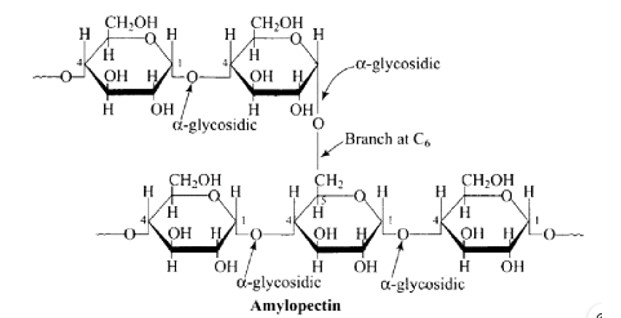
This is a Multiple Answer Type Questions as classified in NCERT Exemplar
The Correct option is b Glycogen resembles amylopectin in structure. It's a ? −D− glucose unit branched chain polymer with C1−C4 glycosidic linkage and C1−C6 glycosidic linkage branching. The structure of amylopectin is depicted in the diagram below.
New answer posted
a year agoContributor-Level 10
This is a multiple choice answer as classified in NCERT Exemplar
(a) Aspirin inhibits the synthesis of compounds known as prostaglandins which stimulate inflammation in the tissues and cause pain. So, it is effective in relieving pain.
Aspirin has many other effects such as reducing fever (antipyretic) and preventing blood platelet coagulation. Because of this anti-blood clotting action, it is widely used to prevent heart.attacks. It does not make a person addictive as it is non-narcotic drug.
New answer posted
a year agoContributor-Level 10
This is a multiple choice answer as classified in NCERT Exemplar
(c) Birth control pills contain a mixture of estrogen and progesterone derivatives. Both of these are sex hormones. Progesterone suppresses ovulation and estrogen control the menstrual cycle.
New answer posted
a year agoContributor-Level 10
This is a multiple choice answer as classified in NCERT Exemplar
(d) Antiseptics are applied to the living tissues such as wounds, cuts and diseased skin surfaces. Antiseptic medicines such as antibiotics cannot be ingested.
Taking an Exam? Selecting a College?
Get authentic answers from experts, students and alumni that you won't find anywhere else
Sign Up on ShikshaOn Shiksha, get access to
- 67k Colleges
- 1.2k Exams
- 717k Reviews
- 1850k Answers