
Ncert Solutions Maths class 12th
Get insights from 2.5k questions on Ncert Solutions Maths class 12th, answered by students, alumni, and experts. You may also ask and answer any question you like about Ncert Solutions Maths class 12th
- 2.5k
Questions
- 0
Discussions
- 0
Active Users
- 65
Followers
Have a question about Ncert Solutions Maths class 12th? Ask our experts
Keep it short & simple. Type complete word. Avoid abusive language.
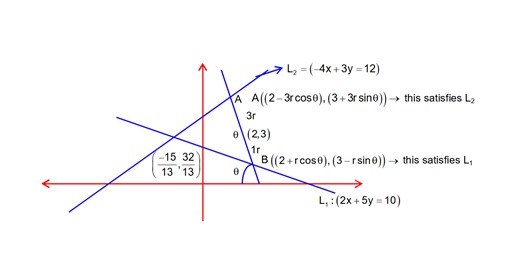
Let a triangle be bounded by the lines L1 : 2x + 5y = 10; L2 : -4x + 3y = 12 and the line L3, which passes through the point P(2, 3), intersects L2 at A and L1 at B. If the point P divides the line-segment AB, internally in the nation 1 :3, then the area of the triangle is equal to:
Let a triangle be bounded by the lines L1 : 2x + 5y = 10; L2 : -4x + 3y = 12 and the line L3, which passes through the point P(2, 3), intersects L2 at A and L1 at B. If the point P divides the line-segment AB, internally in the nation 1 :3, then the area of the triangle is equal to:
Let the lope of the tangent to a curve y = f(x) at (x,y) be given by 2 tan x (cos x – y). If the curve passes through the point then the value of <!-- [if gte mso 9]><xml>
Let the lope of the tangent to a curve y = f(x) at (x,y) be given by 2 tan x (cos x – y). If the curve passes through the point then the value of <!-- [if gte mso 9]><xml>
Solution y sec2x =
y sec2 x = 2sec x + c
y = 2 cos x + c cos2x passes C =
y = 2 cos x
 Upvote

Let f : R® R be a continuous function satisfying f(x) + f(x + k) = n, for all x <!-- [if gte mso 9]><xml>
Let f : R® R be a continuous function satisfying f(x) + f(x + k) = n, for all x <!-- [if gte mso 9]><xml>
Replace x by x + k.
From (i) & (ii), f(x + 2k) = f(x).
is periodic with period = 2k.
put x = t + k
&
Upvote Let f, g : R ® R be functions defined by
<!-- [if gte mso 9]><xml>
where [x] denote the greatest integer less than or equal to x. Then, the function fog is discontinuous at exactly:
Let f, g : R ® R be functions defined by
<!-- [if gte mso 9]><xml>
where [x] denote the greatest integer less than or equal to x. Then, the function fog is discontinuous at exactly:
fog
Not possible as of inequalities give
ex – x < 0, x < 0 (x – 1)2 – 1 < 0
Not possible (x – 1 + 1)(x – 1 – 1) < 0
(x)(x – 2) < 0
x
continuous x < 0
Discontinuous at
Upvote Let f(x) and g(x) be two real polynomials of degree 2 and 1 respectively. If and then the value of f(2) + g(2) is
Let f(x) and g(x) be two real polynomials of degree 2 and 1 respectively. If and then the value of f(2) + g(2) is
g (x) = px + q
Compare 8 = ap2 …………… (i)
-2 = a (2pq) + bp
0 = aq2 + bq + c
? 4x2 + 6x + 1 = apx2 + bpx + cp + q
? An
Upvote Let f and g be twice differentiable even functions on (2, 2) such that and
Then, the minimum number of solutions of is equal to
Let f and g be twice differentiable even functions on (2, 2) such that and
Then, the minimum number of solutions of is equal to
f (x) is an even function
So, f (x) has at least four roots in (-2, 2)
So, g (x) has at least two roots in (2, 2)
now number of roots of f (x)
It is same as number of roots of will have atleast 4 roots in (2, 2)
Upvote Let y = y(x), x > 1, be the solution of the differential equation
If y(3) = , then the value of α+β is equal to
Let y = y(x), x > 1, be the solution of the differential equation
If y(3) = , then the value of α+β is equal to
Let be a vector such that Then, the value of is equal to
Let be a vector such that Then, the value of is equal to
Let A, B, C be three points whose position vectors respectively are
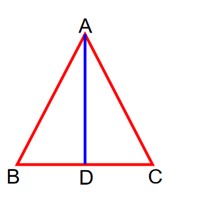
If is the smallest positive integer for which are noncollinear, then the length of the median, in through A is
Let A, B, C be three points whose position vectors respectively are
If is the smallest positive integer for which are noncollinear, then the length of the median, in through A is
Mid point of BC is
For = 1, and will be collinear. So for non collinearity
= 2
 Upvote