
Alternating Current Overview
Get insights from 72 questions on Alternating Current Overview, answered by students, alumni, and experts. You may also ask and answer any question you like about Alternating Current Overview
- 72
Questions
- 0
Discussions
- 0
Active Users
- 0
Followers
Have a question about Alternating Current Overview? Ask our experts
Keep it short & simple. Type complete word. Avoid abusive language.
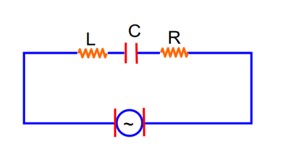
A sinusoidal voltage V(t) = 210 sin3000 t volt is applied to a series LCR circuit in which L = 10 mH, C = 25 <!-- [if gte mso 9]><xml>
A sinusoidal voltage V(t) = 210 sin3000 t volt is applied to a series LCR circuit in which L = 10 mH, C = 25 <!-- [if gte mso 9]><xml>
V = 210 sin 3000 t
= 3000
 Upvote

To increase the resonant frequency in series LCR circuit,
To increase the resonant frequency in series LCR circuit,
Another capacitor should be added in series with the first capacitor.
Upvote An emf of is applied at time to a circuit containing in series inductor and resistor. The ratio of the currents at time and at is close to: (take
<!-- [if !supportLineBreakNewLine]-->
<!--[endif]-->
An emf of is applied at time to a circuit containing in series inductor and resistor. The ratio of the currents at time and at is close to: (take
<!-- [if !supportLineBreakNewLine]-->
<!--[endif]-->
At
at

Upvote A circuit element X when connected to an a.c. supply of peak voltage 100V given a peak current of 5A which is in phase with the voltage. A second element Y when connected to the same a.c. supply also gives the same value of peak current which lags behind the voltage by <!-- [if gte mso 9]><xml>
A circuit element X when connected to an a.c. supply of peak voltage 100V given a peak current of 5A which is in phase with the voltage. A second element Y when connected to the same a.c. supply also gives the same value of peak current which lags behind the voltage by <!-- [if gte mso 9]><xml>
The frequencies at which the current amplitude in an LCR series circuit becomes <!-- [if gte mso 9]><xml>
The frequencies at which the current amplitude in an LCR series circuit becomes <!-- [if gte mso 9]><xml>
at = 212 rad/s
= 232 rad/s
So,
= 250 mH
Upvote Statement – I : The reactance of an ac circuit is zero. It is possible that the circuit contains a capacitor and an inductor.
Statement – II : In ac circuit, the average power delivered by the source never becomes zero.
In the light of the above statements, choose the correct answer from the options given below
Statement – I : The reactance of an ac circuit is zero. It is possible that the circuit contains a capacitor and an inductor.
Statement – II : In ac circuit, the average power delivered by the source never becomes zero.
In the light of the above statements, choose the correct answer from the options given below
Z = if only L & C are present then R = 0 then p = 0
Upvote