
Ncert Solutions Maths class 11th
Get insights from 1.6k questions on Ncert Solutions Maths class 11th, answered by students, alumni, and experts. You may also ask and answer any question you like about Ncert Solutions Maths class 11th
- 1.6k
Questions
- 0
Discussions
- 0
Active Users
- 83
Followers
Have a question about Ncert Solutions Maths class 11th? Ask our experts
Keep it short & simple. Type complete word. Avoid abusive language.
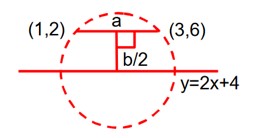
A rectangle R with end points of one of its sides as (1, 2) and (3, 6) is inscribed in a circle. If the equation of a diameter of the circle is 2x – y + 4 = 0, then the area of R is………….
A rectangle R with end points of one of its sides as (1, 2) and (3, 6) is inscribed in a circle. If the equation of a diameter of the circle is 2x – y + 4 = 0, then the area of R is………….
As slope of line joining (1, 2) and (3, 6) is 2 given diameter is parallel to side
 Upvote

If the sum of the first ten terms of the series
where m and n co-prime numbers, then m + n is equal to…….
If the sum of the first ten terms of the series
where m and n co-prime numbers, then m + n is equal to…….
Let
A1 = <!-- [if gte mso 9]><xml>
A2 = <!-- [if gte mso 9]><xml>
Let
A1 = <!-- [if gte mso 9]><xml>
A2 = <!-- [if gte mso 9]><xml>
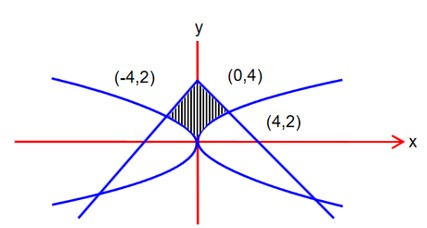
Required area (above x-axis)
and
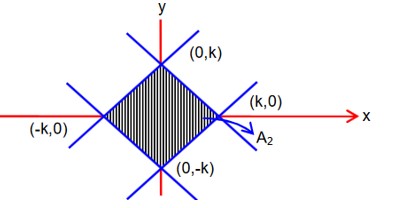
-> k = 6
for above x-axis.
Upvote If the coefficient of x10 in the binomial expansion of <!-- [if gte mso 9]><xml>
If the coefficient of x10 in the binomial expansion of <!-- [if gte mso 9]><xml>
for
->r = 24
k = 3 + exponent of 5 in 
=
= 3 + (12 + 2 – 4 – 0 – 7 – 1)
= 3 + 2 = 5
Upvote If the sum of all the roots of the equation is loge p, then p is equal to………….
If the sum of all the roots of the equation is loge p, then p is equal to………….
Let ex = t then equation reduces to
If roots of
&nb
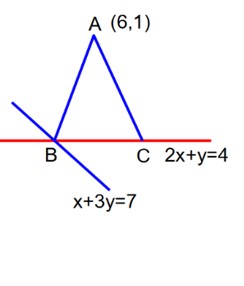
Upvote In an isosceles triangle ABC, the vertex A is (6, 1) and the equation of the base BC is 2x +y = 4. Let the point B lie on the line x + 3y = 7. If (a, b) is the centroid of <!-- [if gte mso 9]><xml>
In an isosceles triangle ABC, the vertex A is (6, 1) and the equation of the base BC is 2x +y = 4. Let the point B lie on the line x + 3y = 7. If (a, b) is the centroid of <!-- [if gte mso 9]><xml>
B (1, 2)
Let C (k, 4 – 2k)
Now AB2 = AC2
->5k2 – 24k + 19 = 0
Now 15 (a + b)
 Upvote
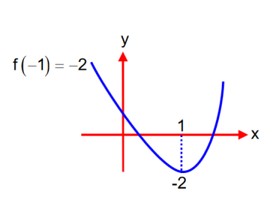
The number of distinct real roots of x4 – 4x + 1 = 0 is:
The number of distinct real roots of x4 – 4x + 1 = 0 is:
Let <!-- [if gte mso 9]><xml>
Let <!-- [if gte mso 9]><xml>
Short distance of (11,6)
=
= 13 – 5
= 8
Upvote If where a, b, c are in A.P. and <!-- [if gte mso 9]><xml>
If where a, b, c are in A.P. and <!-- [if gte mso 9]><xml>
Now,
a, b, c -> AP
1 – a, 1 – b, 1 – c -> AP
x, y, z -> HP
Upvote