

Chemistry
Get insights from 6.9k questions on Chemistry, answered by students, alumni, and experts. You may also ask and answer any question you like about Chemistry
Follow Ask QuestionQuestions
Discussions
Active Users
Followers
New answer posted
a year agoContributor-Level 10
Below 1683K, the melting point of silicon, the Δ fGo curve for the formation of SiO2 lies above the Δ fGo curve for MgO, so, at temperature below 1683 K, Mg can reduce SiO2. On the other hand, above 1683 K, the ΔfGo curve for MgO lies above ΔfGo curve for SiO2. Hence, at a temperature above 1683 K, Si can reduce MgO to Mg.

New answer posted
a year agoContributor-Level 10
The reaction,
Cr2O3 + 2 Al → Al2 O3 + 2 Cr (ΔG0 = – 421 kJ)
Is thermodynamically feasible as is apparent from Gibbs energy value. The change in Gibbs free energy is
related to the equilibrium constant, k as
ΔG = - RT ln K
A certain amount of energy activation is required even for such reactions which are thermodynamically feasible, therefore heating is required.
ΔG = ΔH + S
Increasing the temperature increases the value of TΔS, making the value of ΔG more and more negative.
Therefore, the reaction becomes more and more feasible as the temperature is increased.
New answer posted
a year agoContributor-Level 10
7.45
Nitrogen has a smaller size than Bismuth, because on going down the group the atomic size increases
i.e. N

Due to smaller size, there is very high electron density around Nitrogen as compared to Bismuth. Therefore, nitrogen atom can easily release electrons. And, we know higher the electron donating tendency, higher is the basic strength. Due to which NH3 is more basic than BiH3.
Note: The basic strength in group 15 is in the following pattern:
NH3 > PH3 > AsH3 > SbH3 > BiH3

New answer posted
a year agoContributor-Level 10
The method of leaching consists of treating the powdered ore with a suitable reagent which can selectively dissolve the ore but not the impurities. The impurities are filtered out and are recovered from the solution. For example, bauxite ore containing SiO2, iron oxide, and titanium oxides impurities are concentrated by this method. Leaching is significant as it helps in removing the impurities like SiO2, FeO2, TiO2, etc. from the bauxite ore.
New answer posted
a year agoContributor-Level 10
The ore can be concentrated by the process of magnetic separation, only if either the ore or the gangue can be attracted in presence of magnetic field. In table 6.1, the ores of iron such as haematite (Fe2O3), magnetite (Fe3O4), siderite (FeCO3), and iron pyrite (FeS2) can be separated by the process of magnetic separation.
New answer posted
a year agoContributor-Level 10
7.44
Nitrogen does not have d-orbital to expand its octet. So, it cannot have coordination number greater than 4. But, phosphorous has d-orbital and can extend its octet and form R3P = O. Therefore, R3P = O exist but R3N = O does not.
New answer posted
a year agoContributor-Level 10
7.43
Among the group 15 elements, N has the highest electronegativity, because of which there is high electron density around N. This causes repulsion between the electron pairs around causing high HNH angle value.
As we go down the group, the electronegativity of the elements decease and the bond angle also decreases due to lesser repulsion.
New answer posted
a year agoContributor-Level 10
7.42
To draw the resonating structure of NO2 No. of valence electrons for N = 5
No. of valence electrons for O = 2 * 6 = 12
Total no. of valence electrons = 5 + 12 = 17
The N and O atoms are arranged in such a way that the less electronegative atom N is placed as the central atom.
Electron pairs are placed between bonds and distributed around the atoms to form octet as shown. Both the O atoms have their complete octet but N has only 5 electrons.

A pair of electrons is transferred from O to the bond between O and N. Both the O atoms have their complete octets and N has 7 electrons.

The resonating structures of NO2 can be shown as:


New answer posted
a year agoContributor-Level 10
7.41
Copper metal on reaction with HNO3 gets oxidized and give different by-products depending on the temperature, concentration of the acid and the copper metal undergoing oxidation.
The reaction of copper with concentrated and dilute HNO3 is as shown below:
3Cu + 8HNO3 (did.) 3Cu (NO3)2 + 2NO +4H2O
Cu + 4HNO3 (conc.) Cu (NO3)2 + 2NO2 +2H2O
New answer posted
a year agoContributor-Level 10
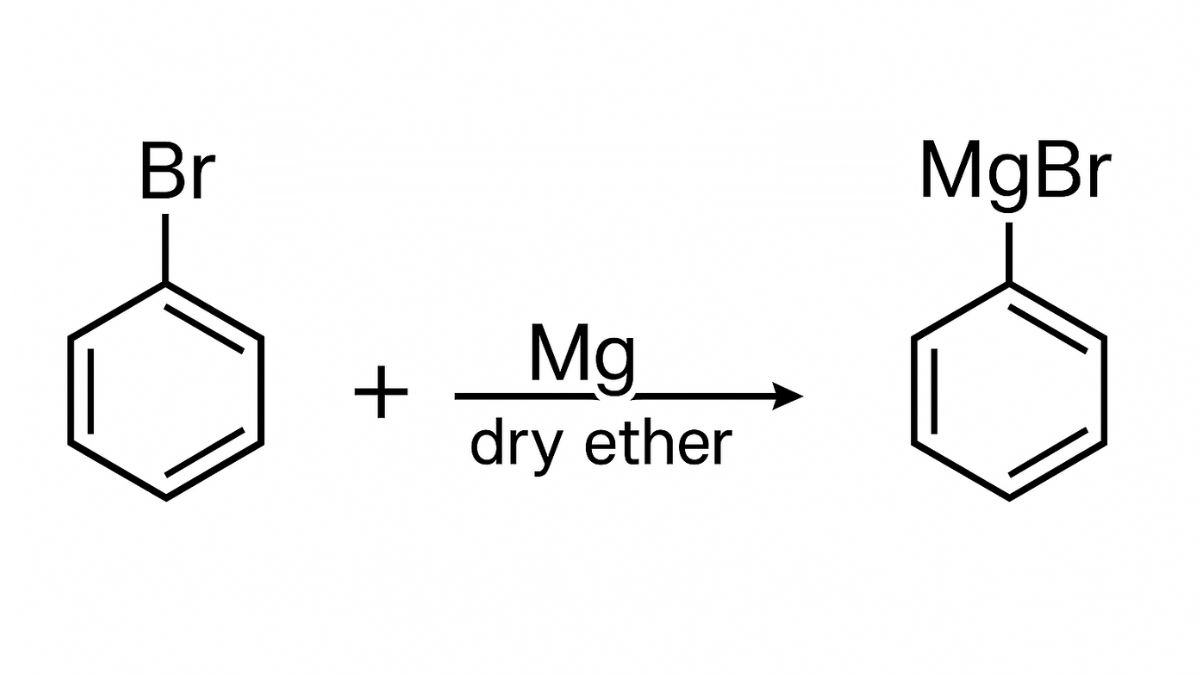
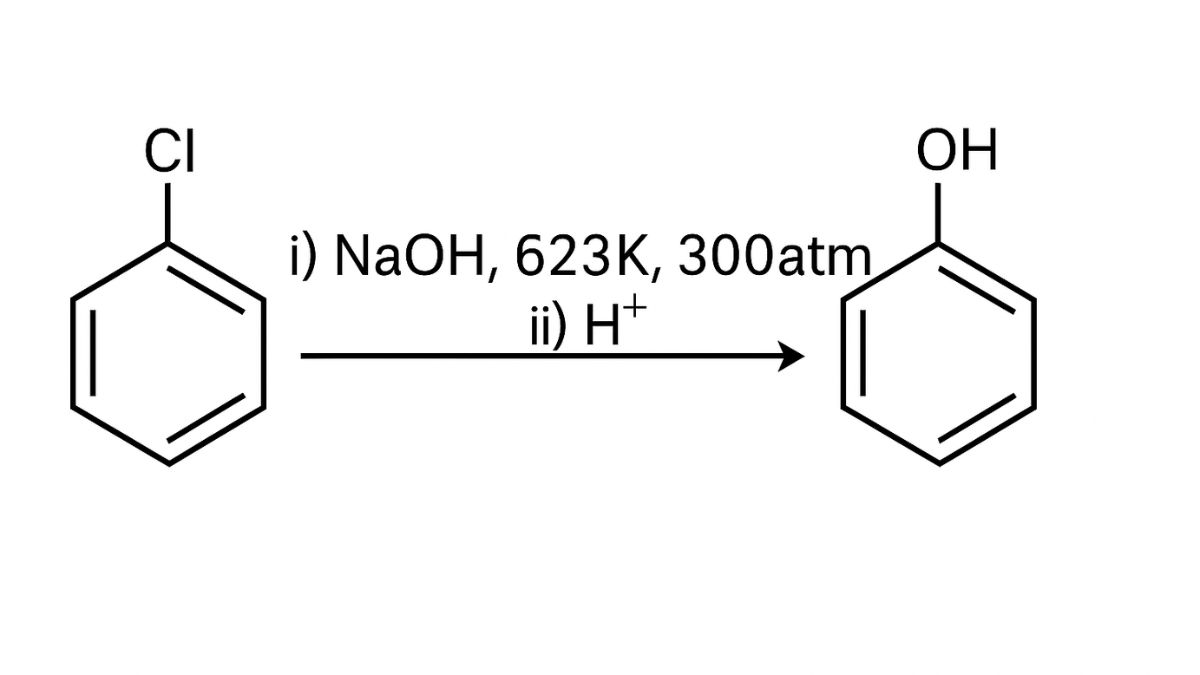
This is a classic question from the chapter Haloalkanes and Haloarenes. Let us solve each one as follows:
(1) When n - butyl chloride is treated with alcoholic KOH, the formation of but - l - ene takes place. This reaction is a dehydrohalogenation reaction.
When N-butyl chloride or 1-chlorobutane is treated with alcoholic potassium hydroxide (KOH), elimination reaction takes place. This leads to alkene formation. 1-butene is the major product here.
(ii) When Bromobenzene is treated with Mg in the presence of dry ether, it undergoes a reaction to produce phenylmagnesium bromide which is the Grignard reagent. This reagent is very re
Taking an Exam? Selecting a College?
Get authentic answers from experts, students and alumni that you won't find anywhere else
Sign Up on ShikshaOn Shiksha, get access to
- 67k Colleges
- 1.2k Exams
- 718k Reviews
- 1850k Answers