

English
Get insights from 1.8k questions on English, answered by students, alumni, and experts. You may also ask and answer any question you like about English
Follow Ask QuestionQuestions
Discussions
Active Users
Followers
New answer posted
a year ago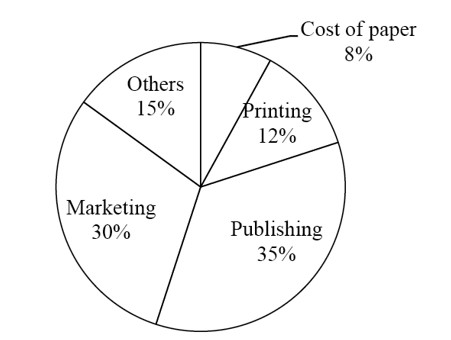
Contributor-Level 10
Let the total cost is 100, then Marketing cost = 30, New Marketing cost after the increase of 20% = 1.2 (30) = 36, New Total cost = 106. So, the percentage shown of Marketing cost.
New answer posted
a year ago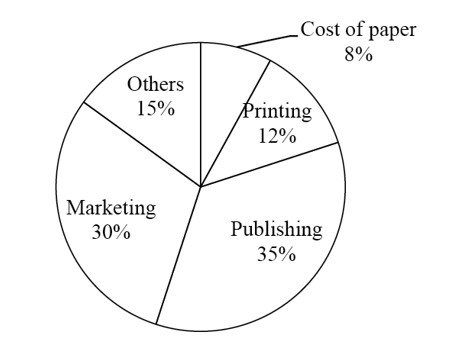
Contributor-Level 10
Let the total cost is 100, then Publishing cost = 35% of 100 = 35 & Marketing Cost = 30 % of 100 = 30. So, by the Publishing cost is 16.66% more than the Marketing cost.
New answer posted
a year ago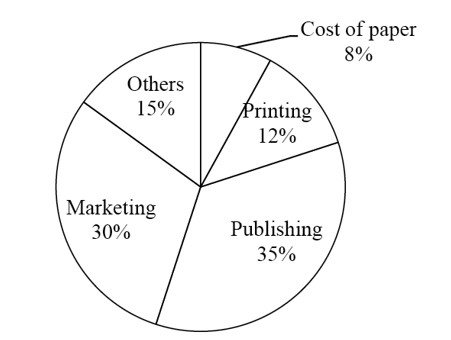
Contributor-Level 10
Let the total cost of writing the book is x.
So, 12 % of x =14400, Cost of Others = 15% of Total cost = 15 % of 1,20,000 = 18,000.
New answer posted
a year ago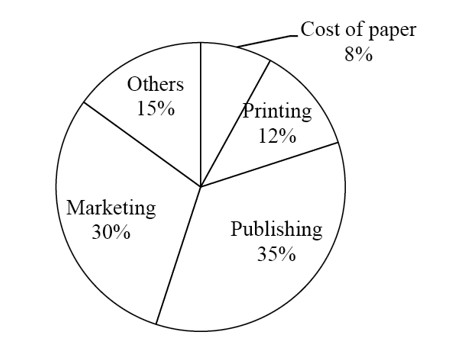
Contributor-Level 10
Shown of Printing is 8 % of the total cost. Here 100% = 360°. So, 1% = 3.6°.
So, central angle = 8 * 3.6 = 28.8°
New answer posted
a year ago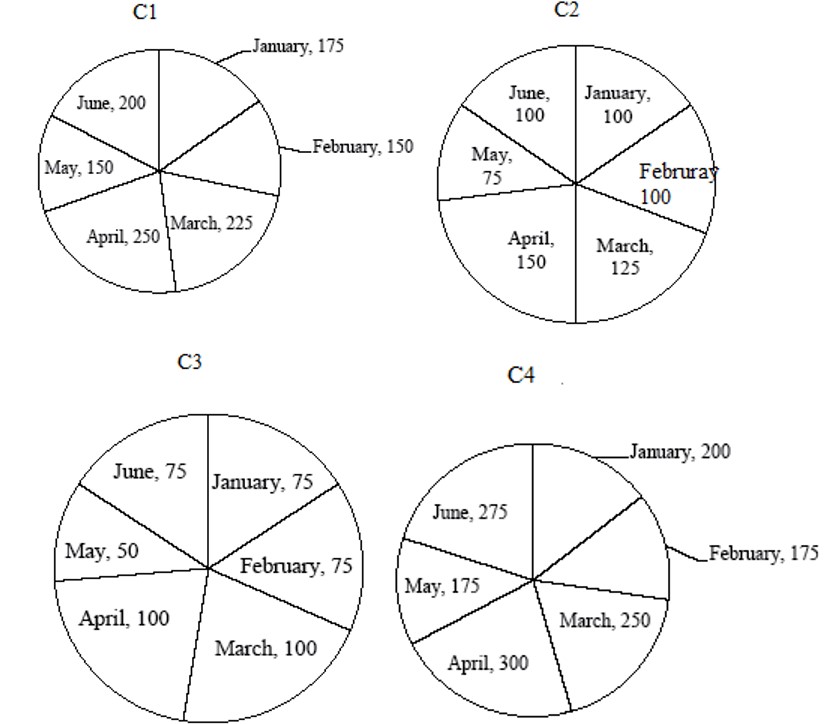
Contributor-Level 10
Verify the choices one by one.
(a) The total sales of all the four companies was different in each month, hence (a) is false.
(b) For the given period:
Total Sales of C1 = 175 +150 + 225 + 250 + 150 + 200 = 1150.
Total Sales of C3 = 75 + 75 + 100 + 100 + 50 + 75 = 475.
Hence, (b) is false.
(c) Total Sales of C2 for the given period = 650
Required percentage
(d) The sales of C2 were less than the sales of C4 in each month. Hence, (d) is false
New answer posted
a year ago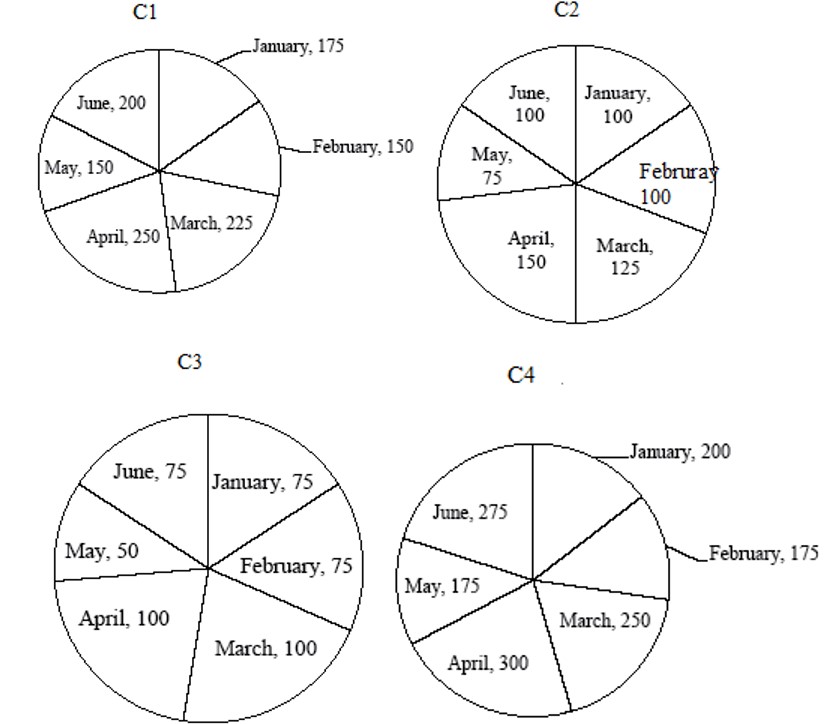
New answer posted
a year ago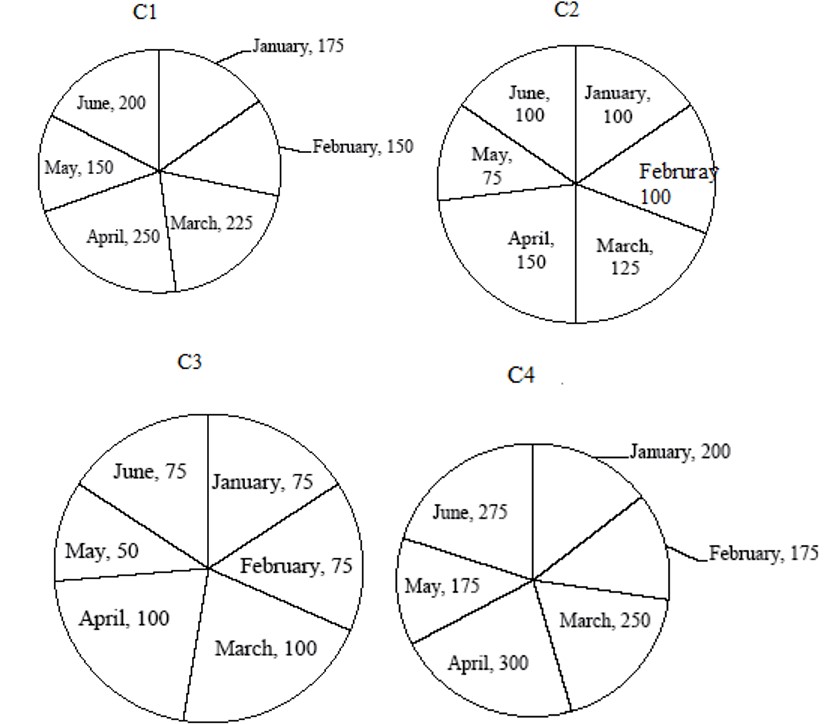
Contributor-Level 10
Month = C1/Total Sales * 100
January
February
March
April
May
June
No month have sales more than 33.33%. Hence option (d)
New answer posted
a year agoContributor-Level 7
Some of the skills required for Precis Writing are:
- Keep the length to about one-third of the original passage.
- Write in the third person and use the past tense.
- Ensure logical flow and coherence throughout the summary.
- Maintain a neutral and objective tone.
- Avoid copying sentences verbatim, except for essential terms or technical phrases.
- Do not include personal opinions or remarks.
- Refrain from using emotional or exaggerated language.
New answer posted
a year ago
Contributor-Level 10
The two important features of Precis Writing are:
Clarity: It should be written in straightforward, unambiguous language that is easy to comprehend.
Conciseness: The precis must be short and focused, generally one-third the length of the original text, excluding all unnecessary information.
New answer posted
a year ago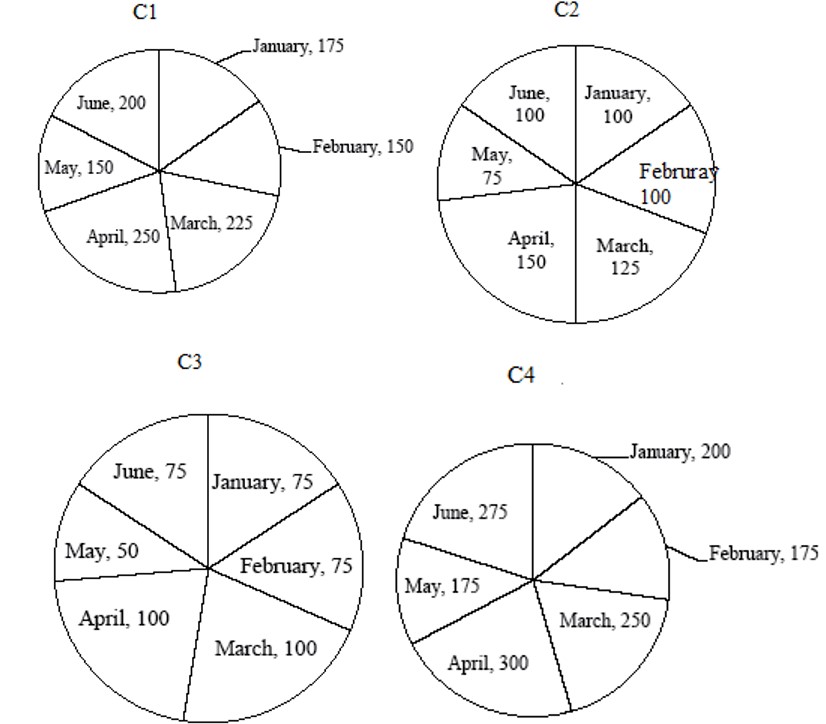
Contributor-Level 10
Month = C3/ (C2+C4)
January
February
March
April
May
June
Hence, the required percentage was the most in the month of February.
Taking an Exam? Selecting a College?
Get authentic answers from experts, students and alumni that you won't find anywhere else
Sign Up on ShikshaOn Shiksha, get access to
- 67k Colleges
- 1.2k Exams
- 719k Reviews
- 1850k Answers