

Gauss's Law
Get insights from 8 questions on Gauss's Law, answered by students, alumni, and experts. You may also ask and answer any question you like about Gauss's Law
Follow Ask QuestionQuestions
Discussions
Active Users
Followers
New answer posted
11 months agoContributor-Level 10
Gauss Law is only concerned with the total enclosed charge that finally tells us the total flux. The charges outside may change field patterns. They not affect the total flux. It's actually incorrect to assume the field due to the external charges should also affect the flux through the Gaussian surface.
New answer posted
11 months agoContributor-Level 10
Gauss Law does not directly give the electric field in all cases. It can only be used in calculations for symmetrical surfaces: spherical, cylindrical, or planar.
New answer posted
11 months agoContributor-Level 10
The integral form of Gauss Law is considered as an indirect form and only in theory. It will still create a mathematical problem. The Gaussian surface passing through a discrete charge means it lies on the surface. Half of the electric flux is outside and half in. Not on the boundary. And we know Gauss' Law holds true only when there are closed surfaces.
New answer posted
a year agoContributor-Level 10
All the charge given to a conducting sphere resides on outer surface.
New answer posted
a year ago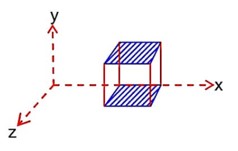
Contributor-Level 10
Direction of E in the direction of y axes so flux is only due to top and bottom surface for bottom surface y = 0 E = 0
and for top surface y = 0.5 m So
Gausses law
New answer posted
a year agoContributor-Level 10
Gauss law for magnetism states that total magnetic flux through a closed surface S will be zero. It is one of the four maxwell's equations that is useful in understanding the prinicples of electromagnetism. When understood in depth, the law implies that magnetic field lines form closed loops since they are continous. In short, it confirms that magnetic monopoles cannot exist.
Taking an Exam? Selecting a College?
Get authentic answers from experts, students and alumni that you won't find anywhere else
Sign Up on ShikshaOn Shiksha, get access to
- 67k Colleges
- 1.2k Exams
- 718k Reviews
- 1850k Answers