
Ncert Solutions Chemistry Class 12th
Get insights from 2.6k questions on Ncert Solutions Chemistry Class 12th, answered by students, alumni, and experts. You may also ask and answer any question you like about Ncert Solutions Chemistry Class 12th
- 2.6k
Questions
- 0
Discussions
- 0
Active Users
- 79
Followers
Have a question about Ncert Solutions Chemistry Class 12th? Ask our experts
Keep it short & simple. Type complete word. Avoid abusive language.
Among the gases (a) - (e), the gases that cause greenhouse effect are :
a)
b)
c)
d)
Among the gases (a) - (e), the gases that cause greenhouse effect are :
a)
b)
c)
d)
Except , remarginal are green house gases
 Upvote

The number of -hybridized carbons present in "Aspartame" is
The number of -hybridized carbons present in "Aspartame" is
<p><strong>Consider the following reactions:</strong></p>
<p><span contenteditable="false"> <math> <mi mathvariant="normal">N</mi> <mi mathvariant="normal">a</mi> <mi mathvariant="normal">C</mi> <mi mathvariant="normal">l</mi> <mo>+</mo> <msub> <mrow> <mrow> <mi mathvariant="normal">K</mi> </mrow> </mrow> <mrow> <mrow> <mn>2</mn> </mrow> </mrow> </msub> <msub> <mrow> <mrow> <mi mathvariant="normal">C</mi> <mi mathvariant="normal">r</mi> </mrow> </mrow> <mrow> <mrow> <mn>2</mn> </mrow> </mrow> </msub> <msub> <mrow> <mrow> <mi mathvariant="normal">O</mi> </mrow> </mrow> <mrow> <mrow> <mn>7</mn> </mrow> </mrow> </msub> <mo>+</mo> <munder> <mrow> <mrow> <msub> <mrow> <mrow> <mi mathvariant="normal">H</mi> </mrow> </mrow> <mrow> <mrow> <mn>2</mn> </mrow> </mrow> </msub> <msub> <mrow> <mrow> <mi mathvariant="normal">S</mi> <mi mathvariant="normal">O</mi> </mrow> </mrow> <mrow> <mrow> <mn>4</mn> </mrow> </mrow> </msub> <mo>?</mo> <mo>(</mo> <mi mathvariant="normal">A</mi> <mo>)</mo> <mo>+</mo> <mtext> </mtext> <mtext>side products</mtext> <mtext> </mtext> </mrow> </mrow> <mrow> <mrow> <mtext> </mtext> <mtext>(Conc.)</mtext> <mtext> </mtext> </mrow> </mrow> </munder> </math> </span><br><strong><!--[endif]--><!--[endif]--></strong></p>
<p><strong>(A) </strong><span class="mathml" contenteditable="false"> <math> <mo>+</mo> <mi mathvariant="normal">N</mi> <mi mathvariant="normal">a</mi> <mi mathvariant="normal">O</mi> <mi mathvariant="normal">H</mi> </math> </span><br><span class="mathml" contenteditable="false"> <math> <mo>(</mo> <mi mathvariant="normal">B</mi> <mo>)</mo> <mo>+</mo> </math> </span><strong> Side products</strong><br><strong>(B) </strong><span class="mathml" contenteditable="false"> <math> <mo>+</mo> <msub> <mrow> <mrow> <mi mathvariant="normal">H</mi> </mrow> </mrow> <mrow> <mrow> <mn>2</mn> </mrow> </mrow> </msub> <msub> <mrow> <mrow> <mi mathvariant="normal">S</mi> <mi mathvariant="normal">O</mi> </mrow> </mrow> <mrow> <mrow> <mn>4</mn> </mrow> </mrow> </msub> <mo>+</mo> <msub> <mrow> <mrow> <mi mathvariant="normal">H</mi> </mrow> </mrow> <mrow> <mrow> <mn>2</mn> </mrow> </mrow> </msub> <msub> <mrow> <mrow> <mi mathvariant="normal">O</mi> </mrow> </mrow> <mrow> <mrow> <mn>2</mn> </mrow> </mrow> </msub> <mo>?</mo> <mo>(</mo> </math> </span><strong> dilute)</strong><br><strong>(C) + Side products</strong></p>
<p><strong>The sum of the total number of atoms in one molecule each of <!-- [if gte msEquation 12]><m:oMath><spanstyle='font-size:11.0pt;font-family:"Cambria Math",serif;mso-fareast-font-family:Calibri;mso-fareast-theme-font:minor-latin;mso-bidi-font-family:"Times New Roman";mso-bidi-theme-font:minor-bidi;mso-ansi-language:EN-US;mso-fareast-language:EN-US;mso-bidi-language:AR-SA'><m:r><m:rPr><m:scr m:val="roman"/><m:sty m:val="p"/></m:rPr>(</m:r><m:r><istyle='mso-bidi-font-style:normal'>A</i></m:r><m:r><m:rPr><m:scr m:val="roman"/><m:stym:val="p"/></m:rPr>),(</m:r><m:r><i style='mso-bidi-font-style:normal'>B</i></m:r><m:r><m:rPr><m:scrm:val="roman"/><m:sty m:val="p"/></m:rPr>)</m:r></span></m:oMath><![endif]--><!-- [if !msEquation]--><!-- [if gte vml 1]><v:shapeid="_x0000_i1025" type="#_x0000_t75" style='width:37pt;height:13pt'><v:imagedata src="file:///C:/Users/ALOK~1.SIN/AppData/Local/Temp/msohtmlclip1/01/clip_image007.png"o:title="" chromakey="white"/>
</v:shape><![endif]--><!-- [if !vml]--><img src="file:///C:/Users/ALOK~1.SIN/AppData/Local/Temp/msohtmlclip1/01/clip_image008.gif" width="49" height="17"><!--[endif]--><!--[endif]--> and <!-- [if gte msEquation 12]><m:oMath><spanstyle='font-size:11.0pt;font-family:"Cambria Math",serif;mso-fareast-font-family:Calibri;mso-fareast-theme-font:minor-latin;mso-bidi-font-family:"Times New Roman";mso-bidi-theme-font:minor-bidi;mso-ansi-language:EN-US;mso-fareast-language:EN-US;mso-bidi-language:AR-SA'><m:r><m:rPr><m:scr m:val="roman"/><m:sty m:val="p"/></m:rPr>(</m:r><m:r><istyle='mso-bidi-font-style:normal'>C</i></m:r><m:r><m:rPr><m:scr m:val="roman"/><m:stym:val="p"/></m:rPr>)</m:r></span></m:oMath><![endif]--><!-- [if !msEquation]--><!-- [if gte vml 1]><v:shapeid="_x0000_i1025" type="#_x0000_t75" style='width:16pt;height:13pt'><v:imagedata src="file:///C:/Users/ALOK~1.SIN/AppData/Local/Temp/msohtmlclip1/01/clip_image009.png"o:title="" chromakey="white"/>
</v:shape><![endif]--><!-- [if !vml]--><img src="file:///C:/Users/ALOK~1.SIN/AppData/Local/Temp/msohtmlclip1/01/clip_image010.gif" width="21" height="17"><!--[endif]--><!--[endif]--> is </strong></p>
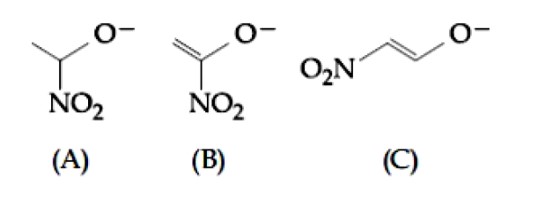
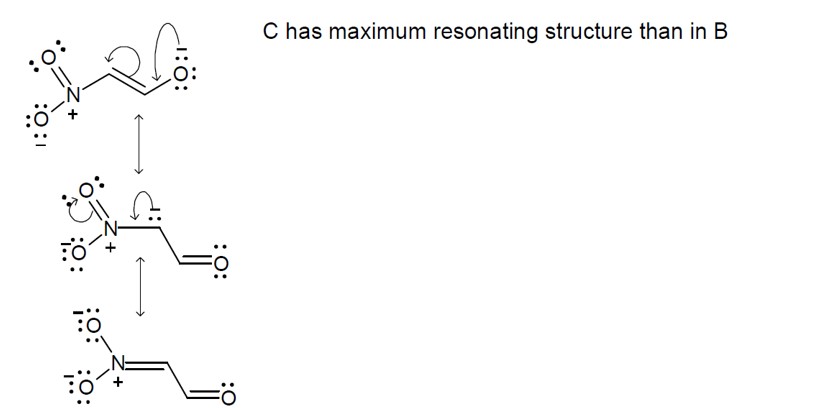
The correct order of stability for the following alkoxides is
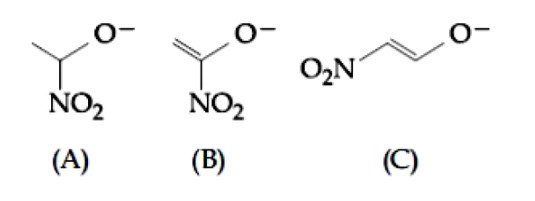
The correct order of stability for the following alkoxides is
A Chromatography column, packed with silica gel as stationary phase, was used to separate a mixture of compounds consisting of (a) benzanilide, (b) aniline and (c) acetophenone. When the column is eluted with a mixture of solvents, hexane; ethyl acetate , the sequence of obtained compounds is
<!-- [if !supportLineBreakNewLine]-->
<!--[endif]-->
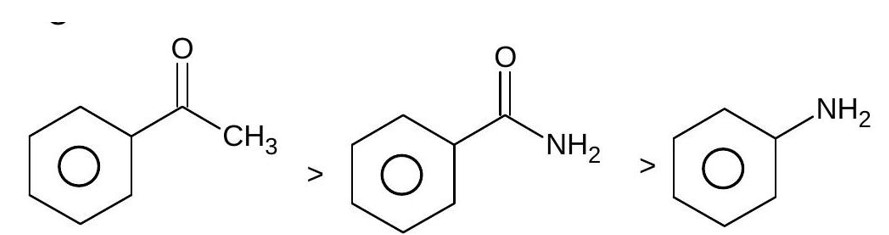
Aniline has higher viscosity due to intermolecular -bonding.
Upvote For the following reactions:
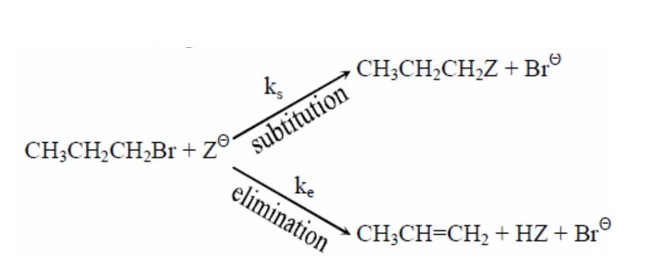
where,
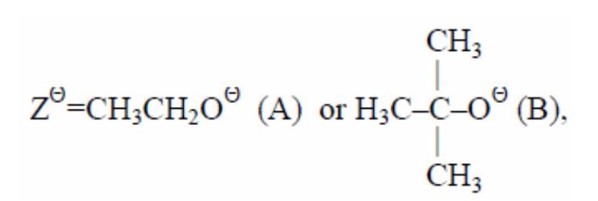
<!-- [if !supportLineBreakNewLine]-->
<!--[endif]-->
For the following reactions:
where,
<!-- [if !supportLineBreakNewLine]-->
<!--[endif]-->
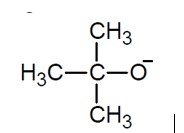
Is bulky base, so elimination is dominating.
Upvote In the following reaction sequence, structures of and respectively will be
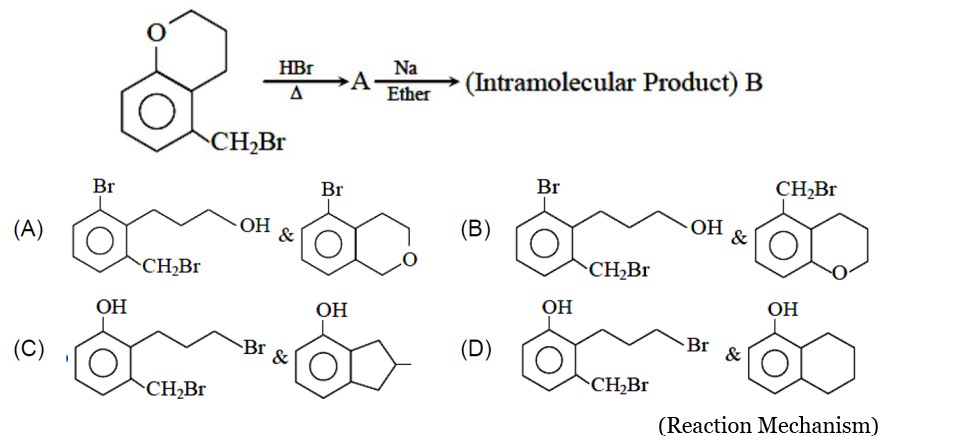
In the following reaction sequence, structures of and respectively will be

Consider the following reactions:
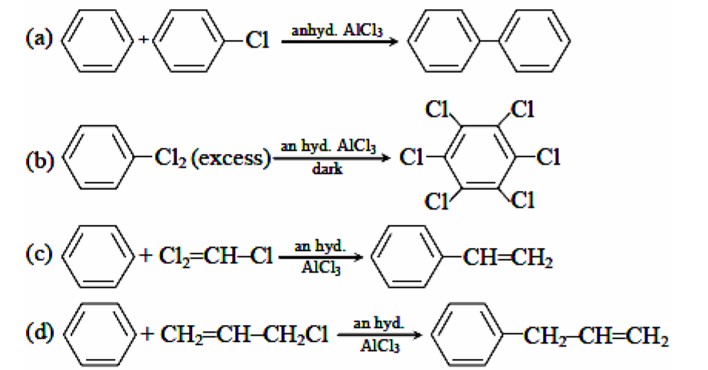
Which of these reactions are possible?
Consider the following reactions:
Which of these reactions are possible?
Carbon-chlorine bond cleavage is not possible in
Upvote Consider the following reaction:
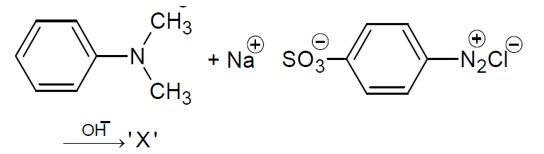
The product ' ' is used
Consider the following reaction:
The product ' ' is used
Kindly consider the following figure
Upvote