

Science
Get insights from 102.2k questions on Science, answered by students, alumni, and experts. You may also ask and answer any question you like about Science
Follow Ask QuestionQuestions
Discussions
Active Users
Followers
New answer posted
a year agoContributor-Level 6
The difficulty level for CUET Physics exam is uaully considered moderate to high. The question paper my include questions that require candidates to use their analytical thinking skills. Additionally, calculation-based questions might be time consuming making it hard for candidates to complete their exam on time.
New answer posted
a year agoContributor-Level 6
The CUET Physics Paper consists of 50 questions and the candidates are required to attempt all questions within 60 minute time frame. Each correct answer carries 5 marks, and 1 mark is deducted for incorrect responses. Candidates taking the exam must ensure to manage their time effectively.
New answer posted
a year agoNew answer posted
a year agoBeginner-Level 5
Students can check Class 12 Chemistry Chapter 9 Amines NCERT Solutions, which can help you know name chemical reactions crucial for CBSE Board Exams and Competitive Exams like JEE and NEET:
Gabriel Phthalimide Synthesis – Used to prepare primary amines from phthalimide via hydrolysis.
Hoffmann Bromamide Degradation Reaction – Converts amides to primary amines with one less carbon atom using Br? and NaOH.
Carbylamine Reaction – A test for primary amines where they react with chloroform and KOH to form isocyanides (foul-smelling).
Acylation and Alkylation of Amines – Involves the reaction of amines with acid chlorides or alkyl h
New answer posted
a year agoContributor-Level 10
The chapter consists of fundamental topics that are important for board exams preparation as well as for competitive tests:
Composition and Size of the Nucleus: Understanding protons, neutrons, and nuclear density.
Nuclear Force: The forces that hold the nucleus together.
Mass-Energy Equivalence (E = mc²): Einstein's equation and its significance in nuclear reactions.
Nuclear Binding Energy: Understanding nuclear stability and energy release.
Radioactivity: Concepts of alpha, beta, and gamma decay.
Laws of Radioactive Decay: Half-life, mean life, and decay constant derivations.
Nuclear Fission and Fusion: Their
New answer posted
a year agoContributor-Level 10
Students can download the Class 12 Physics Chapter 13 Nuclei NCERT Solutions PDF from various online platforms or they can visit the Shiksha homepage.
These PDFs are useful for students who want to study anywhere even if there is no internet access, which makes it easier to practice important numerical problems related to decay laws, nuclear binding energy, and nuclear reactions. To get access to NCERT Solutions PDF Class 12 Physics Chapter 13 Nuclei students mucst click on the following link.
New answer posted
a year agoContributor-Level 10
NCERT Solutions for Class 12 Physics Chapter 13 Nuclei is a detailed explanation of all the important concepts, solved numerical problems, and step-by-step derivations, that can be asked in competitve exams JEE, NEET, and other entrance exmas. There are various competitive exams that consists of questions on half-life, nuclear reactions, radioactive decay, and mass-energy equivalence, all of which are thoroughly included in NCERT solutions PDFs.
New answer posted
a year agoContributor-Level 10
While studying the mechanical properties of solids, stress and strain are fundamental concepts.
Stress: It refers to the condition when the external force is applied to a solid body and it experiences an internal restoring force per unit area. The resisting deformation due to the internal force is called stress. The formula is:
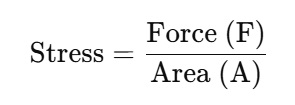
The SI unit of stress is N/m² (Pascal, Pa).
There are three types of stress -
- When the applied force increases the length of the body, it is called tensile stress.
- When the applied force decreases the length of the body, it is termed as the compressive stress.
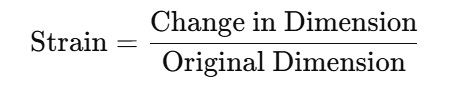
- When the force is applied tangentially and creates defor
New answer posted
a year agoContributor-Level 7
Yes, in BCom hons, maths is compulsory, hence the students who did not study it in class 12th are not eligible for same. Delhi University has made maths or applied mathematics a mandatory subject removing the previous option of applying through Accountancy.
New answer posted
a year agoContributor-Level 10
NCERT Class 12 Physics Ch 13 Nuclei is a important to lay the foundation for advanced topics in energy generation, nuclear physics, and medical applications. The Class 12 Physics chapter Nuclei includes important topics such as nuclear binding energy, radioactivity, mass-energy equivalence (E = mc²), and nuclear reactions, which are not only crucial for CBSE Board Exams but also asked in JEE, NEET, and other competitive exams. Understanding these important topics helps students build a solid conceptual understanding for higher studies in physics and engineering.
Taking an Exam? Selecting a College?
Get authentic answers from experts, students and alumni that you won't find anywhere else
Sign Up on ShikshaOn Shiksha, get access to
- 67k Colleges
- 1.2k Exams
- 718k Reviews
- 1850k Answers