

Class 12th
Get insights from 12k questions on Class 12th, answered by students, alumni, and experts. You may also ask and answer any question you like about Class 12th
Follow Ask QuestionQuestions
Discussions
Active Users
Followers
New answer posted
a year agoContributor-Level 10
Stability constant are :
K1 = 104
K2 = 1.58 * 103
K3 = 5 * 102
K4 = 102
Overall stability constant K will be
K = K1 * K2 * K3 * K4
= 7.9 * 1011
Now, overall equilibrium constant for dissociation of [Cu (NH3)4]2+ is
= 1.26 * 10-12
So; x = 1 (Rounded off to the nearest integer)
New answer posted
a year ago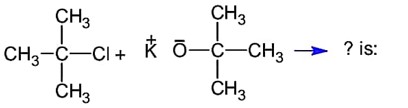
Contributor-Level 9
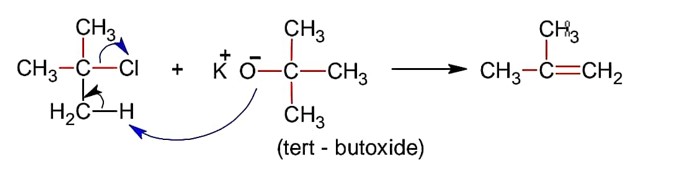
Base is tert-butoxide thus favours elimination with 3° alkyl halide and gives alkene
New answer posted
a year agoContributor-Level 10
For stabilization of a - helix structure of protein, H-bonding is responsible which is in between 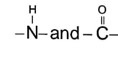
New answer posted
a year agoContributor-Level 10
t? , half life = (log?2)/λ = 3 s
Initially 200 nuclei were there
After 3 half-lives, 9 seconds,
No. of nuclei = (1/2³) (200) = 25
Therefore, the number of nuclei that decayed = 200 – 25 = 175
New answer posted
a year ago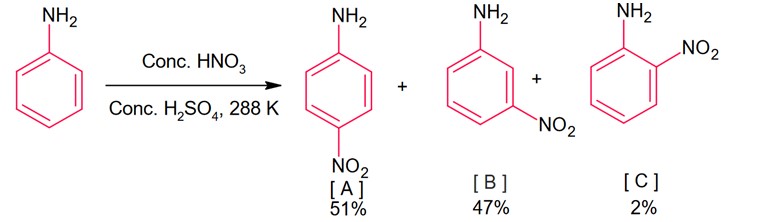
Contributor-Level 10
During nitration of aniline, meta product is also formed, it is because of due to presence of anilinium ion. In anilium
Taking an Exam? Selecting a College?
Get authentic answers from experts, students and alumni that you won't find anywhere else
Sign Up on ShikshaOn Shiksha, get access to
- 67k Colleges
- 1.2k Exams
- 716k Reviews
- 1850k Answers