

Class 12th
Get insights from 12k questions on Class 12th, answered by students, alumni, and experts. You may also ask and answer any question you like about Class 12th
Follow Ask QuestionQuestions
Discussions
Active Users
Followers
New answer posted
a year agoContributor-Level 9
the strongest oxidizing agent have the highest reduction potential. So Mn3+ is the strongest oxidizing agent.
New answer posted
a year agoContributor-Level 9
Cerium exists in two oxidation states (+3) and (+4)
It exist as Ce+4 and acts like a strong oxidizing agent by gaining electrons
New answer posted
a year agoContributor-Level 10
In y axis u? = v? a? = -E? q / m
s? = 0, u? t + (1/2)a? t² = 0 ⇒ t = 2u? /a? = 2v? m/E? q
x coordinate at that time = v? * t = (2v? m/0) * v? = (2v? ²m)/E? q
New answer posted
a year agoContributor-Level 10
For permanent magnetic Y is good choice, As it has very high coercivity (comparitively)
New answer posted
a year agoContributor-Level 10
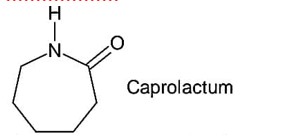
Caprolactum is monomer of nylon-6
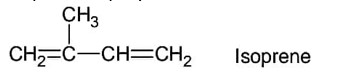
Isoprene is polymer of natural rubber
2 – chloro-1,3-butadiene or chloroprene is the polymer of neoprene which is a synthetic rubber
Acrylonitrite is one of the monomer of Buna-N
Acrylonitrile
New answer posted
a year agoContributor-Level 10
The time spent in magnetic field (t) is independent of velocity of charge.
t = (1/4) (2πm/qB)
New answer posted
a year agoContributor-Level 10
At minima, I = (√I? - √25I? )² = 16I?
At maxima, I = (√I? + √25I? )² = 36I?
∴ Ratio = 16/36 = 4/9
New answer posted
a year ago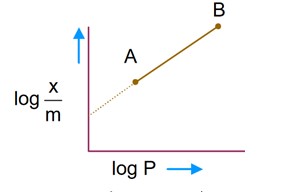
Contributor-Level 10
Freundlich adsorption isotherm
Comparing with y = mx + C
so, slope of given graph is
New answer posted
a year agoContributor-Level 10
Sphalerite is ore of zinc consists of ZnS during its concentration group 1 cyanides are used as depressants like NaCN
Taking an Exam? Selecting a College?
Get authentic answers from experts, students and alumni that you won't find anywhere else
Sign Up on ShikshaOn Shiksha, get access to
- 67k Colleges
- 1.2k Exams
- 716k Reviews
- 1850k Answers