

Class 12th
Get insights from 12k questions on Class 12th, answered by students, alumni, and experts. You may also ask and answer any question you like about Class 12th
Follow Ask QuestionQuestions
Discussions
Active Users
Followers
New answer posted
a year agoContributor-Level 10
A = [ x 1 ]
[ 1 0 ]
A² = [ x 1 ] [ x 1 ] = [ x²+1 x ]
[ 1 0 ] [ 1 0 ] [ x 1 ]
A? = [ x²+1 x ] [ x²+1 x ]
[ x 1 ] [ x 1 ]
= [ (x²+1)²+x² x (x²+1)+x ]
[ x (x²+1)+x²+1 ]
a? = (x² + 1)² + x² = 109
⇒ x = ±3
a? = x² + 1 = 10
New answer posted
a year agoContributor-Level 10
0 ≤ y ≤ x² + 1, 0 ≤ y ≤ x + 1, 1/2 ≤ x ≤ 2
Required area
= 19/24 + 5/2 = 79/24
New answer posted
a year agoContributor-Level 10
2π - (sin? ¹ (4/5) + sin? ¹ (5/13) + sin? ¹ (16/65)
= 2π - (tan? ¹ (4/3) + tan? ¹ (5/12) + tan? ¹ (16/63)
= 2π - (tan? ¹ (63/16) + tan? ¹ (16/63)
= 2π - π/2 = 3π/2
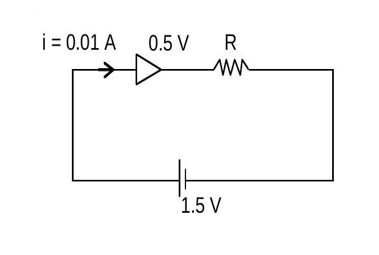
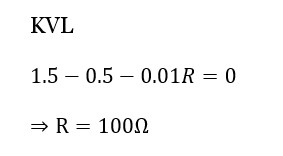
New answer posted
a year agoContributor-Level 10
f (x) = (3x - 7)x²/³
⇒ f (x) = 3x? /³ - 7x²/³
⇒ f' (x) = 5x²/³ - 14/ (3x¹/³)
= (15x - 14) / (3x¹/³) > 0
∴ f' (x) > 0 ∀x ∈ (-∞, 0) U (14/15, ∞)
New answer posted
a year agoContributor-Level 10
When the two conducting spheres are connected by a wire, they will reach the same electric potential, V.
The total charge Q_total = 12µC + (-3µC) = 9µC. This total charge will redistribute.
Let the final charges be q? and q? + q? = 9µC.
The potential of a sphere is V = kq/r.
V? = V?
k q? /R? = k q? /R? ⇒ q? /R? = q? /R?
q? / (2R/3) = q? / (R/3) ⇒ q? /2 = q? ⇒ q? = 2q?
Substitute this into the charge conservation equation:
2q? + q? = 9µC ⇒ 3q? = 9µC ⇒ q? = 3µC.
Then, q? = 2 * 3µC = 6µC.
The final charges are 6µC and 3µC.
New answer posted
a year agoContributor-Level 10
Sum obtained is a multiple of 4.
A = { (1,3), (2,2), (3,1), (2,6), (3,5), (4,4), (5,3) (6,2), (6,6)}
B: Score of 4 has appeared at least once.
B = { (1,4), (2,4), (3,4), (4,4), (5,4), (6,4), (4,1), (4,2), (4,3), (4,5), (4,6)}
Required probability = P (B/A) = P (B? A)/P (A)
= (1/36) / (9/36) = 1/9
New answer posted
a year agoContributor-Level 10
∫ [-π to π] |π - |x|dx = 2∫ [0 to π] |π - x|dx
= 2∫ [0 to π] (π - x)dx
= 2 [πx - x²/2] (from 0 to π) = π²
New answer posted
a year agoIf Δ =
|x-2 2x-3 3x-4|
|2x-3 3x-4 4x-5|
|3x-5 5x-8 10x-17|
= Ax³ + Bx² + Cx + D, then B + C is equal to:
Contributor-Level 10
Δ = | x-2 2x-3 3x-4 |
| 2x-3 3x-4 4x-5 |
| 3x-5 5x-8 10x-17|
= Ax³ + Bx² + Cx + D.
R? → R? - R? , R? → R? - R?
Δ = | x-2 2x-3 3x-4 |
| x-1 |
| x-2 (x-2) 6 (x-2) |
= (x-1) (x-2) | 1 2x-3 3x-4 |
| 1 |
| 1 2 6 |
= -3 (x - 1)² (x - 2) = -3x³ + 12x² - 15x + 6
∴ B + C = 12 - 15 = -3
New answer posted
a year agoContributor-Level 10
(1 + e? ) (1 + y²) dy/dx = y²
⇒ (1 + y? ²)dy = ( e? / (1 + e? ) ) dx
⇒ (y - 1/y) = ln (1 + e? ) + c
∴ It passes through (0,1) ⇒ c = -ln2
⇒ y² = 1 + yln ( (1+e? )/2 )
Taking an Exam? Selecting a College?
Get authentic answers from experts, students and alumni that you won't find anywhere else
Sign Up on ShikshaOn Shiksha, get access to
- 67k Colleges
- 1.2k Exams
- 717k Reviews
- 1850k Answers