

Class 12th
Get insights from 12k questions on Class 12th, answered by students, alumni, and experts. You may also ask and answer any question you like about Class 12th
Follow Ask QuestionQuestions
Discussions
Active Users
Followers
New answer posted
a year agoContributor-Level 10
The person who eats equal number of Dosas and Uttpams also takes chutney is Ishwar and he is taking chutney.

New answer posted
a year agoContributor-Level 9
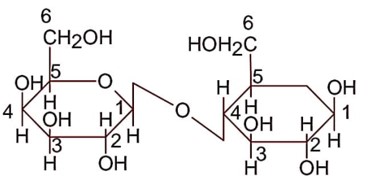
Lactose is polymer contain glycosidic linkage between C1 of b-galactose & C4 of b-glucose.
New answer posted
a year agoContributor-Level 10
Following is the structure of the stops on this route:
Case I:
R3 | R1 | R5 | R4 | R6 | R2 |
Stop 1 | Stop 2 | Stop 3 | Stop 4 | Stop 5 | Stop 6 |
Case II: | |||||
R4 | R6 | R5 | R3 | R1 | R2 |
Stop 1 | Stop 2 | Stop 3 | Stop 4 | Stop 5 | Stop 6 |
Now all the questions can be answered.
New answer posted
a year agoContributor-Level 10
It is mentioned that only one college was rated five star and only one college was rated three star.
Also Barla college was a five star college.
Therefore, there are three colleges with four star rating.
It is given that ABES Institute had a higher rating than the college where Purvi studied. ABES Institute has four star rating and Purvi studied in a three star rating college.
Also Gajraj college has four star rating since it is mentioned that it does not have three star rating.
We have Barla college – five star, ABES Institute – four star and Gajraj college – four star.
One of Anipal Institute and Chemical college has to have three st
New answer posted
a year agoContributor-Level 10
All 3 conditions are false. Because none of them following the selection procedure.
New answer posted
a year agoContributor-Level 10
Given variance of boys
& variance of girls
New answer posted
a year agoContributor-Level 10
Both E and F are selected then W and Y are ruled out respectively. There must be both X and Z.
New answer posted
a year agoContributor-Level 10
If W is selected E and X are rejected. Only senior member rest D, F. If F is selected then Y is ruled out. Only rest member be Z.
Taking an Exam? Selecting a College?
Get authentic answers from experts, students and alumni that you won't find anywhere else
Sign Up on ShikshaOn Shiksha, get access to
- 67k Colleges
- 1.2k Exams
- 718k Reviews
- 1850k Answers