Class 12th

Get insights from 12k questions on Class 12th, answered by students, alumni, and experts. You may also ask and answer any question you like about Class 12th

Follow Ask Question
12k

Questions

0

Discussions

63

Active Users

0

Followers

New answer posted

5 months ago

0 Follower 1 View

R
Raj Pandey

Contributor-Level 9

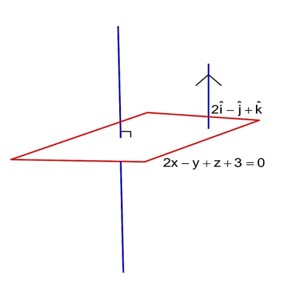
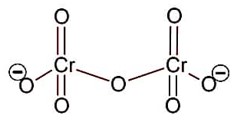
Kindly consider the following Image.


New answer posted

5 months ago

0 Follower 2 Views

P
Payal Gupta

Contributor-Level 10

Common grandchild of M6 and M8 is D

New answer posted

5 months ago

0 Follower 1 View

P
Payal Gupta

Contributor-Level 10

Please find the answer below

New answer posted

5 months ago

0 Follower 2 Views

V
Vishal Baghel

Contributor-Level 10

Let square is made with piece of length x metre & hexagon with piece of length y metre

x + y = 20 .(i)

a = x 4 & b = y 6       

Now let A = area of square + area of hexagon

A = x 2 1 6 + 6 * 3 4 * y 2 3 6 = x 2 1 6 + 3 y 2 2 4 = x 2 1 6 + 3 2 4 ( 2 0 x ) 2 f r o m ( i ) ,

for minimum area

x = 8 0 3 6 + 4 3 = 8 0 3 2 3 ( 3 + 2 ) = 4 0 2 + 3

x = 4 0 ( 2 3 )

=> side of hexagon = y 6 = 2 0 3 ( 2 3 ) 6 = 2 0 3 6 ( 2 + 3 ) = 1 0 3 3 ( 2 + 3 ) = 1 0 2 3 + 3

New answer posted

5 months ago

0 Follower 2 Views

P
Payal Gupta

Contributor-Level 10

Clearly from figure.
M2 is son-in-law of M8.


New answer posted

5 months ago

0 Follower 6 Views

A
alok kumar singh

Contributor-Level 10

| A | = | [ x + 1 ] [ x + 2 ] [ x + 3 ] [ x ] [ x + 3 ] [ x + 3 ] [ x ] [ x + 2 ] [ x + 4 ] | = | [ x ] + 1 [ x ] + 2 [ x ] + 3 [ x ] [ x ] + 3 [ x ] + 3 [ x ] [ x ] + 2 [ x ] + 4 |

R 1 R 1 R 3 & R 2 R 2 R 3

| 1 0 1 0 1 1 [ x ] [ x ] + 2 [ x ] + 4 | = 1 9 2

[ x ] = 6 2

x [ 6 2 , 6 3 )              


New answer posted

5 months ago

0 Follower 5 Views

J
Jaya Sharma

Contributor-Level 10

The SI unit of the electrical power is Watt which is symbolized as W. One watt is equal to one joule per second (J/s). In the context of current and voltage, one watt is the power consumed when one ampere of the current flows through the potential difference of one volt.

New answer posted

5 months ago

0 Follower 5 Views

V
Vishal Baghel

Contributor-Level 10

y 1 / 4 + 1 y 1 / 4 = 2 x

( y 1 / 4 ) 2 2 x y 1 / 4 + 1 = 0    

=> ( y 1 / 4 ) 2 2 x y 1 / 4 + 1 = 0

d y d x = 4 y x 2 1 . . . . . . . . . . ( i )

( x 2 1 ) d 2 y d x 2 + x d y d x 1 6 y = 0 f r o m ( i )      

=>α = 1, β = -16

|α - β| = 17

New answer posted

5 months ago

0 Follower 3 Views

V
Vishal Baghel

Contributor-Level 10

Let l = d x ( x 2 + x + 1 ) 2 . . . . . . . . . . . . . ( i )

Now d x x 2 + x + 1 = ( 1 x 2 + x + 1 ) d x

by integration by parts

=> d x ( x 2 + x + 1 ) 2 = 4 3 2 t a n 1 2 x + 1 3 + 1 3 ( 2 x + 1 ) ( x 2 + x + 1 ) + c

a = 4 3 3 , b = 1 3

Now, 9 ( 3 a + b ) = 9 ( 4 3 + 1 3 ) = 1 5

New answer posted

5 months ago

0 Follower 2 Views

A
alok kumar singh

Contributor-Level 10

Equation of the plane will be { r . ( i ^ + j ^ + k ^ ) 1 } + λ { r . ( 2 i ^ + 3 j ^ k ^ ) + 4 } = 0   

r . { ( 1 + 2 λ ) i + ( 1 + 3 λ ) j ^ + ( 1 λ ) k ^ } + ( 4 λ 1 ) = 0               

-> ( 1 + 2 λ ) x + ( 1 + 3 λ ) y + ( 1 λ ) z + ( 4 λ 1 ) = 0 . . . . . . . . . ( i )

(i) is parallel to x-axis so its d.r.s will be (1, 0, 0)

-> 1 + 2 λ = 0 s o λ = 1 2

Hence required equation will be

r { 1 2 j ^ . + 3 2 k ^ } + ( 3 ) = 0

r . ( j ^ 3 k ^ ) + 6 = 0              


Get authentic answers from experts, students and alumni that you won't find anywhere else

Sign Up on Shiksha

On Shiksha, get access to

  • 66k Colleges
  • 1.2k Exams
  • 681k Reviews
  • 1800k Answers

Share Your College Life Experience

×
×

This website uses Cookies and related technologies for the site to function correctly and securely, improve & personalise your browsing experience, analyse traffic, and support our marketing efforts and serve the Core Purpose. By continuing to browse the site, you agree to Privacy Policy and Cookie Policy.