Class 12th

Get insights from 11.9k questions on Class 12th, answered by students, alumni, and experts. You may also ask and answer any question you like about Class 12th

Follow Ask Question
11.9k

Questions

0

Discussions

48

Active Users

0

Followers

New answer posted

6 months ago

0 Follower 1 View

A
alok kumar singh

Contributor-Level 10

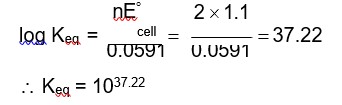
Kindly go through the solution


New answer posted

6 months ago

0 Follower 1 View

A
Aadit Singh Uppal

Contributor-Level 10

Yes, both coherent and incoherent waves can be seen by the naked eye. However, we cannot detect whether the wave is coherent or incoherent. This is because the incoherent waves have different frequencies which cannot be distinguished by the human eye. We have can only see lights of specific wavelengths as per the human limit.

New answer posted

6 months ago

0 Follower 1 View

A
alok kumar singh

Contributor-Level 10

Density of nuclei is order of 1017 kg m–3.

New answer posted

6 months ago

0 Follower 3 Views

A
alok kumar singh

Contributor-Level 10

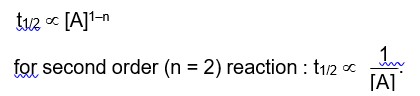
Kindly go through the solution '


New answer posted

6 months ago

0 Follower 1 View

A
Aadit Singh Uppal

Contributor-Level 10

Yes, whether a wave is coherent or incoherent depends on its phase difference and frequency. For converting a coherent wave into an incoherent wave, you have to damage the stable phase of the wave. This can be done by making the medium tough or mixing them with incoherent waves.

Similarly, incoherent waves can be converted into coherent waves by making their frequencies same and having all of them into the same phase.

New answer posted

6 months ago

0 Follower 1 View

A
alok kumar singh

Contributor-Level 10

Photocell works on photoelectric effect.

New answer posted

6 months ago

0 Follower 3 Views

A
alok kumar singh

Contributor-Level 10

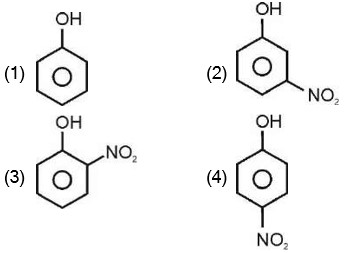
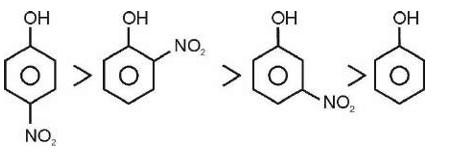
Kindly go through the solution


New answer posted

6 months ago

0 Follower 3 Views

A
alok kumar singh

Contributor-Level 10

XC  = 1/ ωC

On increasing w; XC decreases so Z decreases, current in circuit increases.

New answer posted

6 months ago

0 Follower 4 Views

A
Aadit Singh Uppal

Contributor-Level 10

Yes, it strongly depends on the wavelength of the light wave. It is directly proportional to the length i.e. longer the wavelength, more will be the amount of diffraction. Similarly, short wavelength of the light will mean less diffraction comparatively.

New answer posted

6 months ago

0 Follower 1 View

A
Aadit Singh Uppal

Contributor-Level 10

Reflection is the concept of bouncing back of light waves when passed through a surface. Whereas, diffraction is a term used when light waves spread in different directions on being passed through an obstacle. Reflection requires a smooth surface whereas diffraction requires the edge of an object.

Get authentic answers from experts, students and alumni that you won't find anywhere else

Sign Up on Shiksha

On Shiksha, get access to

  • 66k Colleges
  • 1.2k Exams
  • 687k Reviews
  • 1800k Answers

Share Your College Life Experience

×

This website uses Cookies and related technologies for the site to function correctly and securely, improve & personalise your browsing experience, analyse traffic, and support our marketing efforts and serve the Core Purpose. By continuing to browse the site, you agree to Privacy Policy and Cookie Policy.