

Class 12th
Get insights from 12k questions on Class 12th, answered by students, alumni, and experts. You may also ask and answer any question you like about Class 12th
Follow Ask QuestionQuestions
Discussions
Active Users
Followers
New answer posted
a year agoContributor-Level 10
This is a short answer type question as classified in NCERT Exemplar
Antacids neutralise the acid produced in the stomach. They do not control the cause of production of excess acid. Therefore, antacids control only the symptoms but not the cause. On the other hand, antihistamines are the drugs which suppress the action of histamine which is the chemical responsible for stimulation of secretion of pepsin and HCl in the stomach. These influence and prevent the binding of histamine with the receptors present in the stomach wall resulting in lower acid production and therefore, better treatment. This is the advantage of antihistamines over
New answer posted
a year agoContributor-Level 10
This is a short answer type question as classified in NCERT Exemplar
Transparent soaps are prepared by dissolving the soap in ethanol and then evaporating the excess solvent.
New answer posted
a year agoContributor-Level 10
This is a short answer type question as classified in NCERT Exemplar
Bathing soaps are potassium salts of long chain fatty acids. They are usually soft and also free from unused alkali. While washing soaps are sodium salts of long chain fatty acids. They are usually hard and also contain some residual alkali.
New answer posted
a year agoContributor-Level 10
This is a short answer type question as classified in NCERT Exemplar
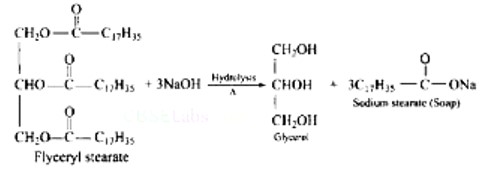
Glycerol is obtained as a side product during the formation of soaps.
New answer posted
a year agoContributor-Level 10
This is a short answer type question as classified in NCERT Exemplar
Antimicrobial drugs can kill the microorganism such as bacteria, fungi, viruses or other parasites. They can, alternatively inhibit the pathogenic action of microbes.
New answer posted
a year agoContributor-Level 10
This is a short answer type question as classified in NCERT Exemplar
Drugs that bind to the receptor site and inhibit its natural function are called antagonistic drugs. For example, cimetidine antacid drug.
New answer posted
a year agoContributor-Level 10
This is a short answer type question as classified in NCERT Exemplar
The narcotic drugs relieve pain and produce sleep. Therefore, these are commonly used for the relief of postoperative pain, cardiac pain and pain of terminal cancer and in child birth.
New answer posted
a year agoContributor-Level 10
This is a short answer type question as classified in NCERT Exemplar
Narcotic analgesics which are obtained from opium poppy are called opiates. Examples are morphine and its derivatives like codeine and heroin (morphine diacetate).
New answer posted
a year agoContributor-Level 10
This is a short answer type question as classified in NCERT Exemplar
Magnesium hydroxide is a better antacid because being insoluble, it does not allow the pH to increase above neutral. However, sodium hydrogen carbonate (NaHCO3) being soluble, its excess can make the stomach alkaline and trigger the production of even more acid.
New answer posted
a year agoContributor-Level 10
This is a short answer type question as classified in NCERT Exemplar
Antiseptics are applied to living tissues whereas disinfectants are applied to non-living objects such as drains, toilets, floors and utensils.
Taking an Exam? Selecting a College?
Get authentic answers from experts, students and alumni that you won't find anywhere else
Sign Up on ShikshaOn Shiksha, get access to
- 67k Colleges
- 1.2k Exams
- 718k Reviews
- 1850k Answers