

Class 12th
Get insights from 12k questions on Class 12th, answered by students, alumni, and experts. You may also ask and answer any question you like about Class 12th
Follow Ask QuestionQuestions
Discussions
Active Users
Followers
New answer posted
a year ago
Contributor-Level 10
This is a Long Answer Type Questions as classified in NCERT Exemplar
Explanation- applying kirchhoff's junction rule I1 = I+I2
Applying kirchhoff's rule in outer loop containing 10V cell
10= IR+10I1……………. (1)
Applying kirchhoff's rule in outer loop containing 2V cell
2= 5I2-RI= 5 (I1-I)-RI
4= 10I1-10I-RI………… (2)
From 1 and 2
6=3RI+10I
2=I (R+10/3)
V= I (R+Reff)
After comparing V=2V, Reff= 10/3 ohm
Since effective internal resistance Reff of two cells 10/3 ohm, being the parallel combination 5 ohm and 10 ohm . the equivalent circuit is
New answer posted
a year agoContributor-Level 10
This is a Long Answer Type Questions as classified in NCERT Exemplar
Explanation- according to ohm's law V= IR
I= 6/6 = 1A
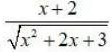
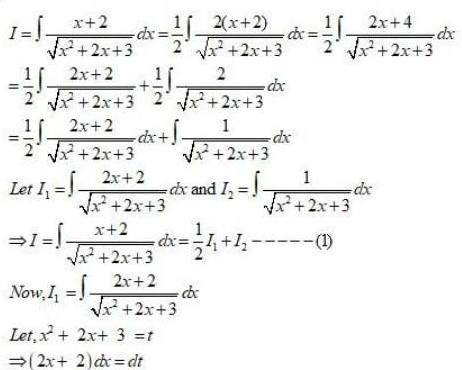
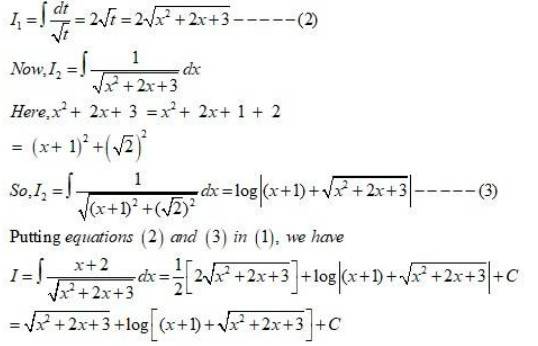
I= AneVd or Vd= i/neA

New answer posted
a year ago
Contributor-Level 10
This is a Long Answer Type Questions as classified in NCERT Exemplar
Explanation – let R' be the resistance of potentiometer wire.
Effective resistance of potentiomter and variable resistor r=50ohm is 500+R'
Effective voltage across potentiometer = 10V
The current through main circuit I= =
Potential difference across wire of potentiometer
IR'=
Since with 50 ohm resistor, null point is not obtained it is possible when
10R'
2R'<400 or R'<200 ohm
Similarly with 10 ohm resistor, null point is obtained its is only possible when
2R'>40
R'>40
7.5R'<80+8R'
R'>160
160
Any R' between 160 ohm and 200 ohm will achieve.
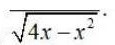
Since the null point on the last 4th segment of
New answer posted
a year ago
Contributor-Level 10
This is a Long Answer Type Questions as classified in NCERT Exemplar
Explanation – power consumption in a day i.e in 5 = 10 units
Power consumption per hour = 2 units
Power consumption = 2 units =2KW= 2000J/s
Also power =V I
2000W= 220V l or l= 9A approx.
R=
Power consumption in first current carrying wire
P= I2R
l2= 1.7 10-8 j/s = 4J/s approx.
Loss due to joule heating in first wire = 100=0.2%
Power loss in Al wire =1.6 4= 6.4J/s
Fractional loss due to joule heating in second wire = 100= 0.32%
Taking an Exam? Selecting a College?
Get authentic answers from experts, students and alumni that you won't find anywhere else
Sign Up on ShikshaOn Shiksha, get access to
- 67k Colleges
- 1.2k Exams
- 718k Reviews
- 1850k Answers