

Physics
Get insights from 5.6k questions on Physics, answered by students, alumni, and experts. You may also ask and answer any question you like about Physics
Follow Ask QuestionQuestions
Discussions
Active Users
Followers
New answer posted
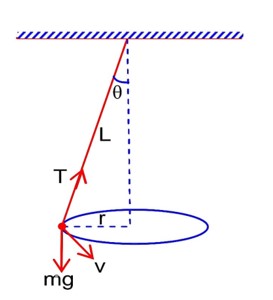
a year agoIf the length of the pendulum in pendulum clock increases by 0.1%, then the error in time per day is
New answer posted
a year agoContributor-Level 10
No, that's a common misconception about force in any object at rest. According to Newton's First Law, zero acceleration means zero net force. That does not mean zero force. A book on a table is at rest because two forces act on it. Gravity pulls it down. The table exerts an equal upward normal force. These forces balance each other, so the net force is zero. This can also be proved with Sir Isaac Newton's laws of motion. The 2nd Law implies that the book is not accelerating, so net force is zero. The third law of action and reaction states that the book pulls the table down with a force equal to its weight, as action. The table pushes
New answer posted
a year agoContributor-Level 10
Horizontal component of velocity of bomb equals to the velocity of plane. So, bomb and plane are in same vertical line always.
New answer posted
a year agoContributor-Level 10
Gauss law for magnetism states that total magnetic flux through a closed surface S will be zero. It is one of the four maxwell's equations that is useful in understanding the prinicples of electromagnetism. When understood in depth, the law implies that magnetic field lines form closed loops since they are continous. In short, it confirms that magnetic monopoles cannot exist.
Taking an Exam? Selecting a College?
Get authentic answers from experts, students and alumni that you won't find anywhere else
Sign Up on ShikshaOn Shiksha, get access to
- 67k Colleges
- 1.2k Exams
- 718k Reviews
- 1850k Answers