

Chemistry
Get insights from 6.9k questions on Chemistry, answered by students, alumni, and experts. You may also ask and answer any question you like about Chemistry
Follow Ask QuestionQuestions
Discussions
Active Users
Followers
New answer posted
a year agoContributor-Level 10
36. Graphite has greater entropy since it is loosely packed. At absolute zero the entropy of a substance is zero.
New answer posted
a year agoContributor-Level 10
This is a Short Answer Type Questions as classified in NCERT Exemplar
During free expansion, external pressure is zero, so Work done, w = -pextΔV
= -0(5 – 1) = 0
Since the gas is expanding isothermally, therefore, q = 0
ΔU = q + w =0+0=0
New question posted
a year agoNew answer posted
a year agoContributor-Level 10
34. For diatomic molecules e.g. H2, O2, Cl2 etc. both energies are equal.
New answer posted
a year agoContributor-Level 10
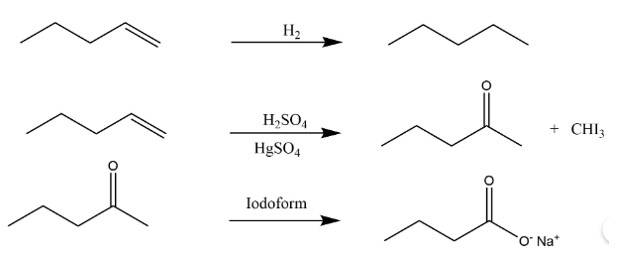
This is a long answer type question as classified in NCERT Exemplar
The molar mass of the compound = 3.38 x 22400/896 =831gmol-1
Element | Percentage | At.mass | Relative ratio | the simplest ratio |
C | 87.8% | 12 | 7.31 | 3 |
H | 12.19% | 1 | 12.19 | 5 |
Thus the empirical formula of the compound is C3H5
Molecular formula =n x empirical formula = 831/41 x C3H5 = C6H10
New answer posted
a year agoContributor-Level 10
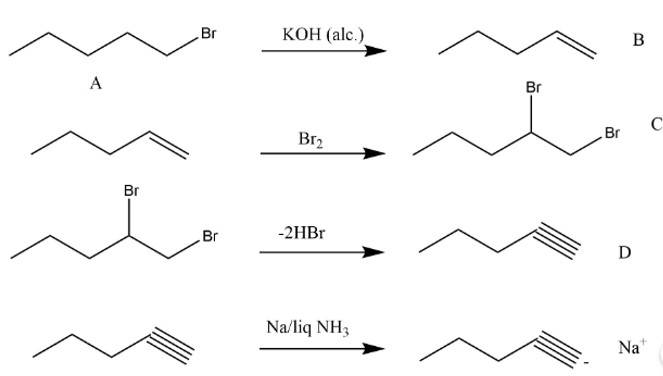
This is a long answer type question as classified in NCERT Exemplar
Taking an Exam? Selecting a College?
Get authentic answers from experts, students and alumni that you won't find anywhere else
Sign Up on ShikshaOn Shiksha, get access to
- 67k Colleges
- 1.2k Exams
- 717k Reviews
- 1850k Answers