

Class 12th
Get insights from 12k questions on Class 12th, answered by students, alumni, and experts. You may also ask and answer any question you like about Class 12th
Follow Ask QuestionQuestions
Discussions
Active Users
Followers
New answer posted
a year agoContributor-Level 10
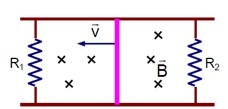
Heat generated in the resistance
H = i²RT
H? = 500 = (1.5)²R (20) ⇒ R = 500/45 = 11.11 Ω
H? = (3)²R (20) = 9 * (500/45) * 20 = 2000 J.

New answer posted
a year ago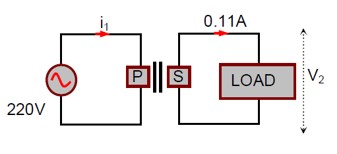
Contributor-Level 10
Voltage across secondary source
P = V? i? = V? i?
V? = P/i? = 60/0.11 ≈ 545 V
Since voltage across secondary source is more than primary source (220V)
⇒ Step- up transformer.
New answer posted
a year agoContributor-Level 10
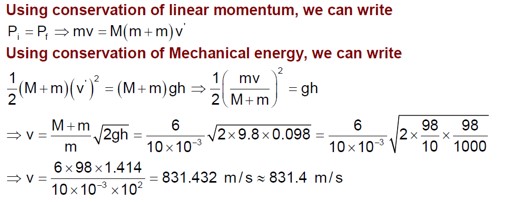
According to Question, we can write
E = λ/ (2πε? r) ⇒ σ = ε? E = λ/ (2πr)
⇒ σ = 8*10? / (2*3.14*3) = 0.424 nCm? ²

New answer posted
a year agoContributor-Level 10
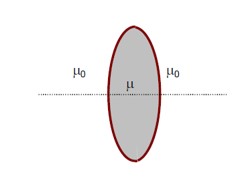
Using lens maker formula, we can write
1/f = (µ/µ? - 1) (1/R? - 1/R? )
µ = µ? ⇒ 1/f = 0 ⇒ f → Infinite
New answer posted
a year agoContributor-Level 10
Using de-Broglie equation:
λ = h/p = h/√ (2mK) = h/√ (2meV)
λ ∝ 1/√m
λ? /λ? = √ (m? /m? ) = √ (1.00727/0.00055) = √1831 ≈ 43:1
New answer posted
a year agoContributor-Level 10
A = Activity = λN = (ln (2)/t? /? ) N
N = (1.5*10? ³ / 198) * 6*10²³
A = (0.693 / (2.7*24*3600) * (1.5*10? ³ / 198) * 6*10²³ disintegration/s
A ≈ 1.32 * 10¹³ Bq = (1.32*10¹³ / 3.7*10¹? ) Ci ≈ 357 Ci
New answer posted
a year agoContributor-Level 10
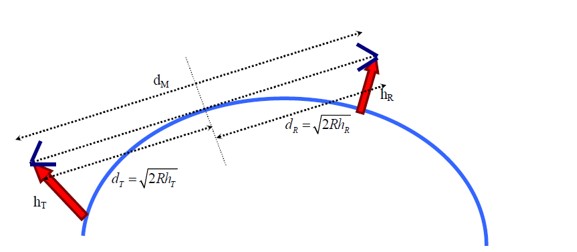
d = √ (2hT R) + √ (2hR R) = 2√ (2hR) (assuming towers are identical)
h = d²/ (8R) = (45*10³)²/ (8*6400*10³) ≈ 39.55 m
Taking an Exam? Selecting a College?
Get authentic answers from experts, students and alumni that you won't find anywhere else
Sign Up on ShikshaOn Shiksha, get access to
- 67k Colleges
- 1.2k Exams
- 717k Reviews
- 1850k Answers