
Overview
Get insights from 152 questions on Overview, answered by students, alumni, and experts. You may also ask and answer any question you like about Overview
- 152
Questions
- 0
Discussions
- 0
Active Users
- 0
Followers
Have a question about Overview? Ask our experts
Keep it short & simple. Type complete word. Avoid abusive language.
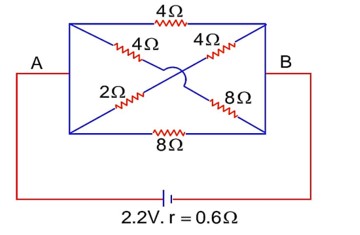
A teacher in his physics laboratory allotted an experiment ot determine the resistance (G) of a galvanometer. Students took the observations for <!-- [if gte mso 9]><xml>
A teacher in his physics laboratory allotted an experiment ot determine the resistance (G) of a galvanometer. Students took the observations for <!-- [if gte mso 9]><xml>
Given below are two statements: one is labeled as Assertion A and the other is labeled as Reason R.
Assertion A : Alloys such as constantan and manganin are used in making standard resistance coils.
Reason R : Constantan and maganin have very small value of temperature coefficient of resistance.
In the light of the above statements, choose the correct answer from the options given below.
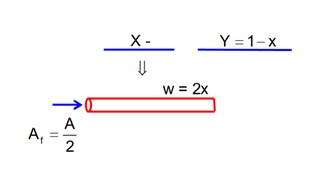
The current density in a cylindrical wire of radius 4mm is 4 × 10⁶Am-2. The current through the outer portion of the wire between radial distances <!-- [if gte mso 9]><xml>
The current density in a cylindrical wire of radius 4mm is 4 × 10⁶Am-2. The current through the outer portion of the wire between radial distances <!-- [if gte mso 9]><xml>
J (current density) = 4 × 10⁶ Am-2
Area between radial distance
A =
I = AJ
=
= 3R2 × 106 πAmp
= 3 (4 × 10⁻³)2 × 10⁶ πAmp
= 3 × 16 × 10-6 × 106π Amp
= 48πA
 Upvote

A cell, shunted by a8 <!-- [if gte mso 9]><xml>
A cell, shunted by a8 <!-- [if gte mso 9]><xml>
R shunt Resistance
Given
CD = 3m
CF = 2m
Current through potentiometer wire
I = (1)
A Area of potentiometer wire
Resistivity of the wire
L Length of the potentiometer wire
Case 1 When 8 shunt is bal aced at 3m length
VCD = VAB = E – I1r
=
(2)
Case 2 When 4 shunt is b
Upvote A <!-- [if gte mso 9]><xml>
A <!-- [if gte mso 9]><xml>
% of I which passes through galvanometer
of I
Upvote As shown in the figure, in steady state, the charge stored in the capacitor is ____________× 10-6C.
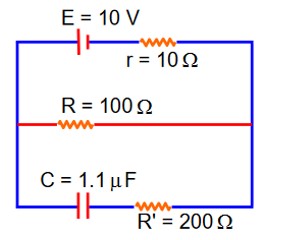
As shown in the figure, in steady state, the charge stored in the capacitor is ____________× 10-6C.