

Physics
Get insights from 5.6k questions on Physics, answered by students, alumni, and experts. You may also ask and answer any question you like about Physics
Follow Ask QuestionQuestions
Discussions
Active Users
Followers
New answer posted
a year agoContributor-Level 10
Capacitive reactance (say) on decreasing the operating frequency reduces
As is inversely proportional to the value of increase
As
increases, therefore displacement current Id decreases.
New answer posted
a year agoContributor-Level 10
Yes. Angular Velocity is a vector quantity i.e. it has directions. The direction of rotation can influence the sign of angular velocity's value. If the movement of the object is anticlockwise, the sign will be positive. Similarly, if the movement of the object is clockwise, the sign will be negative.
New answer posted
a year agoContributor-Level 10
Even if the torque is same, the rotation of a body can be slow or fast depending on the distribution of mass along the surface area. If the mass of a body is more on the axis area, it's speed of rotation will be faster as compared to the body whose mass is accumulated away from the axis due to which the body will resist the angular acceleration.

New answer posted
a year agoContributor-Level 10
In simple words, a push or pull applied on a body is known as a force. Force is a concept used in terms of linear motion. On the other hand, the force which causes a body to spin around an axis instead of moving from one point to aother is called torque. Torque is a theory which comes into account while studying rotational motion and is considered as the rotational analogue of force.
New answer posted
a year ago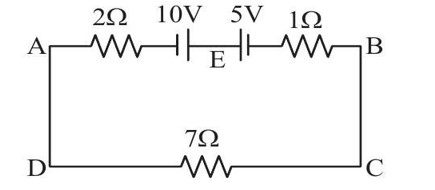
Contributor-Level 10
First band  Red
Red
2nd band Red
3rd band =Orange (Multiplier)
4th band = Gold (Tolerance)
Taking an Exam? Selecting a College?
Get authentic answers from experts, students and alumni that you won't find anywhere else
Sign Up on ShikshaOn Shiksha, get access to
- 67k Colleges
- 1.2k Exams
- 718k Reviews
- 1850k Answers