Physics

Get insights from 5.6k questions on Physics, answered by students, alumni, and experts. You may also ask and answer any question you like about Physics

Follow Ask Question
5.6k

Questions

0

Discussions

28

Active Users

0

Followers

New answer posted

11 months ago

0 Follower 2 Views

A
Aadit Singh Uppal

Contributor-Level 10

No. Since kinetic energy is a scalar quantity, it only depends on speed of the body and not the direction. So if the direction of the body is changed but the speed remains unchanged, there won't be any effect on the kinetic energy. However, if changing the direction also changes the speed of the body, then kinetic energy of the body will also change.

New answer posted

11 months ago

0 Follower 2 Views

A
Aadit Singh Uppal

Contributor-Level 10

If you look closely at the formula of kinetic energy (1/2*m*v^2), the velocity is squared which automatically gives a positive integer. And mass of the body can never be a negative value, which leads to the result being a positive integer.

New answer posted

11 months ago

0 Follower 2 Views

A
Aadit Singh Uppal

Contributor-Level 10

The 1/2 is a result of mathematical calculation, which occurs when we integrate? vdv in the formula of work done according to Newton's second law of motion. Without this, the final result will turn out to be twice of the actual value.

New answer posted

11 months ago

0 Follower 2 Views

J
Jaya Sharma

Contributor-Level 10

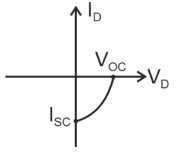
In solar cells, electron emission converts the light energy into electrical energy through the photoelectric effect. Solar cells work due to photoelectric effect, in which photons from sunlight strike solar cell surface. When a photon that has sufficient energy hits the surface, it transfers its energy to an electron in the material of solar cell surface. This causes the electron emission from its bound state. Solar cells can use photoelectric effect to generate electron-hole pairs that are separated and collected for producing electrical current. This provides a renewable source of power.

New answer posted

11 months ago

0 Follower 3 Views

J
Jaya Sharma

Contributor-Level 10

Electron emission is used for generating a beam of electrons in an electron microscope. An electron microscope requires a source of electrons for creating a beam of electrons. This source can be mostly a gun that uses electron emission for producing free electrons. Once the electrons are emitted, they are accelerated by anode and then, they are focused as a fine beam through a series of electromagnetic lenses. The beam is then directed onto the specimen that is being examined.

New answer posted

11 months ago

0 Follower 1 View

J
Jaya Sharma

Contributor-Level 10

The work function in electron emission is the minimum amount of energy needed for removing an electron from the surface of a material. This function is denoted as? , and it is measured in electron volts. An electron requires at least the work function as energy to escape the surface of a solid material into the vacuum. This represents the difference between energy of an electron at rest in vacuum and fermi level of the material. Work function varies from material to material.

New answer posted

11 months ago

0 Follower 4 Views

J
Jaya Sharma

Contributor-Level 10

A camera lens focuses the light onto a light-sensitive surface like film or a digital sensor for capturing an image. The camera lens gathers as much light as possible for forming a clear and bright image. This lens focuses the collected light on a specific point like camera's film or its digital sensor. The focus is achieved due to the curvature of lens and the arrangement of its optical elements. This lens refracts light rays so that they converge at focal plane where film/sensor is located.

New answer posted

11 months ago

0 Follower 4 Views

J
Jaya Sharma

Contributor-Level 10

A telescope functions on the working principle of gathering light form distant source and then, forming image which can be magnified for observation. Based on their design, there are two types of telescopes including refracting telescopes and reflecting telescopes. A refracting telescope has a front lens called as objective lens. This front lens is a convex lens that collects light from distant objects and then bend it to the focal point. In a reflecting telescope, a concave mirror is the primary mirror that collects light and then, reflects it to a focal point.

New answer posted

11 months ago

0 Follower 2 Views

J
Jaya Sharma

Contributor-Level 10

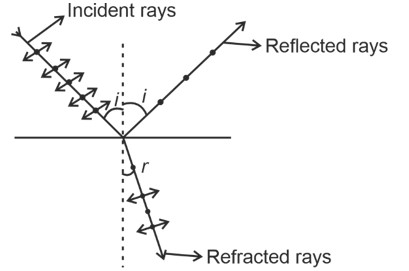
The following happens when light refracts from a prism:

  • When a white light passes through prism, it is separated into its constituent colours. This separation occurs because different colours of light are refracted in different amounts. This is known as dispersion.
  • Prism's refractive index varies with the wavelength of light. This causes shorter wavelengths to bend more than longer wavelengths. Due to the variation in bending, spread of colours is visible in rainbow. 
  • After being dispersed within the prism, light rays reach second surface of the prism. Here, light rays again undergo refraction as they exit the prism and re-enter air.
...more

New answer posted

11 months ago

0 Follower 2 Views

J
Jaya Sharma

Contributor-Level 10

Nuclear force is related to quarks and gluons in the following ways:

  • Protons and neutrons are made up of a combination of smaller particles called quarks and down quarks. A proton has two up quarks and one down quark whereas neutron has one up quark and two down quarks.
  • Nuclear force is an interaction between quarks that is mediated by particles called gluons. These are the exchange particles that are important for strong interactions. In simple words, they glue quarks together as they are being exchanged between quarks constantly.
  • Quarks are never found alone and are often found with protons and neutrons. This happens because of the beha
...more

Get authentic answers from experts, students and alumni that you won't find anywhere else

Sign Up on Shiksha

On Shiksha, get access to

  • 66k Colleges
  • 1.2k Exams
  • 705k Reviews
  • 1850k Answers

Share Your College Life Experience

×

This website uses Cookies and related technologies for the site to function correctly and securely, improve & personalise your browsing experience, analyse traffic, and support our marketing efforts and serve the Core Purpose. By continuing to browse the site, you agree to Privacy Policy and Cookie Policy.