
Nuclei
Get insights from 103 questions on Nuclei, answered by students, alumni, and experts. You may also ask and answer any question you like about Nuclei
- 103
Questions
- 0
Discussions
- 0
Active Users
- 0
Followers
Have a question about Nuclei? Ask our experts
Keep it short & simple. Type complete word. Avoid abusive language.
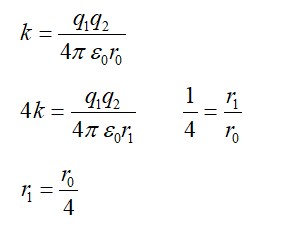
Find the mass number of an atom whose radius is half of that of a given atom of mass number 192.
Find the mass number of an atom whose radius is half of that of a given atom of mass number 192.
A nuclear fusion reaction is given by 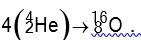
A nuclear fusion reaction is given by
Q = [4 *4.0026 – 15.9994] *931.5 MeV
Q = 10.2 MeV
 Upvote

A radioactive simple is undergoing a decay. At any time t1, its activity is A and another time t2, the activity is <!-- [if gte mso 9]><xml>
A radioactive simple is undergoing a decay. At any time t1, its activity is A and another time t2, the activity is <!-- [if gte mso 9]><xml>
Upvote A nucleus with mass number 240 breaks into two fragments each of mass number 120, the binding energy per nucleon of unfragmented nuclei is 7.6MeV while that of fragments is 8.5MeV. The total gain in the Binding Energy in the process is:
A nucleus with mass number 240 breaks into two fragments each of mass number 120, the binding energy per nucleon of unfragmented nuclei is 7.6MeV while that of fragments is 8.5MeV. The total gain in the Binding Energy in the process is:
The reaction is X²? → Y¹²? + Z¹²?
Binding energies per nucleon are: X=7.6 MeV, Y=8.5 MeV, Z=8.5 MeV.
Gain in binding energy (Q) = (Binding energy of products) - (Binding energy of reactants)
Q = (120 × 8.5 + 120 × 8.5) - (240 × 7.6) MeV
Q = (2 × 120 × 8.5) - (240 × 7.6) MeV = 2040 - 1824 = 216 MeV.
Upvote An electron (of mass ) and a photon have the same energy in the range of a few eV. The ratio of the de-Broglie wavelength associated with the electron and the wavelength of the photon is ( speed of light in vacuum)
<!-- [if !supportLineBreakNewLine]-->
<!--[endif]-->
An electron (of mass ) and a photon have the same energy in the range of a few eV. The ratio of the de-Broglie wavelength associated with the electron and the wavelength of the photon is ( speed of light in vacuum)
<!-- [if !supportLineBreakNewLine]-->
<!--[endif]-->
The half-life of Au¹⁹⁸ is 2.7 days. The activity of 1.50 mg of Au¹⁹⁸ if its atomic weight is 198 g mol⁻¹ is, (Nₐ = 6×10²³ / mol)
The half-life of Au¹⁹⁸ is 2.7 days. The activity of 1.50 mg of Au¹⁹⁸ if its atomic weight is 198 g mol⁻¹ is, (Nₐ = 6×10²³ / mol)
A = Activity = λN = (ln (2)/t? /? ) N
N = (1.5×10? ³ / 198) × 6×10²³
A = (0.693 / (2.7×24×3600) × (1.5×10? ³ / 198) × 6×10²³ disintegration/s
A ≈ 1.32 × 10¹³ Bq = (1.32×10¹³ / 3.7×10¹? ) Ci ≈ 357 Ci
Upvote