

Physics
Get insights from 5.6k questions on Physics, answered by students, alumni, and experts. You may also ask and answer any question you like about Physics
Follow Ask QuestionQuestions
Discussions
Active Users
Followers
New answer posted
a year agoContributor-Level 10
Elastic deformation leads to the temporary change in a material's shape that is also reversible. It occurs for energy storage in devices, such as springs. It's also essential for understanding the flexibility of structural components like beams in bridges. This principle is used in engineering design. You can think vehicle suspension systems and even the resilience of buildings against wind forces.
New answer posted
a year agoContributor-Level 10
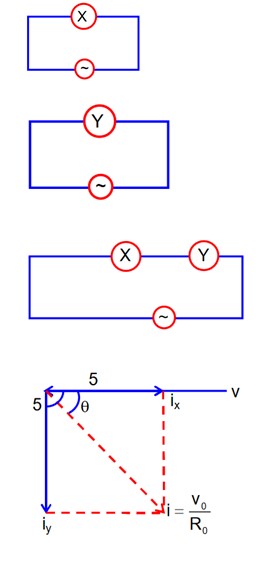
v = 100 sin
i =
i = 100 5sin
When x and y both are connected in series :-
v = 100sin
tan = 1 = 45°
R0 =
New answer posted
a year agoContributor-Level 10
Time to reach at max height t = of balls thrown in 1 sec = n.
So, time taken by each ball to reach maxm height, =
i.e. So, hmax =
=
New answer posted
a year agoContributor-Level 10
When we talk about elastic materials, we're referring to those that really show off their elasticity. Think of natural rubber, synthetic polymers, including spandex (also known as Lycra) and nylon, and even metals such as spring steel when they're within their elastic limits. These materials are quite resilient. They can store potential energy and bounce back to their original shape after being stretched or compressed. This behaviour is determined by the Hooke's Law.
New answer posted
a year agoContributor-Level 10
Elastic energy is stored in objects that can deform. They have several applications, including springs in vehicle suspension systems and wind-up clocks. This potential energy, present in items like stretched rubber bands, trampolines, and an archer's bow, is converted to kinetic energy upon release.
Taking an Exam? Selecting a College?
Get authentic answers from experts, students and alumni that you won't find anywhere else
Sign Up on ShikshaOn Shiksha, get access to
- 67k Colleges
- 1.2k Exams
- 718k Reviews
- 1850k Answers