Physics

Get insights from 5.6k questions on Physics, answered by students, alumni, and experts. You may also ask and answer any question you like about Physics

Follow Ask Question
5.6k

Questions

0

Discussions

29

Active Users

0

Followers

New answer posted

6 months ago

0 Follower 3 Views

V
Vishal Baghel

Contributor-Level 10

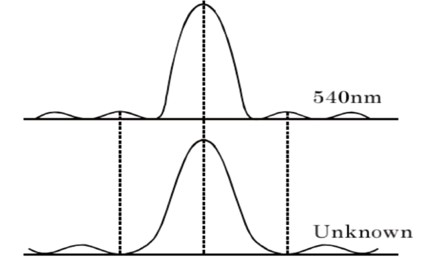
λ > h λ > 4 0 0 m

New answer posted

6 months ago

0 Follower 23 Views

V
Vishal Baghel

Contributor-Level 10

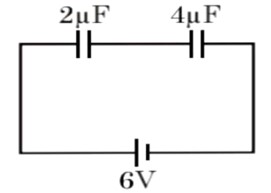
Q 1 = C 1 V = 2 V μ C

Q 2 = Q 3 = C 2 C 3 C 2 + C 3 V = 6 * 1 2 6 + 1 2 V = 4 V μ C

Q 1 : Q 2 : Q 3 = 1 : 2 : 2

New answer posted

6 months ago

0 Follower 2 Views

V
Vishal Baghel

Contributor-Level 10

Let us consider an elementary ring of radius r and thickness dr in which current is flowing.

So, No. of turns in this elementary ring

d N = ( N b a ) d r

( d B ) a t c e n t r e = μ 0 l d N 2 r

B = μ 0 l N 2 ( b a ) l n b a

New answer posted

6 months ago

0 Follower 41 Views

V
Vishal Baghel

Contributor-Level 10

Diode, in forward biased condition only, will allow current to flow through it.

Pot. different across resistor is

Δ V = ( 1 0 s i n ω t 3 ) v o l t  

But in reverse biased condition of diode,

Δ V = 0 (across diode)

New answer posted

6 months ago

0 Follower 1 View

V
Vishal Baghel

Contributor-Level 10

Using F = MA = m V T

m = FTV1

New answer posted

6 months ago

0 Follower 10 Views

V
Vishal Baghel

Contributor-Level 10

Load of mass will be equally distributed among the four colours so force on each columns will be 125 * 103 N.

Cross section area of the column = π [ ( 1 ) 2 ( 0 . 5 ) 2 ] = 2 . 3 5 5 m 2

Using young's modulus : ε = σ Y = F A Y = 1 2 5 * 1 0 3 2 . 3 5 5 * 2 * 1 0 1 1 = 2 . 6 5 * 1 0 7  

New answer posted

6 months ago

0 Follower 4 Views

V
Vishal Baghel

Contributor-Level 10

V = 10 ( 1 ? e ? t / R C )

2 = 20 ( 1 ? e ? t / R C )

1 1 0 = 1 ? e ? t / R C

e t / R C = 1 0 9

t R C = l n ( 1 0 9 ) = 0 . 1 0 5

C = t R * 0 . 1 0 5 = 1 0 ? 6 1 0 * 0 . 1 0 5 = 0 . 9 5 ? F


New answer posted

6 months ago

0 Follower 8 Views

V
Vishal Baghel

Contributor-Level 10

As observer is at O So height of water observed by observer

H μ ω = H ( 4 / 3 ) = 3 H 4

given diagram (17.5 H) is height of observer

S o 3 H 4 = 1 7 . 5 H

7 H 4 = 1 7 . 5

7H = 70

H = 10

New answer posted

7 months ago

0 Follower 1 View

S
Syed Aquib Ur Rahman

Contributor-Level 10

It's the energy that is needed for a change of state to transition from one substance or physical state to another. Remember that the main condition for latent heat is that there is no temperature change when the energy is absorbed or released. 

New answer posted

7 months ago

0 Follower 1 View

S
Syed Aquib Ur Rahman

Contributor-Level 10

You will be seeing these temperature plateaus appearing on the heating curve at the main melting and boiling points. The reason for that is the energy reaches latent heat. And we know that latent heat is the energy that lets phase transitions occur without increasing the temperature. 

Get authentic answers from experts, students and alumni that you won't find anywhere else

Sign Up on Shiksha

On Shiksha, get access to

  • 66k Colleges
  • 1.2k Exams
  • 688k Reviews
  • 1850k Answers

Share Your College Life Experience

×
×

This website uses Cookies and related technologies for the site to function correctly and securely, improve & personalise your browsing experience, analyse traffic, and support our marketing efforts and serve the Core Purpose. By continuing to browse the site, you agree to Privacy Policy and Cookie Policy.