Aldehydes, Ketones and Carboxylic Acids
Get insights from 93 questions on Aldehydes, Ketones and Carboxylic Acids, answered by students, alumni, and experts. You may also ask and answer any question you like about Aldehydes, Ketones and Carboxylic Acids
- 93
Questions
- 0
Discussions
- 0
Active Users
- 1
Followers
Have a question about Aldehydes, Ketones and Carboxylic Acids? Ask our experts
Keep it short & simple. Type complete word. Avoid abusive language.
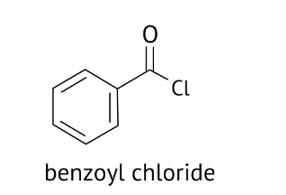
Benzophenone can be obtained by ____________.
A: Benzoyl chloride + Benzene + AlCl3
B: Benzoyl chloride + Diphenyl cadmium
C: Benzoyl chloride + Phenyl magnesium chloride
D: Benzene + Carbon monoxide + ZnCl2
Benzophenone can be obtained by ____________.
A: Benzoyl chloride + Benzene + AlCl3
B: Benzoyl chloride + Diphenyl cadmium
C: Benzoyl chloride + Phenyl magnesium chloride
D: Benzene + Carbon monoxide + ZnCl2
This is a Multiple Choice Type Questions as classified in NCERT Exemplar
Correct options: A and B
A: Benzophenone can be obtained by Friedel-craft acylation reaction
B: Benzophenone can also be obtained by the reaction between benzoyl chloride and diphenyl cadmium.
Through which of the following reactions the number of carbon atoms can be increased in the chain?
A: Grignard reaction
B: Cannizaro’s reaction
C: Aldol condensation
D: HVZ reaction
Through which of the following reactions the number of carbon atoms can be increased in the chain?
A: Grignard reaction
B: Cannizaro’s reaction
C: Aldol condensation
D: HVZ reaction
This is a Multiple Choice Type Questions as classified in NCERT Exemplar
Correct option: A and C
Grignard Reaction is the addition of an organomagnesium halide to form a tertiary or secondary alcohol.
Canizzaro's Reaction involves the base induced disproportionation of two molecules. Aldol Condensation
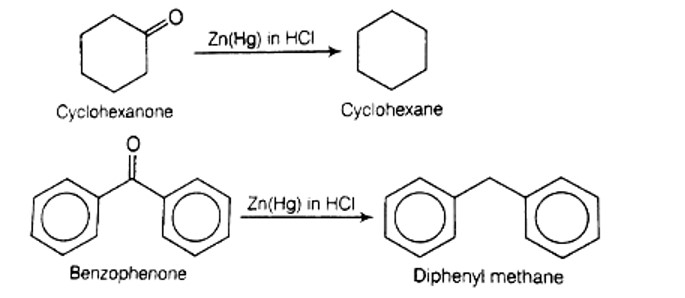
Which of the following conversions can be carried out by Clemmensen Reduction?
(i) Benzaldehyde into benzyl alcohol
(ii) Cyclohexanone into cyclohexane
(iii) Benzoyl chloride into benzaldehyde
(iv) Benzophenone into diphenyl methane
Which of the following conversions can be carried out by Clemmensen Reduction?
(i) Benzaldehyde into benzyl alcohol
(ii) Cyclohexanone into cyclohexane
(iii) Benzoyl chloride into benzaldehyde
(iv) Benzophenone into diphenyl methane
This is a Multiple Choice Type Questions as classified in NCERT Exemplar
Solution: (b, d)
Clemmensen reduction is used to convert cyclohexanone into cyclohexane and benzophenone into diphenyl methane .
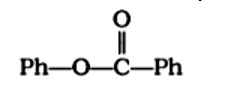
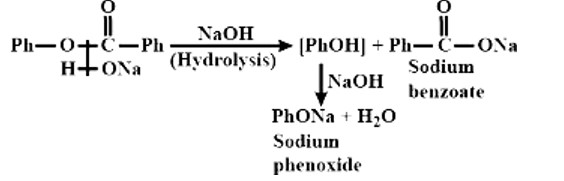
Treatment of compound
with NaOH solution yields
A: Phenol
B: Sodium phenoxide
C: Sodium benzoate
D: Benzophenone
Treatment of compound
with NaOH solution yields
A: Phenol
B: Sodium phenoxide
C: Sodium benzoate
D: Benzophenone
This is a Multiple Choice Type Questions as classified in NCERT Exemplar
Correct options: B and C
Note: In the following questions two or more options may be correct
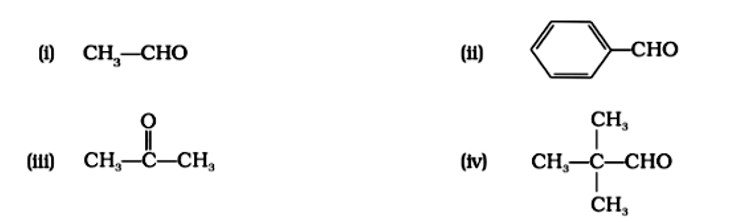
13. Which of the following compounds do not undergo aldol condensation?
Note: In the following questions two or more options may be correct
13. Which of the following compounds do not undergo aldol condensation?
This is a Multiple Choice Type Questions as classified in NCERT Exemplar
Correct options: B and D
Consider the following product CH3 -CHO C and O are broken into positive and negative bonds. C should have one condition: hydrogen must be available; if it isn't, aldol condensation will not oc
In Clemmensen Reduction carbonyl compound is treated with _____________.
A: Zinc amalgam + HCl
B: Sodium amalgam + HCl
C: Zinc amalgam + nitric acid
D: Sodium amalgam + HNO3
In Clemmensen Reduction carbonyl compound is treated with _____________.
A: Zinc amalgam + HCl
B: Sodium amalgam + HCl
C: Zinc amalgam + nitric acid
D: Sodium amalgam + HNO3
This is a Multiple Choice Type Questions as classified in NCERT Exemplar
Correct option: A
The Clemmensen Reduction method is used to reduce a carbonyl group to CH2. Amalgams are a type of reducing agent that has been around for a long time. In the Clemmensen reduction, hydrogen chloride acts as an ac
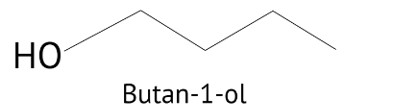
Which of the following compounds will give butanone on oxidation with alkaline KMnO4 solution?
A: Butan-1-ol
B: Butan-2-ol
C: Both
D: None of these
Which of the following compounds will give butanone on oxidation with alkaline KMnO4 solution?
A: Butan-1-ol
B: Butan-2-ol
C: Both
D: None of these
This is a Multiple Choice Type Questions as classified in NCERT Exemplar
Correct option: B
When a primary alcohol, such as Butan-1-ol, reacts with a powerful oxidising agent, such as KMnO4, it produces carboxylic acid, however when a secondary alcohol, such as Butan-2-ol, is oxidised under the pressur
Which is the most suitable reagent for the following conversion?
A: Tollen’s reagent
B: Benzoyl peroxide
C: I2 and NaOHsolution
D: Sn and NaOH solution
Which is the most suitable reagent for the following conversion?
A: Tollen’s reagent
B: Benzoyl peroxide
C: I2 and NaOHsolution
D: Sn and NaOH solution
This is a Multiple Choice Type Questions as classified in NCERT Exemplar
Correct option: C
I2 and NaOH It is an iodoform reaction involving methyl ketones, the solution is the correct reagent. Because the reactants and product have double bonds, double bonds do not work throughout the reaction. T
Compounds A and C in the following reaction are __________.
A: Identical
B: Positional isomers
C: Functional isomers
D: Optical isomers
Compounds A and C in the following reaction are __________.
A: Identical
B: Positional isomers
C: Functional isomers
D: Optical isomers
This is a Multiple Choice Type Questions as classified in NCERT Exemplar
Correct option: B
The position of a functional group in the same carbon chain differs in positional isomerism. The functional group in the chemical or the unsaturated double or triple bond in the compound can help us figure it ou
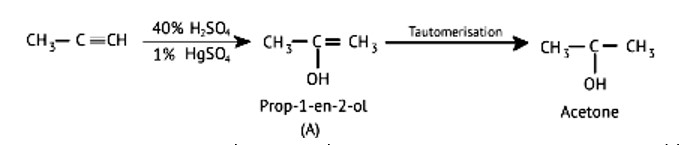
Structure of ‘A’ and type of isomerism in the above reaction are respectively
A: Prop–1–en–2–ol, metamerism
B: Prop-1-en-1-ol, tautomerism
C: Prop-2-en-2-ol, geometrical isomerism
D: Prop-1-en-2-ol, tautomerism
Structure of ‘A’ and type of isomerism in the above reaction are respectively
A: Prop–1–en–2–ol, metamerism
B: Prop-1-en-1-ol, tautomerism
C: Prop-2-en-2-ol, geometrical isomerism
D: Prop-1-en-2-ol, tautomerism
This is a Multiple Choice Type Questions as classified in NCERT Exemplar
Ans: Correct option: D