

Chemistry
Get insights from 6.9k questions on Chemistry, answered by students, alumni, and experts. You may also ask and answer any question you like about Chemistry
Follow Ask QuestionQuestions
Discussions
Active Users
Followers
New answer posted
a year agoContributor-Level 9
Sodium fusion extract is boiled with conc. HNO3 to remove NaCN and Na2S.
New answer posted
a year agoContributor-Level 9
Benzoic acid & naphthalene can be separated by crystallization. Benzoic acid is soluble is hot water but naphthalene is insoluble.
Assertion is incorrect & Reason is correct.
New answer posted
a year agoContributor-Level 9
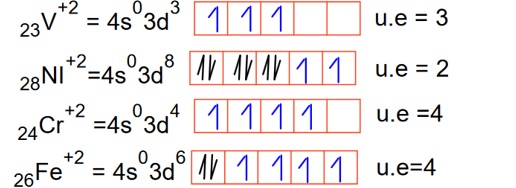
the lowest spin only magnetic moment for Ni+2 because of minimum unpaired electron.
New answer posted
a year agoContributor-Level 10
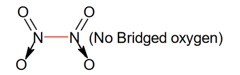
For AB3 interhalogen compound, which is T-shaped, only two lone pair electrons are available on central atom.
New answer posted
a year agoContributor-Level 10
Except electron gain enthalpy all the physical properties like sublimation enthalpy, ionization enthalpy and hydration energy affected the value of reduction potential.
Ans. = 3
New answer posted
a year agoContributor-Level 10
Electronic configuration of
Gd is ; Gd64 = [Xe]4f7 5d1 6s2
Hence
Total number of electrons in 4f sub-shell = 7
Ans. = 7
New answer posted
a year agoContributor-Level 10
Molecular structure of tetrapeptide Gly-Glu-Asp-Tyr is;
Total negative charge developed at pH 12.5 = 4
Ans. = 4
Taking an Exam? Selecting a College?
Get authentic answers from experts, students and alumni that you won't find anywhere else
Sign Up on ShikshaOn Shiksha, get access to
- 67k Colleges
- 1.2k Exams
- 716k Reviews
- 1850k Answers