Chemistry

Get insights from 6.9k questions on Chemistry, answered by students, alumni, and experts. You may also ask and answer any question you like about Chemistry

Follow Ask Question
6.9k

Questions

0

Discussions

29

Active Users

0

Followers

New answer posted

5 months ago

0 Follower 5 Views

A
alok kumar singh

Contributor-Level 10

For equation A + B ? C + D  

  K C = [ C ] [ D ] [ A ] [ B ] = 1 0 0 a t 2 9 8 K             

Here;    A +  B  ? C    +    D

t = 0       1M        1M

eq.         (1-x)      (1-x)      (1-x)      (1-x)

K c = ( 1 + x ) * ( 1 + x ) ( 1 x ) * ( 1 x )

x = 9 1 1  

At equilibrium, concentration of D is = 1 + 911=11+911=2011  

= 1.818 = 181.8 * 10-2 M

Ans. = 182 (the nearest integer)

New answer posted

5 months ago

0 Follower 4 Views

R
Raj Pandey

Contributor-Level 9

Δ H = 3 ( Δ H c o m b ) C 2 H 2 ( g ) ( Δ H c o m b ) C 6 H 6 ( l )

= 1 3 0 0 * 3 ( 3 2 6 8 ) k J / m o l e

= ( 3 9 0 0 + 3 2 6 8 ) k J / m o l e

= 6 3 2 k J / m o l e

New answer posted

5 months ago

0 Follower 2 Views

V
Vishal Baghel

Contributor-Level 10

Cu2Cl2 + Water -> Insoluble

AgCl + Water -> Insoluble

ZnCl2 + Water -> Colouless solution

CuCl2 + Water -> Coloured solution due to 3d9 electronic configuration.

New answer posted

5 months ago

0 Follower 8 Views

A
alok kumar singh

Contributor-Level 10

In photo-electric effect;

  h c λ = h v 0 + 1 2 m v 2             

  6 . 6 3 * 1 0 3 4 * 3 * 1 0 8 5 0 0 * 1 0 9 = ( 6 . 6 3 * 1 0 3 4 * 4 . 3 * 1 0 1 4 ) + 1 2 * 9 . 0 * 1 0 3 1 * v 2            

  v = ( 3 . 9 7 8 * 1 0 1 9 2 . 8 5 * 1 0 1 9 ) 4 . 5 * 1 0 3 1 = 2 5 * 1 0 1 0 = 5 * 1 0 5 m / s             

Ans. = 5

New answer posted

5 months ago

0 Follower 3 Views

V
Vishal Baghel

Contributor-Level 10

Molar conductivity measured at infinite dilution is called limiting molar conductivity. Hence at infinite dilution stage, both strong electrolyte (KCl) and weak electrolyte (CH3COOH) have identical value of conductivity. Therefore statement – I is false.

Statement – II is also false because molar conductivity increases by the decreasing the concentration of electrolyte.

New answer posted

5 months ago

0 Follower 2 Views

A
alok kumar singh

Contributor-Level 10

Molar weight of BaSO4 = 233 gram

233 gm of BaSO4 has 32 gm of S content

Hence 1.44 gm of BaSO4 has ( 3 2 * 1 . 4 4 2 3 3 ) g of S content = 0.1977 gm of 'S'

Weight of sulphur = 0.2 gram (the nearest)

Weight of organic sample = 0.471 gram

% of Sulphur = 0 . 2 * 1 0 0 0 . 4 7 1 = 4 2 . 4 6 %  

the nearest = 42%

New answer posted

5 months ago

0 Follower 4 Views

V
Vishal Baghel

Contributor-Level 10

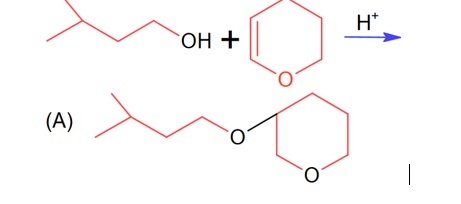
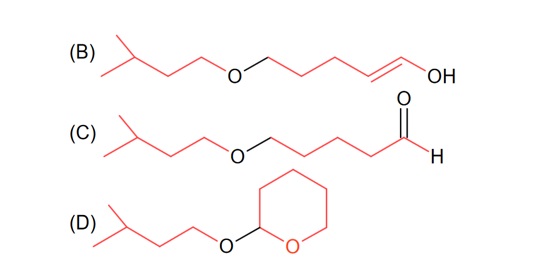
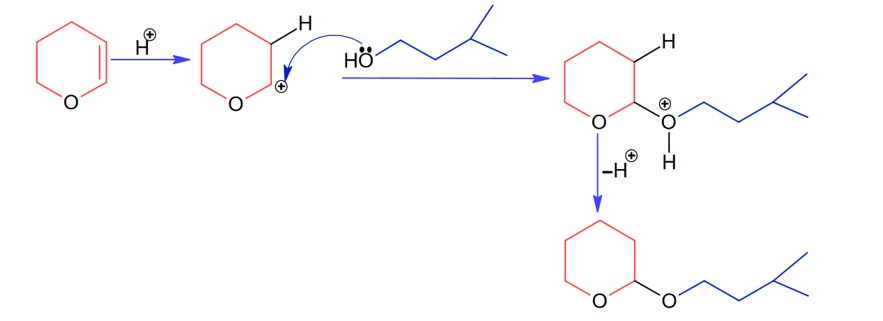
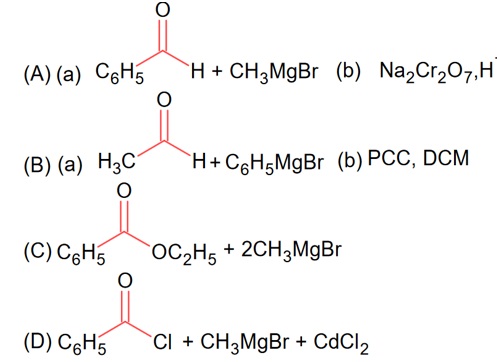
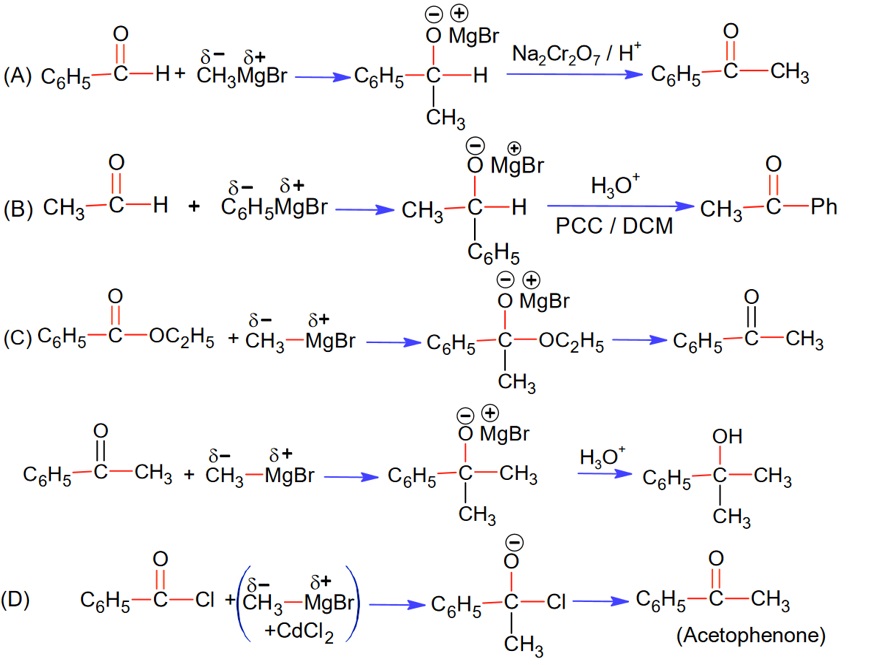
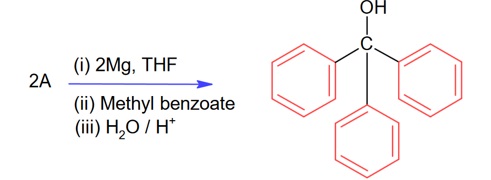
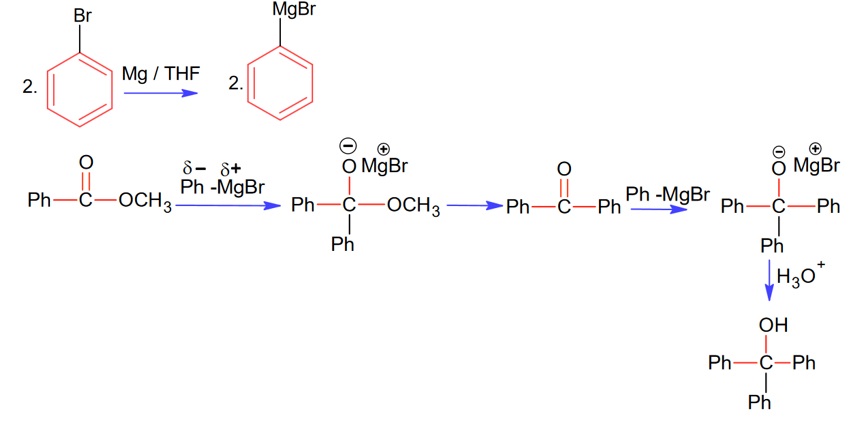
Kindly consider the following figure

New answer posted

5 months ago

0 Follower 2 Views

V
Vishal Baghel

Contributor-Level 10

Hydroxyapatite is the calcium minerals whose molecular formula is 3 C a 3 ( P O 4 ) 2 . C a ( O H ) 2  or C a 1 0 ( P O 4 ) 6 ( O H ) 2 .  During contact with water dissolved F ion, hydroxyapatite converted into  3 C a 3 ( P O 4 ) 2 . C a F 2 .

New answer posted

5 months ago

0 Follower 5 Views

V
Vishal Baghel

Contributor-Level 10

Yellow precipitate is Agl (s) which only produce by structure IV

New answer posted

5 months ago

0 Follower 2 Views

R
Raj Pandey

Contributor-Level 9

? 0 = h υ 0

= 6 . 6 * 1 0 3 4 * 1 . 3 * 1 0 1 5 J

= 8 . 5 8 * 1 0 1 9 J

Get authentic answers from experts, students and alumni that you won't find anywhere else

Sign Up on Shiksha

On Shiksha, get access to

  • 66k Colleges
  • 1.2k Exams
  • 681k Reviews
  • 1800k Answers

Share Your College Life Experience

×
×

This website uses Cookies and related technologies for the site to function correctly and securely, improve & personalise your browsing experience, analyse traffic, and support our marketing efforts and serve the Core Purpose. By continuing to browse the site, you agree to Privacy Policy and Cookie Policy.