

Chemistry
Get insights from 6.9k questions on Chemistry, answered by students, alumni, and experts. You may also ask and answer any question you like about Chemistry
Follow Ask QuestionQuestions
Discussions
Active Users
Followers
New answer posted
a year agoContributor-Level 10
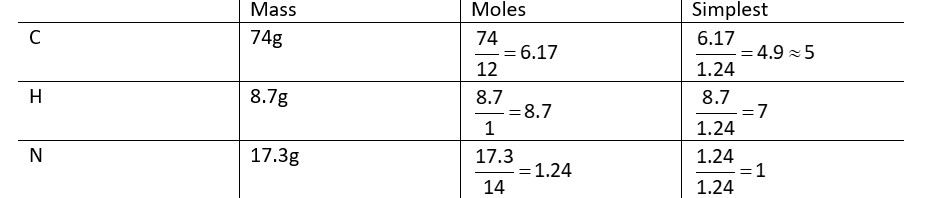
Empirical formula is C5H7N
Empirical mass = 81
Molecular mass = 162
So, molecular formula is C10H14N2
New answer posted
a year agoContributor-Level 10
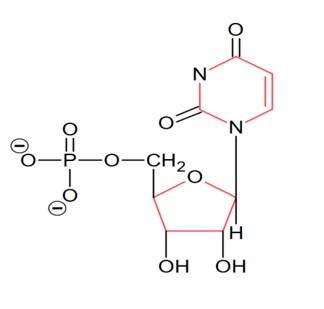
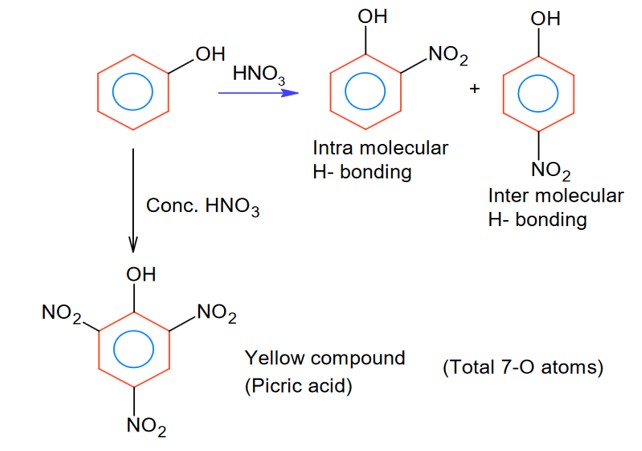
Intermolecular H- bonding and intra-molecular H- bonding producing compound may be the phenol derivatives.
New answer posted
a year agoContributor-Level 10
Complete combustion of compound produces 0.2 gm CO2
Hence wt of carbon in 0.2 gm CO2
Therefore % of carbon in compound
New answer posted
a year agoContributor-Level 10
For precipitation of two moles of AgCl
Two Cl will produce as a free anion
CoCl3.4NH3 complex will Cl (will not give 2Cl)
complex will be H2 [PtCl6] will not any Cl
will produce two Cl ion.
precipitate formation
New answer posted
a year agoContributor-Level 10
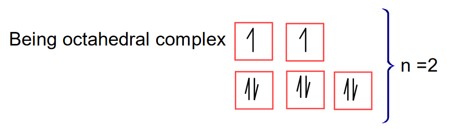
Most basic oxide V2O3
Here V has +3 O.S. Hence V+3
two unpaired e- in d- subshell
New answer posted
a year agoContributor-Level 10
Volume of H2 adsorbed =
Therefore volume of gas adsorbed per gram of the adsorbent =
New answer posted
a year agoContributor-Level 10
Process is based upon simultaneous disintegration hence,
………….(i)
and ………….(ii)
from equation (i) and (ii)
Here; A0 = B0 and
Therefore
New answer posted
a year agoContributor-Level 10
Here, total meq of acetic acid = 50 * 0.1 = 5
And total meq of NaOH = 25 * 0.1 = 2.5
After neutralization process
Meq of left acetic acid = 2.5
And meq of formed CH3COONa = 2.5
New answer posted
a year agoContributor-Level 10
0.5 % KCl solution has molality (m) =
1 - α α α
And I =
1.976 = 1 + α
% = 97.6%
the nearest 98.
Taking an Exam? Selecting a College?
Get authentic answers from experts, students and alumni that you won't find anywhere else
Sign Up on ShikshaOn Shiksha, get access to
- 67k Colleges
- 1.2k Exams
- 717k Reviews
- 1850k Answers