

Class 11th
Get insights from 8k questions on Class 11th, answered by students, alumni, and experts. You may also ask and answer any question you like about Class 11th
Follow Ask QuestionQuestions
Discussions
Active Users
Followers
New answer posted
a year agoContributor-Level 10
By the principle of conservation of angular momentum, the total angular momentum of the system (platform + person) remains constant.
L_initial = L_final
I_initial * ω_initial = I_final * ω_final
Initial state: Person is on the rim.
I_initial = I_platform + I_person_rim = (1/2)M_platform R² + M_person R²
Final state: Person is at the center.
I_final = I_platform + I_person_center = (1/2)M_platform R² + 0
[ (1/2) (200)R² + (80)R²] * 5 rpm = [ (1/2) (200)R²] * ω_final
(100R² + 80R²) * 5 = (100R²) * ω_final
180R² * 5 = 100R² * ω_final
ω_final = (180 * 5) / 100 = 9 rpm.
New answer posted
a year agoContributor-Level 10
lim_ (x→0) (1/x? ) {1 - cos (x²/2) - cos (x²/4) + cos (x²/2)cos (x²/4)} = 2?
⇒ lim_ (x→0) ( (1 - cos (x²/2) (1 - cos (x²/4) / x? ) = 2?
⇒ 2? = 2? ⇒ k = 8
New answer posted
a year agoContributor-Level 10
∴ center lies on x + y = 2 and in 1st quadrant center = (a, 2-a) where a > 0 and 2-a > 0 ⇒ 0 < a < 2
∴ circle touches x = 3 and y = 2
⇒ |3-a| = |2 - (2-a)| = radius
⇒ |3-a| = |a| ⇒ a = 3/2
∴ radius = a
⇒ Diameter = 2a = 3.
New answer posted
a year agoContributor-Level 10
After burning, heat exchange occurs between helium and atmospheric. Hence, irreversible, isothermal process.
New answer posted
a year agoContributor-Level 10
S = (2 . ¹P? - 3 . ²P? + 4 . ³P? upto 51 terms) + (1! - 2! + 3! - . upto 51 terms)
∴ [? ? P_ (n-1) = n!]
= (2! - 3! + 4! + 52!) + (1! - 2! + 3! - 4! + . . + (51)!)
= 1! + 52!
New answer posted
a year agoContributor-Level 10
LHL : lim_ (x→0? ) |1-x-x|/|λ-x-1| = 1/|λ-1|
RHL: lim_ (x→0? ) |1-x+x|/|λ-x+0| = 1/|λ|
For existence of limit
LHL = RHL
⇒ 1/|λ-1| = 1/|λ| ⇒ λ = 1/2
∴ L = 1/|λ| = 2
New answer posted
a year agoContributor-Level 10
The mass of the cylinder M = ρV = ρ (πR²L), where ρ is the density of the material.
We can express R² in terms of L: R² = M / (πρL).
The moment of inertia is I = M (R²/4 + L²/12).
Substitute R² into the equation for I:
I (L) = M * [ (M / (4πρL) + (L²/12) ]
To find the minimum possible I, we differentiate I with respect to L and set the derivative to zero.
dI/dL = M * [ -M/ (4πρL²) + 2L/12 ] = 0
M/ (4πρL²) = 2L/12 = L/6
M/ (πρ) = (4/6)L³ = (2/3)L³
Since R² = M/ (πρL), we have R²L = M/ (πρ).
Substitute M/ (πρ) into the differentiated equation:
R²L = (2/3)L³
New answer posted
a year agoContributor-Level 10
T_r+1 =? C_r (3)^ (n-r)/2) (5)^ (r/8) (n ≥ r)
Clearly r should be a multiple of 8.
∴ there are exactly 33 integral terms
Possible values of r can be
0,8,16, . . .,32 * 8
∴ least value of n = 256
New answer posted
a year agoContributor-Level 10
Sum of 1st 25 terms = sum of its next 15 terms
? (T? + . + T? ) = (T? + . + T? )
? (T? + . + T? ) = 2 (T? + . + T? )
? 40/2 [2*3 + (39d)] = 2 * 25/2 [2*2 + 24 d]
? d = 1/6
New answer posted
a year ago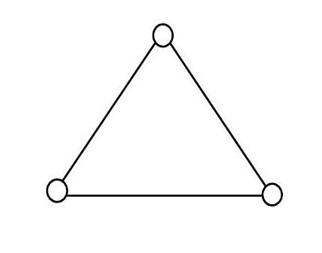
Contributor-Level 10
The internal energy of one mole of an ideal gas is given by U = (f/2)RT, where f is the number of degrees of freedom.
For a non-linear triatomic molecule (assumed to be a rigid rotator), there are:
3 translational degrees of freedom.
3 rotational degrees of freedom.
Vibrational modes are generally not considered at temperature T unless specified.
Total degrees of freedom f = 3 + 3 = 6.
U = (6/2)RT = 3RT.
Taking an Exam? Selecting a College?
Get authentic answers from experts, students and alumni that you won't find anywhere else
Sign Up on ShikshaOn Shiksha, get access to
- 67k Colleges
- 1.2k Exams
- 716k Reviews
- 1850k Answers