Class 11th

Get insights from 8k questions on Class 11th, answered by students, alumni, and experts. You may also ask and answer any question you like about Class 11th

Follow Ask Question
8k

Questions

0

Discussions

0

Active Users

0

Followers

New answer posted

a year ago

0 Follower 9 Views

P
Payal Gupta

Contributor-Level 10

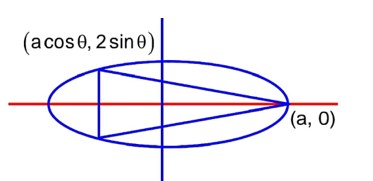
 x2a2+y24=1

∴Δ=12*a (1+cosθ).4sinθ

∴ΔmaxΔ=63⇒a=4

∴e=32


New answer posted

a year ago

0 Follower 6 Views

P
Payal Gupta

Contributor-Level 10

Equation of tangent at P (x, y) is Y = dydx (X−x)

A/q,      2x−ydxdy=0⇒2dyy=dxx

⇒2lny=lnx+lncy2=xc

It passes through (3, 3), c = 3

∴y2=3x        ∴ Length of latus rectum = 3

New answer posted

a year ago
0 Follower 2 Views

P
Payal Gupta

Contributor-Level 10

 x1y>0   and   x3y2=215

AM≥GM

3x+2y5≥ (x3y2)15

⇒3x+2y≥40

New answer posted

a year ago

0 Follower 12 Views

P
Payal Gupta

Contributor-Level 10

(x2+1)*1=x*2

⇒ (x2+1)2+1=x2+8⇒x2=2

2sin−1 (x4+x2−2x4+x2+2)=2sin−1 (12)=π3

New answer posted

a year ago

0 Follower 6 Views

P
Payal Gupta

Contributor-Level 10

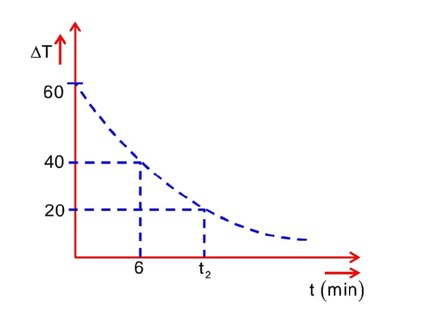
 dTdt=−k (T−T0)

dT (T−T0)=−kdt

⇒k=−16ln (23) - (1)

Now dTdt=−k (T−T0)

t = 10.257

t2 = 6 + 10.257 = 16.257 minutes

16.25 and or 16

New answer posted

a year ago

0 Follower 2 Views

P
Payal Gupta

Contributor-Level 10

Q=Δυ+w⇒nCΔT=nCvΔT=nCΔT4=34nCΔT=nCvΔT

C=43Cv=43*32R=2R

New answer posted

a year ago

0 Follower 2 Views

P
Payal Gupta

Contributor-Level 10

y= (10cosπxsin2πtT)cm

at   x=43

y=10cos (4π3)sin (2πtT)cm

=−5sin (2πtT)cm

Then Amplitude will be 5 cm.

New answer posted

a year ago

0 Follower 3 Views

P
Payal Gupta

Contributor-Level 10

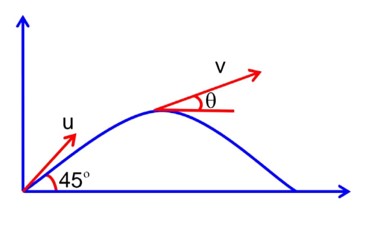
after 2 sec, v = 20 m/sec

v→=ucos45°i^+ (usin45°−gt)j^v=20= (ucos45°)2+ (usin45°−20)2

⇒400=u2+400−40usin45°

u = 40 sin 45°

Hmax=u2sin2452g=402sin245°*sin2452g

=40*402*10*12*12=20m

New answer posted

a year ago

0 Follower 5 Views

R
Rishabh Pandey

Contributor-Level 10

To represent in detail NCERT ideas of organic chemistry basics (Class 11, Chapter Organic Chemistry - some basic principles and methodologies), you can use a variety of superb online resources. Sites such as  Khan Academy provide entire notes, video recorded lectures and solved examples which deconstructs hard topics such as nomenclature, isomerism, reaction mechanisms and the effect of electron displacement. Physics Wallah and Aakash also have detailed revision videos as part of the NCERT syllabus which goes into details about these base concepts. Going through the platforms will give you deeper insights than the textbook.

New answer posted

a year ago

0 Follower 3 Views

A
alok kumar singh

Contributor-Level 10

z ˜ = i z 2 + z 2 − z

z + Z ¯ = z 2 ( i + 1 )

z + Z ¯ = z 2 ( i + 1 ) Let z be equal to (x + iy)

(x + iy) + (x – iy) = (x + iy)2 (i + 1)

2 x = ( x 2 − y 2 + 2 i x y ) ( i + 1 )               

Equating the real & in eg part.

( x 2 − y 2 + 2 i x y ) = 0 . . . . . . . . . ( i )

( x 2 − y 2 − 2 x y ) = ( 2 x ) . . . . . . . . . . . . . . ( i i )               

(i) & (ii)

 4xy = -2x Þ x = 0 or y = ( − 1 2 )  

(for x = 0, y = 0)

For y = − 1 2  

x2   − 1 4 + 2 ( − 1 2 ) x = 0

x =   4 ± 1 6 + 1 6 2 . 4

=  ( 1 + 2 2 ) o r ( 1 − 2 2 )  

∴ s u m of   | z | 2 = ( 1 + 2 2 ) 2 + 1 4 + ( 1 − 2 2 ) 2 + 1 4 + 0 2 + O 2

=   3 4 + 2 2 + 1 4 + 3 4 − 2 2 + 1 4             = 3 2 + 1 2 = 2

Get authentic answers from experts, students and alumni that you won't find anywhere else

Sign Up on Shiksha

On Shiksha, get access to

  • 67k Colleges
  • 1.2k Exams
  • 717k Reviews
  • 1850k Answers

Share Your College Life Experience

×
×

This website uses Cookies and related technologies for the site to function correctly and securely, improve & personalise your browsing experience, analyse traffic, and support our marketing efforts and serve the Core Purpose. By continuing to browse the site, you agree to Privacy Policy and Cookie Policy.