Class 12th

Get insights from 12k questions on Class 12th, answered by students, alumni, and experts. You may also ask and answer any question you like about Class 12th

Follow Ask Question
12k

Questions

0

Discussions

60

Active Users

0

Followers

New answer posted

3 months ago

0 Follower 1 View

A
alok kumar singh

Contributor-Level 10

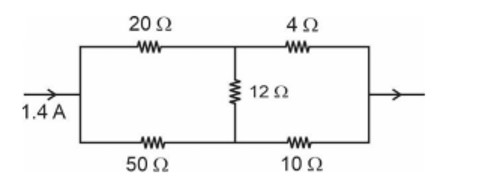
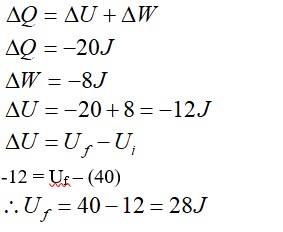
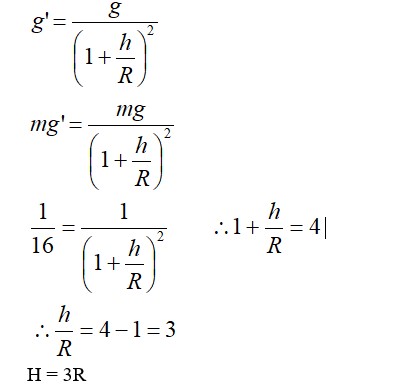
Kindly go through the solution


New answer posted

3 months ago

0 Follower 1 View

A
alok kumar singh

Contributor-Level 10

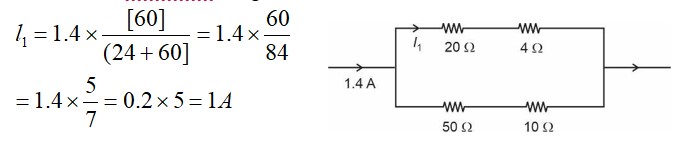
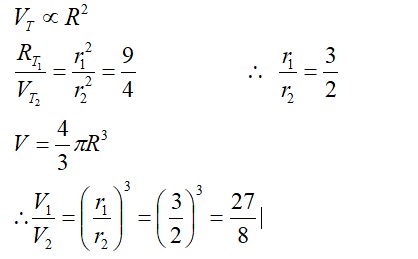
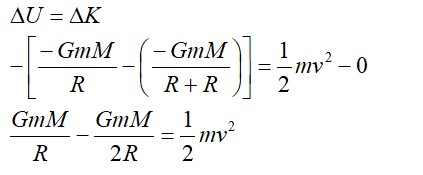
Kindly go through the solution


New answer posted

3 months ago

0 Follower 1 View

A
alok kumar singh

Contributor-Level 10

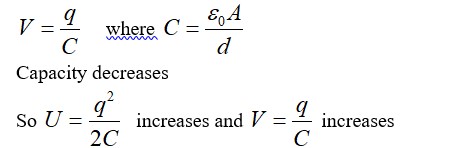
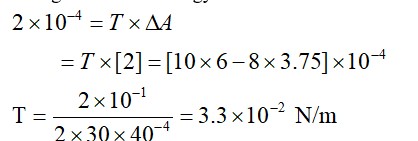
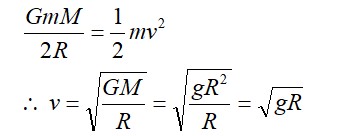
Kindly go through the solution

HVZ reaction:


New answer posted

3 months ago

0 Follower 1 View

A
alok kumar singh

Contributor-Level 10

Cannizzaro reaction is shown by aldehydes containing no a–H atoms

New answer posted

3 months ago

0 Follower 2 Views

A
alok kumar singh

Contributor-Level 10

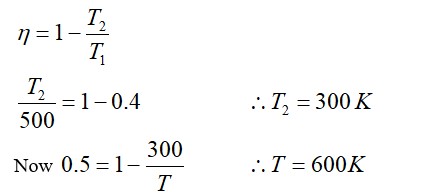
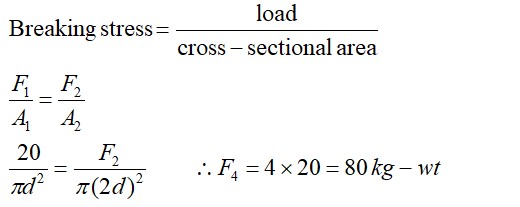
Kindly go through the image


New answer posted

3 months ago

0 Follower 1 View

A
alok kumar singh

Contributor-Level 10

Zn2+ has no unpaired electron and colourless in aqueous solution.

New answer posted

3 months ago

0 Follower 1 View

A
alok kumar singh

Contributor-Level 10

Homoleptic complexes in which a metal is bound to only one kind of donor groups/ligands.

New answer posted

3 months ago

0 Follower 2 Views

A
alok kumar singh

Contributor-Level 10

In aniline –NH2 is strong activating group due to presence of lone pair in nitrogen.

Aniline does not show Friedel-Craft alkylation reaction, because anhydrous AlCl3 and aniline form salt together


New answer posted

3 months ago

0 Follower 1 View

A
alok kumar singh

Contributor-Level 10

[Ni (H2O)6]2+ Þ Ni2+ is octahedral and [Ni (CN)4]2– is square planar.

In [Ni (H2O)6]2+ Þ Ni2+ has two unpaired electrons and in [Ni (CN)4]2– Þ Ni2+ has no unpaired electrons. [Ni (H2O)6]2+ is coloured as it absorbs red light due to suitable d-d transition and complementary light emitted is green.

[Ni (CN)4]2– has strong field ligand so the electrons of Ni2+ pair up and it is colourless as it cannot absorb light from visible region.

New answer posted

3 months ago

0 Follower 1 View

A
alok kumar singh

Contributor-Level 10

KCN   + CN

            R – X + KCN  R – CN + KX

            R – X + AgCN  R – NC + AgX

            KCN is ionic therefore ionised and attack occurs through carbon.

            AgCN is covalent therefore attack starts with Nitrogen.

Get authentic answers from experts, students and alumni that you won't find anywhere else

Sign Up on Shiksha

On Shiksha, get access to

  • 66k Colleges
  • 1.2k Exams
  • 681k Reviews
  • 1800k Answers

Share Your College Life Experience

×
×

This website uses Cookies and related technologies for the site to function correctly and securely, improve & personalise your browsing experience, analyse traffic, and support our marketing efforts and serve the Core Purpose. By continuing to browse the site, you agree to Privacy Policy and Cookie Policy.