

Class 12th
Get insights from 12k questions on Class 12th, answered by students, alumni, and experts. You may also ask and answer any question you like about Class 12th
Follow Ask QuestionQuestions
Discussions
Active Users
Followers
New answer posted
a year agoBeginner-Level 5
Yes, you are eligible for NEET UG 2025 even if you're appearing for NIOS Class 12 exam in October 2025. As Per NMC GMER 23 guidelines, NIOS students with PCB and English, aged 17 by December 31, 2025, and meeting minimum PCB aggregate marks (50% General, 40% reserved) qualify
.
New answer posted
a year ago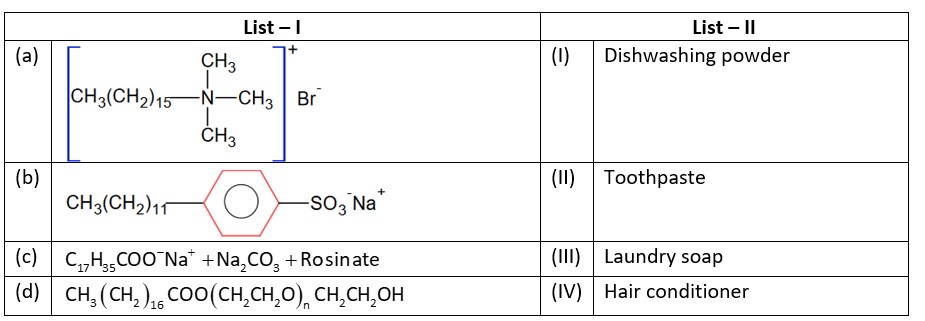
Contributor-Level 10
used in laundry soap
used in dish washing powder
New answer posted
a year agoContributor-Level 10
Bakelite used for making electrical switches, Glyptal used for paints and lacquers, PVC used for water pipe and polystyrene used for Television cabinets.
New answer posted
a year agoContributor-Level 10
In Hofmann's degradation reaction, produced intermediate is carbine and alkyl and Aryl both type of group can be involved in migration process, during rearrangement.
New answer posted
a year agoContributor-Level 10
Among all CO3+ has the highest +ve charge density and CN- is the strongest ligand among all which will give maximum CFSE.
Taking an Exam? Selecting a College?
Get authentic answers from experts, students and alumni that you won't find anywhere else
Sign Up on ShikshaOn Shiksha, get access to
- 67k Colleges
- 1.2k Exams
- 718k Reviews
- 1850k Answers