
Integrals
Get insights from 366 questions on Integrals, answered by students, alumni, and experts. You may also ask and answer any question you like about Integrals
- 366
Questions
- 0
Discussions
- 0
Active Users
- 0
Followers
Have a question about Integrals? Ask our experts
Keep it short & simple. Type complete word. Avoid abusive language.
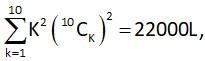
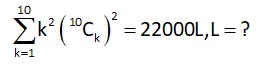
=
22000L =
L = 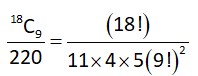
6 + 24 + 2 + 1
3 +3 + 1
= 221
 Upvote

<!-- [if gte mso 9]><xml>
<!-- [if gte mso 9]><xml>
, using L.H.L Rule, e0 = 1
Sum of roots = 6, no solution.
Upvote The value of <!-- [if gte mso 9]><xml>
The value of <!-- [if gte mso 9]><xml>
Let f, g : R ® R be functions defined by
<!-- [if gte mso 9]><xml>
where [x] denote the greatest integer less than or equal to x. Then, the function fog is discontinuous at exactly:
Let f, g : R ® R be functions defined by
<!-- [if gte mso 9]><xml>
where [x] denote the greatest integer less than or equal to x. Then, the function fog is discontinuous at exactly:
fog
Not possible as of inequalities give
ex – x < 0, x < 0 (x – 1)2 – 1 < 0
Not possible (x – 1 + 1)(x – 1 – 1) < 0
(x)(x – 2) < 0
x
continuous x < 0
Discontinuous at
Upvote Let f be a real valued continuous function on [0, 1] and f(x) = Then, which of the following points (x, y) lies on the curve y = f(x)?
Let f be a real valued continuous function on [0, 1] and f(x) = Then, which of the following points (x, y) lies on the curve y = f(x)?
Let
So, f (x) = αx – β
Now,
f (x) = αx – β
option (D) satisfies
Upvote where [t] denotes greatest integer less than or equal to t, is equal to:
where [t] denotes greatest integer less than or equal to t, is equal to: