
Inverse Trigonometric Functions
Get insights from 106 questions on Inverse Trigonometric Functions, answered by students, alumni, and experts. You may also ask and answer any question you like about Inverse Trigonometric Functions
- 106
Questions
- 0
Discussions
- 0
Active Users
- 1
Followers
Have a question about Inverse Trigonometric Functions? Ask our experts
Keep it short & simple. Type complete word. Avoid abusive language.
The number of integral values of ‘k’ for which the equation 3sinx + 4cos x = k + 1 has a solution, k R is------------.
The number of integral values of ‘k’ for which the equation 3sinx + 4cos x = k + 1 has a solution, k R is------------.
total number of integral values of k is 11.
 Upvote

The number of solution of the log4 (x-1) = log2 (x-3) is------------.
The number of solution of the log4 (x-1) = log2 (x-3) is------------.
also x – 1 > 0 and x – 3 > 0
x > 1 & x > 3
Hence, x = 5 possible. Only one solution.
Upvote The number of solutions of the equation log(x+1) <!-- [if gte mso 9]><xml>
The number of solutions of the equation log(x+1) <!-- [if gte mso 9]><xml>
(not possible) and
Hence only one solution is possible.
Upvote If f : R -> R is given by f(x) = x + 1, then the value of
is:
If f : R -> R is given by f(x) = x + 1, then the value of
is:
If <!-- [if gte mso 9]><xml>
If <!-- [if gte mso 9]><xml>
=> ln|y + 2y| = x + c
y (0) = 0
ln |y + 2y| = x
y = 1
x = ln 3
Upvote If <!-- [if gte mso 9]><xml>
If <!-- [if gte mso 9]><xml>
Since
or
Since L.H.S.
or
Upvote Let M and m respectively be the maximum and minimum values of the function f(x) = tan-1 (sin x + cos x) in <!-- [if gte mso 9]><xml>
Let M and m respectively be the maximum and minimum values of the function f(x) = tan-1 (sin x + cos x) in <!-- [if gte mso 9]><xml>
f(x) = tan-1 (sin x + cos x)
so 1
so
->M = tan-1
Now, tan (M – m) = tan
Upvote The domain of the function cosec-1 <!-- [if gte mso 9]><xml>
The domain of the function cosec-1 <!-- [if gte mso 9]><xml>
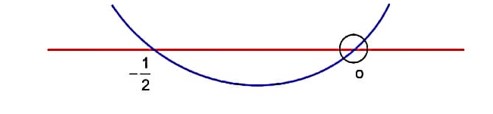
For <!-- [if gte mso 9]><xml>
For <!-- [if gte mso 9]><xml>
use
Sum of roots ->b = -1 + 2
Product of roots -> -5 = -2
b = 4, k2 =
Upvote Considering the principal values of the inverse trigonometric functions, the sum of all the solutions of the equation cos-(x) – 2sin-1(x) = cos-1(2x) is equal to:
Considering the principal values of the inverse trigonometric functions, the sum of all the solutions of the equation cos-(x) – 2sin-1(x) = cos-1(2x) is equal to:
cos-1 x = 2 sin-1 x = cos-1 2x
All satisfy the original equation
Sum =
Upvote