

Physics
Get insights from 5.6k questions on Physics, answered by students, alumni, and experts. You may also ask and answer any question you like about Physics
Follow Ask QuestionQuestions
Discussions
Active Users
Followers
New answer posted
a year ago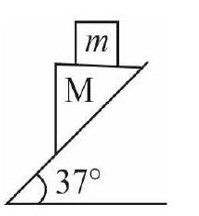
Contributor-Level 9
Acceleration of the combined system along the incline is given by
With respect to block M :
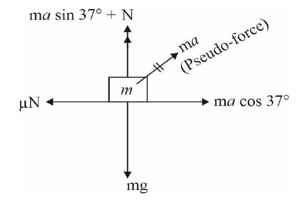
 . After collision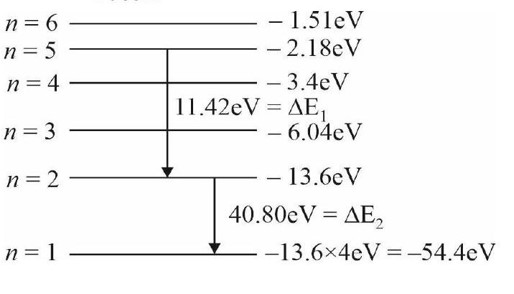
New answer posted
a year agoContributor-Level 9
Statement (1) is correct
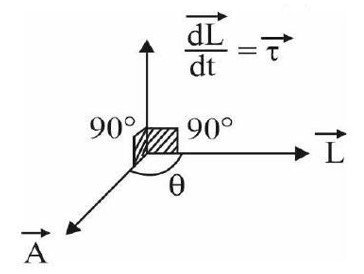
The component of in the direction of is always perpendicular to , so it does not change.
Statement (2) is correct
The magnitude of does not change with time as .
Statement (3) is correct
The direction of changes with time.
Statement (4) is incorrect.
New answer posted
a year agoNew answer posted
a year ago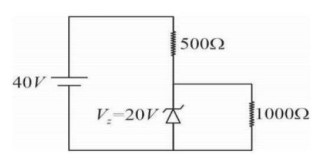
Contributor-Level 10
Potential difference across R?
(R? / (R? +R? ) * V is greater than zenor voltage
⇒ i? = V_z/R? = 20/1000 A = 20 mA
Current through R? , i? = (40-V_z)/R? = 20/500 = 40 mA
Current through zener diode = i? - i? = 20 mA
New answer posted
a year agoContributor-Level 10
I? = P? – P? = 3 * 4? – 3 * 3î = 12? – 9î |I? | = √12² + 9² = 15kgm/s
New answer posted
a year agoNew answer posted
a year agoNew answer posted
a year agoContributor-Level 10
V_common = (C? V? + C? V? )/ (C? + C? )? 2 = (3? F)*12)/ (3? F)+ (3? F)*K)? 2 = 12/ (K+1)? K = 5
Taking an Exam? Selecting a College?
Get authentic answers from experts, students and alumni that you won't find anywhere else
Sign Up on ShikshaOn Shiksha, get access to
- 67k Colleges
- 1.2k Exams
- 718k Reviews
- 1850k Answers