

Physics
Get insights from 5.6k questions on Physics, answered by students, alumni, and experts. You may also ask and answer any question you like about Physics
Follow Ask QuestionQuestions
Discussions
Active Users
Followers
New answer posted
a year agoContributor-Level 10
Stopping potential defined in terms of wavelength as :
Using above two equation we can calculate :
New answer posted
a year ago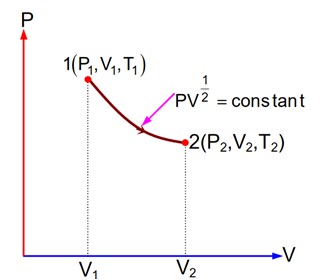
Contributor-Level 10
Since equation of the gas process is given so we can convert it into T & V form.
=
New answer posted
a year ago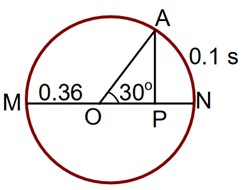
Contributor-Level 10
As we know that maximum acceleration will act on the particle when it is at extreme position .
New answer posted
a year agoBeginner-Level 5
When two or more individual charges are present in a system, the total charge will be an algebraic sum of all individual charges and not the vector sum. Therefore, an electric charge is considered as a scalar quantity.
New answer posted
a year agoWhy do conductors have a positive charge, a lack of free electrons, not as excess number of protons?
Beginner-Level 5
This is an interesting question! Even though a proton has a positive charge, the net positive charge in a conducting material is always due to the removal of free electrons.
This happens due to the availability of only free electrons in all conductors. Since protons are present in the nucleus, they can not roam freely in the conductor, as electrons travel freely in the conductor due to their presence in the outer shell.
New answer posted
a year agoContributor-Level 10
A magnetic pole will repel or attract magnetic sheet so force is need.
B. If sheet is non-magnetic, no force needed.
C. If it is conducting, then there will be addy current in sheet, which opposes the motion. So forces is needed move sheet with uniform speed.
D. The non-conducting and non-polar sheet do not interact with magnetic field of magnet.
Taking an Exam? Selecting a College?
Get authentic answers from experts, students and alumni that you won't find anywhere else
Sign Up on ShikshaOn Shiksha, get access to
- 67k Colleges
- 1.2k Exams
- 718k Reviews
- 1850k Answers