

Chemistry
Get insights from 6.9k questions on Chemistry, answered by students, alumni, and experts. You may also ask and answer any question you like about Chemistry
Follow Ask QuestionQuestions
Discussions
Active Users
Followers
New answer posted
12 months ago
Contributor-Level 10
Group?17, elements have very high ionisation enthalpy due to increase in atomic size, ionization enthalpy decreases down the group.
New answer posted
12 months ago
Contributor-Level 10
In the metallurgy of aluminium, purified Al2O3 is mixed with Na3AIF6 or CaF2 which lowers the melting point of the mixture and brings conductivity.
New answer posted
12 months agoContributor-Level 10
Sucrose is non-reducing sugar. It does not reduce Fehling solution.
New answer posted
12 months agoContributor-Level 10
Heavier element of p block do not from pπ− pπ bonds as their atomic orbital are so large and diffius that they cannot have effecitve overlapping.
New answer posted
12 months ago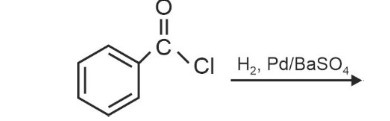
Contributor-Level 10
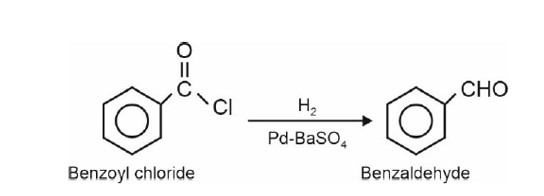
Acyl chloride is hydrogenated over catalyst, palladium or barium sulphate. This reaction is called Rosenmund reaction.
New answer posted
12 months agoContributor-Level 10
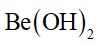
The inertness of


New answer posted
12 months agoContributor-Level 10
Sodium carbonate is a white crystalline solid which exists as a decahydrate, 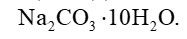
New answer posted
12 months ago
New answer posted
12 months agoContributor-Level 10
Bond angles give some idea regarding the distribution of orbitals around the central atom in a molecule/complex ion and hence it helps us in determining its shape
Taking an Exam? Selecting a College?
Get authentic answers from experts, students and alumni that you won't find anywhere else
Sign Up on ShikshaOn Shiksha, get access to
- 67k Colleges
- 1.2k Exams
- 716k Reviews
- 1850k Answers