

Chemistry
Get insights from 6.9k questions on Chemistry, answered by students, alumni, and experts. You may also ask and answer any question you like about Chemistry
Follow Ask QuestionQuestions
Discussions
Active Users
Followers

New answer posted
12 months ago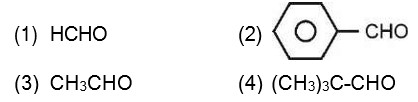
Contributor-Level 10
Cannizzaro reaction is shown by aldehydes containing no a–H atoms
New answer posted
12 months agoContributor-Level 10
In heterolytic bond cleavage ions are formed. hence for ionic reaction in organic compound heterolytic bond cleavage takes place.
New answer posted
12 months agoContributor-Level 10
Zn2+ has no unpaired electron and colourless in aqueous solution.
New answer posted
12 months agoContributor-Level 10
Homoleptic complexes in which a metal is bound to only one kind of donor groups/ligands.
Taking an Exam? Selecting a College?
Get authentic answers from experts, students and alumni that you won't find anywhere else
Sign Up on ShikshaOn Shiksha, get access to
- 67k Colleges
- 1.2k Exams
- 716k Reviews
- 1850k Answers