

Chemistry
Get insights from 6.9k questions on Chemistry, answered by students, alumni, and experts. You may also ask and answer any question you like about Chemistry
Follow Ask QuestionQuestions
Discussions
Active Users
Followers
New answer posted
a year agoContributor-Level 10
Using : PV = nRT
1.5 * 416 = n * 0.083 * 300
n = 25mol =
25 =
So, molar mass, M = 4 g/mol.
New answer posted
a year agoContributor-Level 10
Compound X is sucrose as,

Here, glucose is A which on oxidation with HNO3 gives saccharic acid as
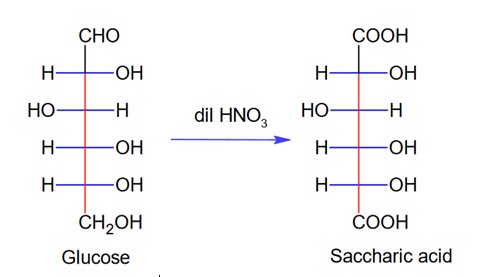
B is b-D fructose which is laevarotatory.
New answer posted
a year agoContributor-Level 10
Natural rubber is a linear polymer of isoprene called cis-polyisoprene and has elastic properties.
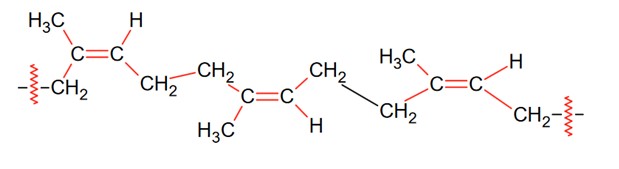
Ci-polyisoprene molecule consists of various chains held together by weak vander Waals interactions and has a coiled structure.
New answer posted
a year ago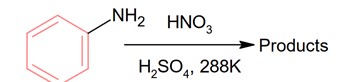
Contributor-Level 10
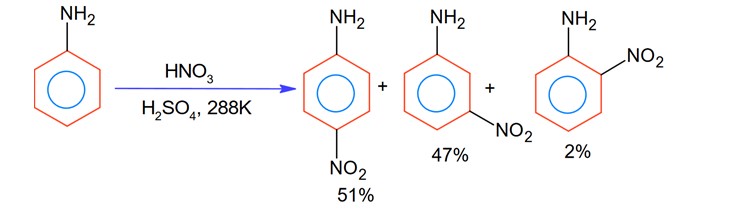
During nitration using HNO3 and H2SO4, H2SO4 act as an acid while HNO3 act as a base.
New answer posted
a year agoContributor-Level 10
Photochemical smog occurs in warm, dry and sunny climate. The main components of photochemical smog result from the action of sunlight on unsaturated hydrocarbons and nitrogen oxides produced by automobiles and factories. Photochemical smog has high concentration of oxidising agents so called as oxidizing smog.
Taking an Exam? Selecting a College?
Get authentic answers from experts, students and alumni that you won't find anywhere else
Sign Up on ShikshaOn Shiksha, get access to
- 67k Colleges
- 1.2k Exams
- 717k Reviews
- 1850k Answers