

Chemistry
Get insights from 6.9k questions on Chemistry, answered by students, alumni, and experts. You may also ask and answer any question you like about Chemistry
Follow Ask QuestionQuestions
Discussions
Active Users
Followers
New answer posted
a year ago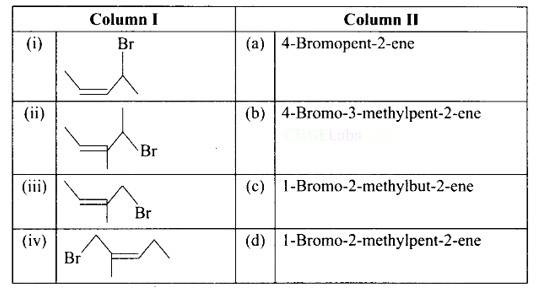
Contributor-Level 10
This is a matching answer type question as classified in NCERT Exemplar
(i) A: 4-bromopent-2-ene.
(ii) B: 4-bromo-3-methylpent-2-ene.
(iii) C: 1-bromo-2-methylbut-2-ene.
(iv) D: 1 -bromo-2-methylpent-2-ene.
Correct Answer: (i) → (a) (ii) → (c) (iii) → (b) (iv) → (d)
New answer posted
a year ago


Contributor-Level 10
This is a matching answer type question as classified in NCERT Exemplar
The first reaction is an electrophilic substitution process in which Cl+ from the Cl2 and FeCl3 combination attacks and substitutes the benzene ring.
Following Markownikoff's rule, the second reaction is an electrophilic addition reaction in which HBr is added across the double bond.
The third reaction is a nucleophilic substitution process that uses the SN1 mechanism to replace the -I group with -OH.
The nucleophilic aromatic substitution process, in which the -Cl group is replaced by -OH, is the fourth reaction.The fifth reaction is a dehydrohalogenation reacti
New answer posted
a year ago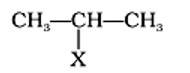

Contributor-Level 10
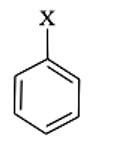
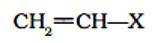
This is a matching answer type question as classified in NCERT Exemplar
Because it includes a halogen atom bound to an sp3 hybridised carbon atom, which is subsequently linked to additional alkyl groups, the first molecule is an alkyl halide.
An allyl halide is a compound in which the halogen atom is linked to a carbon atom that is bound to an sp3 hybridised carbon atom that is attached to a carbon-carbon double bond.
The third molecule is an aryl halide, which is a chemical in which the halogen atom is sp2 hybridised with an aromatic ring carbon atom.
In a carbon-carbon double bond, the halogen atom is linked to a sp2 hybridised carbon at
New answer posted
a year agoContributor-Level 10
The equation can be written as-
Ap+x + Bq- y ? xAp+ (aq) + yBq-
S moles of A and B dissolves to give x S moles of Ap+ and y S moles of Bq-.
Ksp = [Ap+]x [Bq-]y = [x5]x [y5]y
= xx y y 5 x+y
New answer posted
a year agoContributor-Level 10
This is a matching answer type question as classified in NCERT Exemplar
Racemization is the process of converting enantiomers into a racemic mixture, which is a mixture comprising two optically active enantiomers in equal quantities, from the results of the SN1 reaction. Chemical fire extinguishers are chlorobromocarbons.
Bromination of alkenes produces vic-dibromides, which are formed when halogen atoms of the same kind are linked to nearby carbon atoms of the molecule. Alkylidene dihalides, sometimes called gem-dihalides, are dihalides that have two halogen atoms bonded to the same carbon atom. The Saytzeff rule governs the removal of&
New answer posted
a year agoContributor-Level 10
This is a matching answer type question as classified in NCERT Exemplar
The medicinal uses are linked to the halogen derivatives. Chloramphenicol is an antibiotic used to treat typhoid fever, thyroxine is a hormone whose dysregulation causes goitre, chloroquine is a malaria medication, and chloroform is often used as an anaesthetic.
Correct Answer: (i) → (c) (ii) → (d) (iii) → (a) (iv) → (b)
New answer posted
a year agoContributor-Level 10
This is a multiple choice answer as classified in NCERT Exemplar
Heat an alkyl chloride/bromide in the presence of a metallic fluoride such as AgF, Hg2F2, CoF2, or SbF3 to produce alkyl fluorides. Swarts reaction is the name given to this reaction. CoF2 and Hg2F2 are the only choices that work as reagents. NaF is not suitable because the end products of NaF + RCl→ RF + NaCl are soluble in the solvent, i.e. water, making separation difficult. As a result, the right alternatives are (ii) and (iii).
Correct Answer: Option (ii) and (iii)
New answer posted
a year agoContributor-Level 10
This is a multiple choice answer as classified in NCERT Exemplar
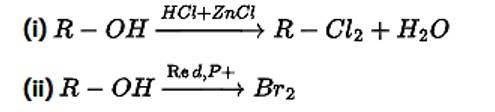
Correct Answer: Option (i) and (ii)
New answer posted
a year agoContributor-Level 10
This is a multiple choice answer as classified in NCERT Exemplar
Aryl halides are halides in which the halogen atom is directly linked to the aromatic ring's sp2 hybridised carbon atom. Only (i) and (iv) contain halogen atoms directly linked to aryl rings among the choices. As a result, they are known as aryl halides. (i) and (ii) are the right answers (iv).
Correct Answer: Option (i) and (iv)
New answer posted
a year agoContributor-Level 10
This is a multiple choice answer as classified in NCERT Exemplar
Checking with the carbon atom it is connected to is one way to see if a compound has a secondary bromide. In a molecule, a secondary carbon group is linked to one hydrogen atom and three non-hydrogen groups. As a result of the foregoing possibilities, secondary bromides are formed when the -Br group is linked to the -CH group. (i) and (iii) are the right answers.
Correct Answer: Option (i) and (iii)
Taking an Exam? Selecting a College?
Get authentic answers from experts, students and alumni that you won't find anywhere else
Sign Up on ShikshaOn Shiksha, get access to
- 67k Colleges
- 1.2k Exams
- 717k Reviews
- 1850k Answers