

Chemistry
Get insights from 6.9k questions on Chemistry, answered by students, alumni, and experts. You may also ask and answer any question you like about Chemistry
Follow Ask QuestionQuestions
Discussions
Active Users
Followers
New answer posted
a year agoContributor-Level 10
Sphalerite is ore of zinc consists of ZnS during its concentration group 1 cyanides are used as depressants like NaCN
New answer posted
a year agoContributor-Level 9
JJ Thomson, through the cathode ray tube experiment, discovered electrons. He passes the electricity from the tube and sees rays coming from the negative end. These are tiny negatively charged particles, he named them electrons.
New answer posted
a year agoContributor-Level 9
JJ Thomson's model of the atom proposed that an atom is like a sphere (pudding) and electrons are spread around it like a plum or chocolate chips. Basically atom is overall neutral.
New answer posted
a year agoContributor-Level 9
The structure of an atom reflects how the atom is made, which includes the nucleus at the centre where protons and neutrons are present, and electrons revolving around the nucleus.
New answer posted
a year agoContributor-Level 10
Mass of Na+ in 50 ml = 70 * 50 = 3500 mg
23000 mg of Na+ is present in 85000 mg of NaNO3 (1 mole NaNO3 contains 1 mole Na+)
mg Na+ will be present in
= 12934.78 mg
= 12.93478 gm
New answer posted
a year agoContributor-Level 10
Anode :
Cathode : 2Ag+(aq) + 2e- -> 2Ag(s)
Zn(s) + 2Ag+(aq) -> Zn2+ (aq) + 2Ag(s)
x = 147
New answer posted
a year agoContributor-Level 10
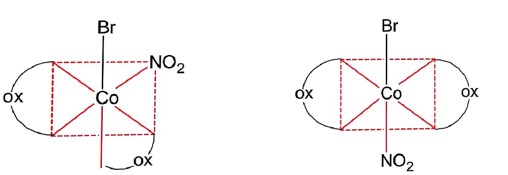
Cis (optically active) Trans (optically inactive)
d & l form (2) (1)
So, total 3 isomerism.
Taking an Exam? Selecting a College?
Get authentic answers from experts, students and alumni that you won't find anywhere else
Sign Up on ShikshaOn Shiksha, get access to
- 67k Colleges
- 1.2k Exams
- 716k Reviews
- 1850k Answers