Class 11th

Get insights from 8k questions on Class 11th, answered by students, alumni, and experts. You may also ask and answer any question you like about Class 11th

Follow Ask Question
8k

Questions

0

Discussions

28

Active Users

0

Followers

New answer posted

3 months ago

0 Follower 3 Views

A
alok kumar singh

Contributor-Level 10

Delocalisation of  electrons in benzene  leads to saturation

New answer posted

3 months ago

0 Follower 1 View

A
alok kumar singh

Contributor-Level 10

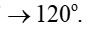
BCl3 is having bond angles of


New answer posted

3 months ago

0 Follower 2 Views

A
alok kumar singh

Contributor-Level 10

Group?17, elements have very high ionisation enthalpy due to increase in atomic size, ionization enthalpy decreases down the group.

New answer posted

3 months ago

0 Follower 1 View

A
alok kumar singh

Contributor-Level 10

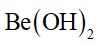
is amphoteric in nature and reacts with acids and base. 


New answer posted

3 months ago

0 Follower 1 View

A
alok kumar singh

Contributor-Level 10

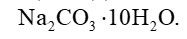
Sodium carbonate is a white crystalline solid which exists as a decahydrate,  This is also called washing soda.
New answer posted

3 months ago

0 Follower 1 View

A
alok kumar singh

Contributor-Level 10

Due to its high dielectric constant, water is a good solvent.

New answer posted

3 months ago

0 Follower 1 View

A
alok kumar singh

Contributor-Level 10

Bond angles give some idea regarding the distribution of orbitals around the central atom in a molecule/complex ion and hence it helps us in determining its shape

New answer posted

3 months ago

0 Follower 4 Views

A
alok kumar singh

Contributor-Level 10

Kindly go through the solution


New answer posted

3 months ago

0 Follower 4 Views

A
alok kumar singh

Contributor-Level 10

a = 3 9 g , For C, 3g – T = 3a = (3) 3 g g

T = 2g = 20 N

σ = Y

σ Y = 2 0 5 * 1 0 8 * 2 * 1 0 1 1

= 2 * 1 0 3  

= 2 0 * 1 0 4 2 0  

New answer posted

3 months ago

0 Follower 3 Views

A
alok kumar singh

Contributor-Level 10

Dv = a (t + 1 – t)

a = 50 m/s2

s = u + a 2 ( 2 ( t + 1 ) 1 )  

1 2 0 = u + 5 0 2 ( 2 t + 1 )  

u = 120 – 25 (2t +1)

In (t + 2)th second

s ' = u + a 2 ( 2 ( t + 2 ) 1 )

= u + 25 (2t + 3)

= 120 – 25 (2t) – 25 + 25 (2t) + 75

S' = 170 m

Get authentic answers from experts, students and alumni that you won't find anywhere else

Sign Up on Shiksha

On Shiksha, get access to

  • 66k Colleges
  • 1.2k Exams
  • 680k Reviews
  • 1800k Answers

Share Your College Life Experience

×
×

This website uses Cookies and related technologies for the site to function correctly and securely, improve & personalise your browsing experience, analyse traffic, and support our marketing efforts and serve the Core Purpose. By continuing to browse the site, you agree to Privacy Policy and Cookie Policy.