

Class 11th
Get insights from 8k questions on Class 11th, answered by students, alumni, and experts. You may also ask and answer any question you like about Class 11th
Follow Ask QuestionQuestions
Discussions
Active Users
Followers
New answer posted
a year agoContributor-Level 10
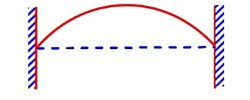
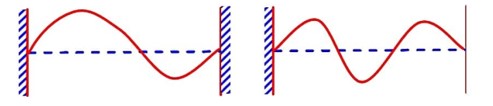
Transverse waves can travel through solids or any medium that can withstand shearing strain. Fluids, including liquids and gases, cannot sustain shear force, so such types of mechanical waves cannot travel through them.
Longitudinal waves can travel through all elastic media that can sustain compressive strain. That means, these mechanical waves can travel through solids, liquids, and gases.
New answer posted
a year agoContributor-Level 10
Ionic radii of cations is smaller than anions, also more the positive charge less be the ionic radii and more the negative charge more be the ionic radii. Hence correct order of ionic radii is,
New answer posted
a year agoContributor-Level 10
Millimoles of HCl = 200 * 0.2 = 40
Millimoles of NaOH = 300 * 0.1 = 30
Heat released =
Mass of solution = 500 * 1 g
= 500 g
Specific heat of water = 4.18 Jg-1 K-1
Ans. = 82
New answer posted
a year agoContributor-Level 10
Sound waves and water waves are mechanical waves, which always require a medium to travel. Light, however, does not require a medium to propagate, as it is electromagnetic. Light can travel through vacuum, while sound and water waves cannot travel through vacuum.
New answer posted
a year agoContributor-Level 10
mvr =
(Bohr's kinetic energy)
Comparing with
x = 32π2 = 315.50
10x = 3155
New answer posted
a year agoContributor-Level 10
(1) Standard enthalpy of formation for alkali metal bromides becomes more negative on descending down the group.
(2) Standard enthalpy of formation for LiF is most negative among alkali metal fluorides.
(3) In case of Csl, lattice energy is less but Cs+ having less hydration energy due to which it is less soluble in water.
(4) For alkali metal fluorides, the solubility in water increases from Li to Cs. LiF is least soluble in water.
Taking an Exam? Selecting a College?
Get authentic answers from experts, students and alumni that you won't find anywhere else
Sign Up on ShikshaOn Shiksha, get access to
- 67k Colleges
- 1.2k Exams
- 717k Reviews
- 1850k Answers