

Class 11th
Get insights from 8k questions on Class 11th, answered by students, alumni, and experts. You may also ask and answer any question you like about Class 11th
Follow Ask QuestionQuestions
Discussions
Active Users
Followers
New answer posted
a year agoContributor-Level 9
Molarity (M) =
=
Molecular mass of oxalic acid
= 1 * 2 + 12 * 2 + 16 * 4 + 2 * 18
= 26 + 64 + 36 = 126
M = 2 * 10-1 M
= 20 * 10-2M
Ans. = 20
New answer posted
a year agoNew answer posted
a year agoContributor-Level 9
(a) Torque ® ML2T-2 ↑ (iii)
(b) Impulse ® MlT-1 ↑ (i)
(c) Tension ↑ MLT-2 ↑ (iv)
(d) Surface Tension ↑
New answer posted
a year agoContributor-Level 9
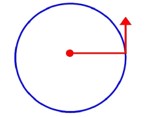
Direction & magnitude both remain same
for particle moving with constant speed.
New answer posted
a year ago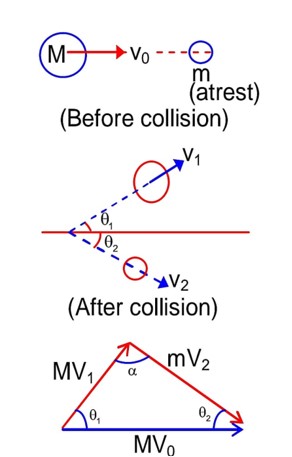
New answer posted
a year agoContributor-Level 10
The main difference lies in the direction. We should know that in a longitudinal wave, the displacement of particles is parallel to the direction of wave propagation. In a transverse wave, however, the displacement is perpendicular to the direction of wave propagation.
New answer posted
a year agoContributor-Level 10
The units of angular wave number and angular frequency are slightly different.
- Angular wave number k has units of radian per metre (rad/m).
- Angular frequency has units of radian per second (rad/s).
New answer posted
a year agoContributor-Level 10
In Physics, we need to know that the phase angle tells us the position of a point within one cycle of a wave. That is measured in radians. It tells you how much a wave is ahead or, behind the other. On the other hand, the initial phase (or phase constant) is the phase angle at time t=0. It tells us where the wave begins with its oscillation cycle.

Taking an Exam? Selecting a College?
Get authentic answers from experts, students and alumni that you won't find anywhere else
Sign Up on ShikshaOn Shiksha, get access to
- 67k Colleges
- 1.2k Exams
- 717k Reviews
- 1850k Answers